

Macaulay Culkin Has an Idea for a New Home Alone. Disney Is Developing It.
The 1990 holiday hit's star is now its pitchman, with Seth Rogen and Evan Goldberg attached and the project still in very early development at 20th Century Studios.
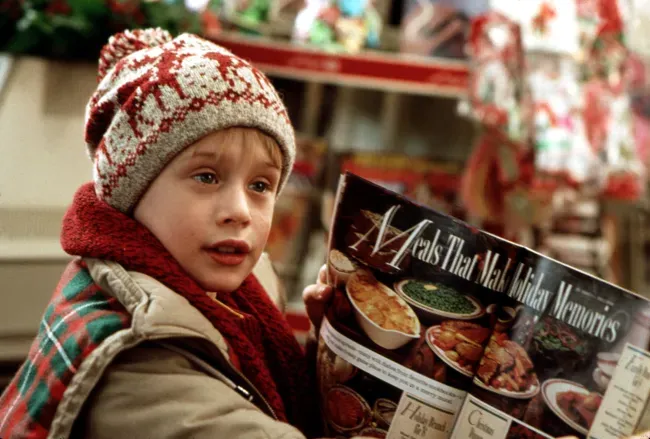
Disney's 20th Century Studios is in very early development on a new Home Alone film based on an idea from Macaulay Culkin, the star of the 1990 original, with Seth Rogen and Evan Goldberg attached. For studio, streaming, and brand executives, the project is a live test of whether star-originated IP revivals can convert nostalgia into theatrical and subscription value without denting a beloved catalog title.
The kid who got left behind is now the one pitching the sequel. Disney's 20th Century Studios is in very early development on a new Home Alone movie, built from an idea by Macaulay Culkin, the actor who starred in the 1990 original. Seth Rogen and Evan Goldberg are attached to the project, according to IndieWire. That is the entire confirmed shape of it: one studio, one idea, two attached names, and the words "very early."
Take "very early" literally. There is no greenlight, no release date, no script, no cast beyond the attachment, and no guarantee the film ever gets made. Hollywood buries projects at this stage constantly, and most of them never surface again. But the fact that this one is being reported at all is the signal worth reading. Disney is willing to be seen exploring a return to one of the most valuable holiday titles in its library, and it is doing so with the original star's fingerprints on the premise rather than just his face in the frame.
Start with why the asset matters. Home Alone arrived in 1990 and became a defining holiday film, the kind of title that gets rewatched on a schedule rather than discovered once. It spawned sequels in the years that followed and a reboot on Disney+ in 2021. Disney inherited the franchise when it bought most of 21st Century Fox's assets in 2019, which is how 20th Century Studios ended up inside the Mouse House. For a company that monetizes nostalgia across theaters, streaming, merchandise, and parks, a dormant holiday franchise is an underused asset sitting in plain sight.
Holiday content is also unusually durable. Most films burn bright and fade; Christmas titles get pulled out every December by millions of households, which is exactly the behavior subscription businesses are built to capture. A new Home Alone would not just be a movie. It would be a recurring event, a merchandising cycle, and a reason for families to keep a streaming subscription through the one quarter when churn is highest.
Now the legacyquel math. Studios have leaned hard on reviving known titles because marketing a familiar name is cheaper than teaching audiences a new one. The trade-off is real: a bad revival can damage the original's long-term value, and audiences are quicker than ever to say so loudly. Home Alone's brand is tied to a specific performance, a specific era, and a specific joke about aftershave. Culkin's involvement is the hedge. It converts a reboot into a homecoming, which is a warmer and more defensible story to sell to both a board and a ticket buyer.
For context, the studio's recent theatrical output has skewed heavily toward established franchises and sequels, a posture that trades originality risk for marketing certainty. A Home Alone revival fits that playbook precisely: known title, built-in awareness, and a holiday window that practically markets itself. It also feeds the other side of the business, since a theatrical release becomes a streaming asset a few months later, and a holiday film keeps paying that dividend every December for as long as the rights hold.
Culkin's own arc is part of the pitch. He was one of the biggest child stars of his generation, then largely stepped back from big-studio work for years. Coming to a studio with an idea, rather than waiting for a call, is a shift in leverage that matters well beyond this project: talent as originator, not just hired face. Rogen and Goldberg bring a comedy pedigree and, just as importantly, a producing apparatus that can actually develop material. Attachments like that are how a rumor becomes a movie.
What does "very early" mean for the people watching? For Disney, it is optionality, a cheap option on a holiday tentpole that can be exercised or dropped. For investors, it is a small but useful signal about how the studio intends to fill a theatrical slate that still needs reliable hits and a streaming service that still needs reasons to stay subscribed. For executives at rival studios, it is another data point that star-blessed IP revivals are the current fashion, and that the stars themselves increasingly want a stake in the premise, not just a fee.
The risks are not small. Timing is the first: holiday films need a holiday window, and those are booked years in advance. Cost is the second: if this moves forward, Culkin, Rogen, and Goldberg will not come cheap, and a legacyquel carries a bigger budget than its premise suggests. Creative is the third and hardest: the original worked because a child defending a house was a fresh idea. Repeating it invites comparison, and the audience that loves the original is now the audience that buys tickets out of nostalgia and then judges the result harshly.
So the strategic read is this. Nothing is decided, and it may never be. But the direction of travel is clear: Disney would rather revive a proven holiday property with its original star's blessing than gamble the same money on an unknown. Watch for three things that would turn this from a fun headline into a real slate decision: a writer, a director, and a release window. Until then, it is an idea, and in Hollywood, ideas are the cheapest thing in the room.
This story's Key Insights and Take-aways are locked.
Create a free account to unlock Executive Actions for one credit.
Register to UnlockAlways free for Executives Club members. Join the Club
More in Entertainment

GTA 6 banks $3.8bn in one day, torching every launch record
One game just out-earned every video game launch and every single-day film box office haul in history, and the fallout lands on every media CEO's forecast.

GTA VI Racked Up $3.79 Billion in a Single Day, Topping Every Film Ever
A 13-year wait produced a $3.79 billion day, more than any movie has made in its entire run, and it resets the launch math for every studio, streamer, and brand chasing the same attention.

GTA 6 sells 32.5M pre-sales and $3.79B day one, torches 13-year record
Rockstar's sequel didn't just beat Grand Theft Auto V's 13-year-old benchmark; it reset what a launch can be, with 32.5 million pre-sale copies and $3.79 billion in a single day.