
Mahmood Backs Pride Uniform Ban, Concedes 'Few' Two-Tier Policing Cases
The UK home secretary denies routine two-tier policing but admits 'a few examples' and proposes a new impartiality standard to rebuild public trust in law enforcement.
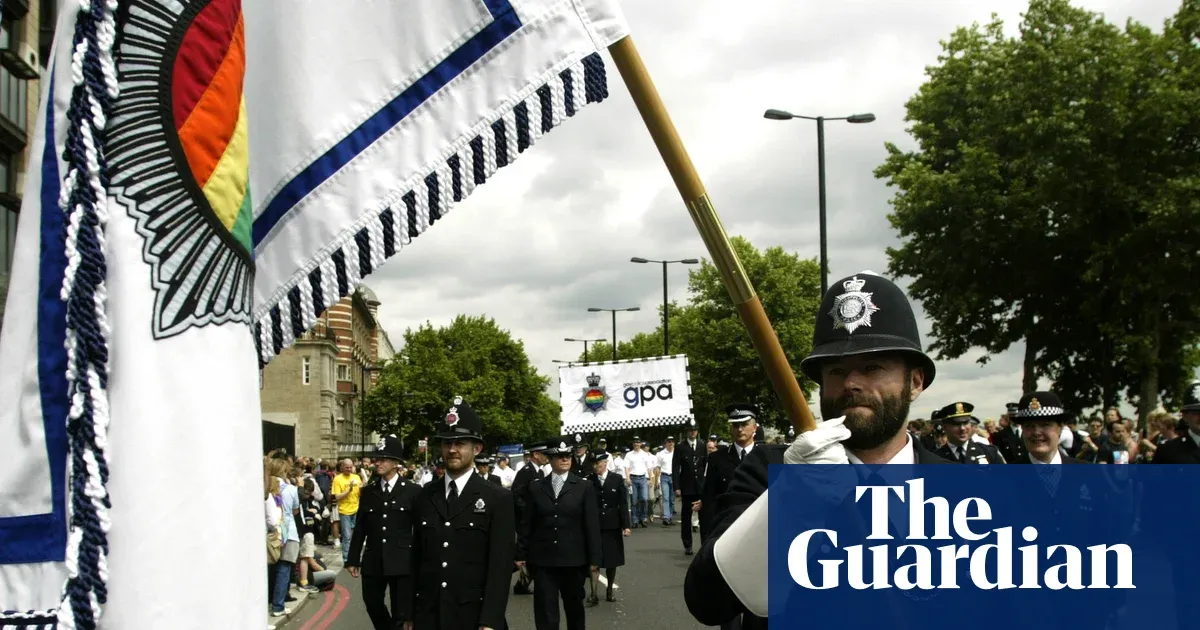
UK home secretary Shabana Mahmood has backed a ban on police officers marching in Pride events in uniform, while acknowledging 'a few examples' of two-tier policing and calling for a 'new impartiality standard' to reverse the fall in public faith in law enforcement. For any leader managing a trust deficit, her move is a case study in conceding the edges to defend the core, and it puts police forces, Pride organizers, and the Home Office on a measurable clock.
Shabana Mahmood, the UK home secretary, has backed a ban on police officers marching in Pride events in uniform, and she attached a concession to the announcement: there have been a "few examples" of two-tier policing. Her stated position is that the practice is neither systematic nor routine. But the same remarks, in which she said a "new impartiality standard" was necessary to reverse the fall in the public's faith in law enforcement, concede that the number of examples is not zero. In a debate this charged, the distance between "a few" and "none" is the entire argument.
That is the part worth holding on to. The home secretary did not say British policing is fair and its critics are wrong. She said the critics have something, just not the structural claim they are making. She rejected routine two-tier policing while confirming that individual cases exist, then used that gap to justify a new standard for how officers present themselves. The ban on uniformed Pride participation is the visible half of the policy. The impartiality standard is the half that will actually bite, because it reaches conduct far beyond a single parade.
For context, "two-tier policing" has become a fixture of UK political argument in recent years. The phrase typically alleges that police apply different standards to different groups, protests, or communities, treating some with more tolerance than others. It is a claim about pattern, not incident, which is why Mahmood's framing matters. By denying the pattern while acknowledging incidents, she is trying to take the sting out of the accusation without dismissing the people making it. That is a narrow ledge, and both sides of the debate will read her words as partial vindication.
The Pride element carries the longest backstory. Uniformed officers marching at Pride parades have historically been a visible signal of the relationship between police forces and LGBTQ+ communities, a relationship with a genuinely complicated history in the UK. Whether officers attend in uniform, in civilian clothes, or not at all has generally been treated by individual forces as a local judgment call, which is exactly the kind of discretion a home secretary can end with a single written standard. Doing so converts a symbolic question into a compliance question, and compliance questions are easier to enforce and harder to argue with.
One structural detail matters here. In the UK system, the home secretary sets the framework and the funding, but chief constables retain operational independence over day-to-day policing. That limits how far a minister can go by decree, and it explains why the mechanism she named is a standard rather than a direct order: standards, guidance, and inspection regimes are the levers central government actually controls. For forces, the practical questions are what the standard says about uniforms, symbols, and participation in civic events, and whether it applies only to Pride or to the wider calendar of public marches officers attend.
For executives outside policing, the transferable lesson sits in the concession itself. Once a leader admits "a few examples" of a problem, the debate stops being about whether the problem exists and starts being about how large it is, how it gets measured, and who is accountable when the next example surfaces. That is a real cost. It is also, sometimes, the only route back to credibility, because an institution that concedes nothing tends to be believed less, not more. Mahmood tied the standard explicitly to restoring public trust, which means she is treating impartiality as an asset that has depreciated and now needs reinvestment.
That framing has second-order effects. Police forces that built community relationships around visible participation in Pride now face a rule that removes one of their most photographed signals of inclusion. Pride organizers, in turn, lose the uniformed contingents that some have read as progress and others have read as uncomfortable. The officers themselves sit in the middle, told that the uniform is a neutrality instrument first and a statement of solidarity never. None of those trade-offs vanish because a standard is written down. They simply move from local discretion to central policy, where they become someone's formal responsibility.
The strategic stakes for peers in similar roles are straightforward. Any leader managing a trust deficit has to choose between defending the institution's record absolutely and conceding its edges to protect its core. Mahmood chose the second path. The cost is that "a few examples" becomes a benchmark her critics can hold her to every time another case appears. The benefit is that she now has a stated problem to solve and a stated solution to be judged against, rather than an argument she can only lose by repeating. What to watch is concrete: the content of the impartiality standard, how forces implement it, whether it extends past Pride to other public events, and whether public faith in law enforcement actually moves. Mahmood has turned impartiality into a testable promise. That is a harder position to hold than a denial, and a far more interesting one to track.
This story's Key Insights and Take-aways are locked.
Create a free account to unlock Executive Actions for one credit.
Register to UnlockAlways free for Executives Club members. Join the Club
More in Politics

Fifth Circuit Kills Pregnant Workers' Law Over Pandemic Proxy Votes
A procedural ruling, not a policy one, has blocked a federal pregnancy-accommodation law and put every pandemic-era statute in the crosshairs ahead of an expected Supreme Court appeal.

Measles kills a Virginia child under 5, the state's first death of 2026
Virginia's health department confirmed the death but withheld the child's vaccination status, leaving schools, clinics and employers to plan around the one detail that would explain the most.

Former Brazilian President Bolsonaro Hospitalized with Intestinal Obstruction
The health status of the former far-right leader raises immediate questions about political stability and the trajectory of Brazil's conservative movement.