
Maybank CTO: We Won't Deploy AI Agents Until They Are Auditable
The CTO of Malaysia's largest bank details why regulatory caution and internal testing are outpacing the rush to customer-facing AI.
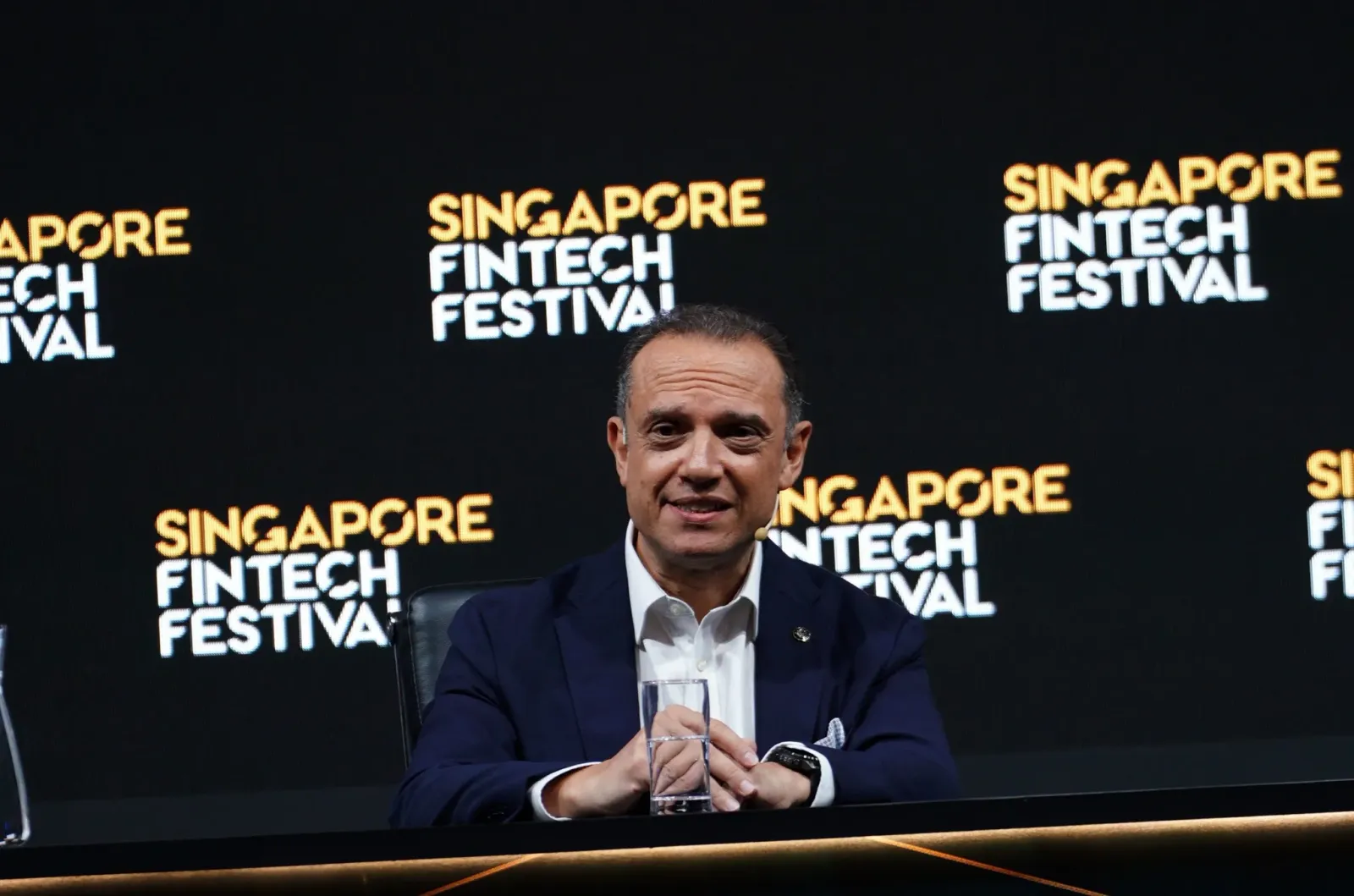
Maybank CTO Giorgio Migliarina announced that the bank will not rush customer-facing agentic AI until it is fully auditable and predictable. This cautious, VC-like approach signals a major shift in how established financial institutions are prioritizing risk management over immediate technological acceleration.
Maybank, Malaysia's largest financial institution, is deliberately resisting the industry pressure to immediately deploy autonomous AI agents to its customer base. Giorgio Migliarina, the bank's Chief Technology Officer, has made it clear that the bank's priority is not being the first mover, but being the most reliable. He stated that banking is fundamentally built on trust, and that trust cannot be jeopardized simply to achieve a short-term productivity boost. This stance directly challenges the prevailing narrative that speed is the ultimate metric for AI adoption in the financial sector.
Migliarina explains that while the potential for AI to accelerate operations is undeniable, the current state of agentic AI requires rigorous validation before it can handle real-world customer interactions. The core requirement for Maybank is that any AI agent must be both auditable and predictable. In simpler terms, if a customer asks the same question twice, the AI must provide the same, consistent answer. This level of reliability is non-negotiable for a system handling sensitive financial data, and Maybank is committed to fine-tuning its models until that standard is met.
This strategic patience is backed by a massive commitment to technological transformation. Maybank is currently executing its ROAR30 plan, which involves a five-year investment of 10 billion Malaysian ringgit, equivalent to $2.5 billion, dedicated to technology, data infrastructure, and artificial intelligence. This is not a hesitant exploration; it is a massive, long-term capital allocation toward digital superiority. However, Migliarina emphasizes that this investment is currently focused on internal efficiency rather than external customer-facing disruption. The bank is heavily utilizing AI internally, deploying it as sophisticated assistants and recommendation engines for its own staff to streamline complex back-office functions.
Crucially, Maybank is already using AI to solve high-stakes internal operational problems. The bank recently announced plans to equip its Resilience Operations Centre, a critical hub responsible for maintaining the stability of its systems, with AI tools from ServiceNow. This upgrade will be applied across Maybank's three primary markets: Malaysia, Singapore, and Indonesia. The AI's role here is highly sophisticated: it will act as a predictive maintenance system. Migliarina compares this function to monitoring a lightbulb for early signs of wear and tear. The AI will filter through normal system activity to identify subtle degradations or 'flickering' that might otherwise go unnoticed, preemptively prompting employees to take action and prevent catastrophic system failures.
This methodical, risk-aware approach is rooted in a specific strategic mindset Migliarina adopted after decades in heavily regulated industries like telecommunications and banking. He advises executives to view AI development not as a series of isolated projects, but through the lens of a Venture Capitalist. In the VC model, you invest in numerous startups, knowing that a few will yield massive returns, while others may fail. Migliarina suggests that AI pilots should operate under this same philosophy: 'Let a thousand flowers bloom.' The goal is to test a vast array of AI applications, and then strategically focus resources on the few that demonstrate exceptional, scalable value.
This measured pace is also a direct response to the escalating threat of AI-powered cyberattacks. Migliarina points out that financial institutions across Asia have recently been targeted by a wave of sophisticated hacks, including major players like Japan's SMBC Consumer Finance and South Korea's Shinhan Bank, KB Kookmin Bank, and Hana Bank. He warns that cyberattacks are rapidly changing in nature and becoming significantly more dynamic. Furthermore, every new fintech partnership or payment integration widens the attack surface, meaning the security risk is constantly expanding. For a bank whose core value proposition is trust, this threat necessitates extreme caution and a deliberate, phased rollout of new technologies.
Despite the inherent risks and the competitive pressure from regional rivals who are already experimenting with customer-facing AI, Migliarina remains optimistic about the future. He sees the bank's role as a facilitator of regional economic growth. By building a robust, secure, and technologically advanced financial infrastructure, Maybank can facilitate the growth of ASEAN as a major global economic power. His ultimate mandate is clear: technological change must be gradual, meaningful, and fundamentally sound. It is not a 'wait-and-see' approach, but it is emphatically not a 'rush and break things' approach either.
This story's Key Insights and Take-aways are locked.
Create a free account to unlock Executive Actions for one credit.
Register to UnlockAlways free for Executives Club members. Join the Club
More in Business

S&P 500 Enters Correction, Down 10% From Its High on AI Worries
The index's slide past the 10 percent line is a symbolic verdict on investor mood, and the AI trade that powered the rally is now the thing testing it.

Dow and S&P 500 enter correction as Nasdaq logs worst week since 2020
All 11 S&P 500 sectors fell more than 1% in the same week for the first time since April 2025, a breadth signal that matters more than any single index level.

Chip stocks lose $2.3 trillion in a week, worst run in 25 years
A $2.3 trillion weekly wipeout in semiconductors is forcing every board with an AI story to ask whether it owns a thesis or just a crowded trade.