
Measles Is Entrenched in the U.S. Again, and the Data Got There First
An international panel convenes Tuesday to rule on America's measles-elimination status, but genetic evidence has already answered the question for schools, employers, and anyone booking international travel.
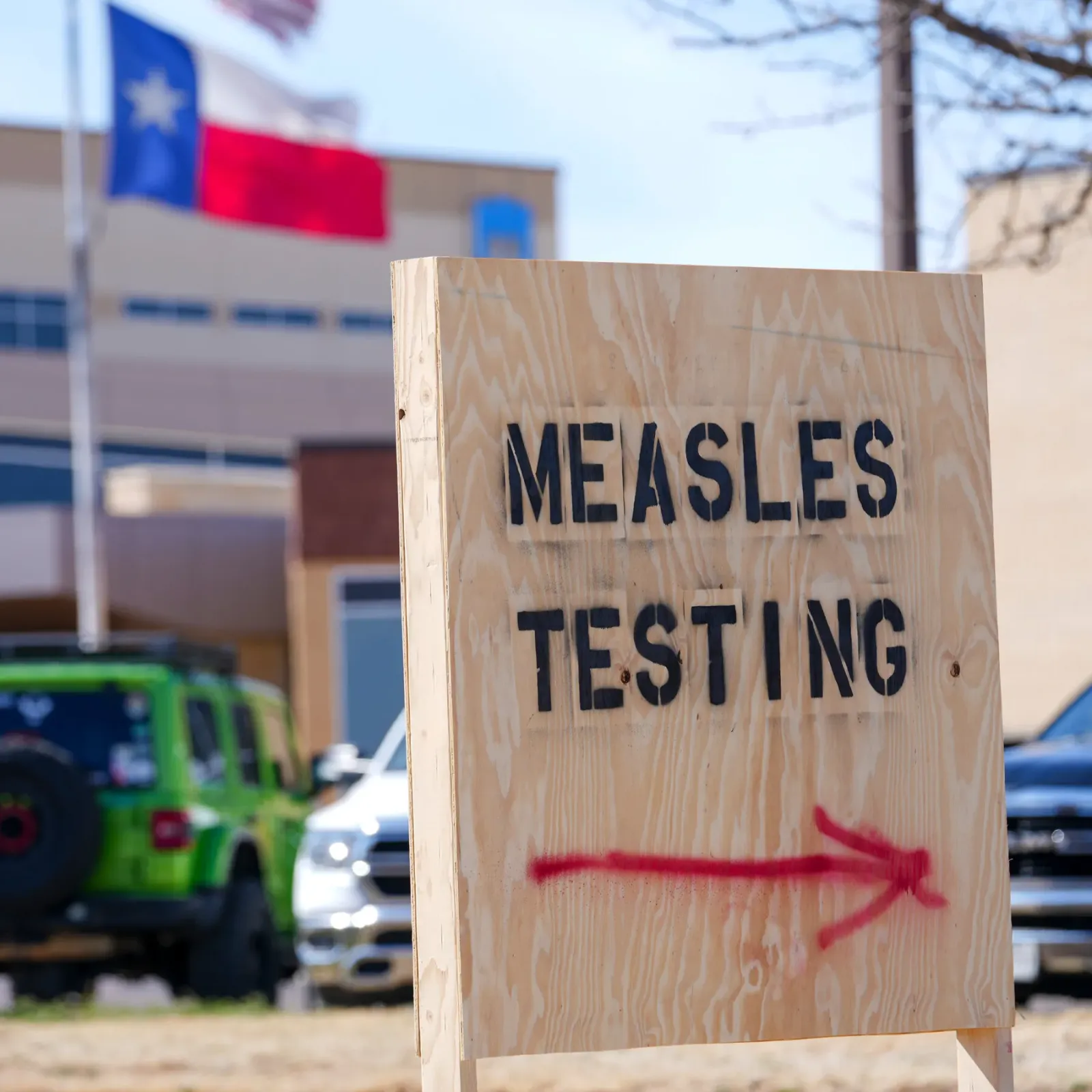
An international panel of scientific experts meets Tuesday to evaluate whether the United States has lost its measles-elimination status, but genetic data already shows the virus is once again entrenched in the country. For decision-makers, that means the public health baseline most organizations have quietly assumed for 25 years can no longer be treated as a given.
On Tuesday, an international panel of scientific experts convenes to formally evaluate the status of measles in the United States. Anyone waiting on the verdict should know the answer is already in the sequencer. Genetic data shows the virus is once again entrenched here, meaning the continuous, unbroken chains of transmission that the elimination designation is built to measure have returned. The panel is being asked to ratify a result that the epidemiology reached first. That sequencing of events matters: this is not a story about a committee discovering a problem, it is a story about a committee confirming one the data has already documented.
The terminology is worth thirty seconds, because it changes how you read everything that follows. Elimination is not eradication. The measles virus never fully disappears from the planet, and no country claims otherwise. What a country earns is a certificate of interruption: twelve consecutive months with no continuous transmission of a single chain of the virus inside its borders. The United States has held that status since 2000, a quarter-century in which measles was treated domestically as an imported curiosity rather than a resident threat. Losing the designation does not mean measles is everywhere. It means the country can no longer demonstrate the one thing the designation certifies, which is that the virus stopped spreading on its own soil within a year.
Genetic data is the reason the panel's work is closer to a formality than an investigation. Case counts tell you how many people got sick; genomes tell you whether those cases are linked. When sequences from different outbreaks match closely, investigators can see an unbroken chain running through a community. When they do not match, you are usually looking at separate sparks carried in from abroad, each stamped out before it found purchase. Entrenched transmission shows up as the first pattern, not the second, and that is the pattern now visible in the data. It is also far harder to argue with than a tally of reported cases, which rises and falls on how many people happen to get tested.
There is precedent here, and it is instructive rather than comforting. The country came close to this cliff once before, in 2019, when a measles outbreak produced nearly 1,300 confirmed cases, the largest count in decades. The status survived that year because transmission stopped inside the twelve-month window. The lesson public health officials took away was that the certificate is a trailing indicator, not a firewall. What has changed is the buffer. Every year the country spends inside the elimination club is a year of margin; every month of continuous transmission burns that margin down. Once it is gone, regaining it means proving a negative for a full year, which is a far slower process than losing it.
For organizations outside the health sector, the consequences arrive through unglamorous channels. School enrollment and immunization paperwork are the most obvious, because schools are where measles finds dense, unvaccinated clusters fastest. Employers face the absenteeism math that follows any outbreak in a childcare or campus setting, and the scheduling chaos that comes with exclusion periods for exposed staff. Hospitals watch it as a capacity question, since measles cases consume isolation rooms and staff time disproportionate to their number. Insurers and travel-facing businesses watch it as a signal that gets read by international health authorities, who decide how to flag a destination. A designation change is a headline; the operational ripples are what actually reach a balance sheet.
The policy layer underneath is where this gets harder to reverse. Elimination status is a function of vaccination coverage and of how aggressively local health departments chase each chain. Measles is extraordinarily contagious, and the protection that stops it is well documented: a two-dose regimen is roughly 97 percent effective, which means the wall holds only when almost everyone behind it is vaccinated. Gaps in coverage do not show up as gradual risk, they show up as clusters, and clusters are what turn into twelve-month chains. That is the mechanical reason a status lost is much harder to restore than to defend, and why the panel's evaluation is likely to be a starting gun for state-level policy attention rather than the closing chapter.
The strategic error available to leadership teams right now is waiting. If your operating assumptions still encode a country where measles is a travel note rather than a domestic planning item, those assumptions are stale as of this week's data, regardless of what the panel announces Tuesday. The useful move is to treat the panel as a confirmation step and plan against the data: know your organization's immunization posture where it is legally knowable, know which programs depend on dense gatherings, and know what an exclusion period would cost in a bad month. None of that requires a prediction about the vote, and all of it gets cheaper to do before the vote than after.
The broader stake is institutional credibility. Elimination status was one of the few clean public health claims the United States could make without caveats, and it functioned as a quiet piece of soft infrastructure for schools, employers, and travel. Losing it does not create a crisis on its own. It removes a safeguard that made a whole category of risk easy to ignore, and it does so at a moment when the underlying data, not just the committee, says the virus has settled back in. The panel meets Tuesday. The genome filed its report much earlier.
This story's Key Insights and Take-aways are locked.
Create a free account to unlock Executive Actions for one credit.
Register to UnlockAlways free for Executives Club members. Join the Club
More in Science

Anthropic's I.P.O. Made Rank-and-File Researchers Worth Tens of Millions
Researchers who joined just a few years ago are now worth tens of millions, and the windfall resets the pay benchmark for every private A.I. lab still paying in paper.

NASA's Mars relay lost a wheel, and Perseverance lost both radios
Odyssey's backup wheel stopped spinning with only months of hydrazine left, while Perseverance's primary and backup radios are both sidelined, pausing science on the surface.

Three Hours With Elizabeth Holmes, and Not One Question About the Fraud
Nathan Fielder's 'You Can See Everything' bets that eye contact can out-truth a fraud conviction, and the Guardian's critic argues that is an insult to objective truth.