
Meta Reconsiders 2030 Net-Zero Goal After AI Data Center Emissions Surge
Meta's sustainability leaders admit the pace of AI infrastructure growth is outpacing their original climate projections.
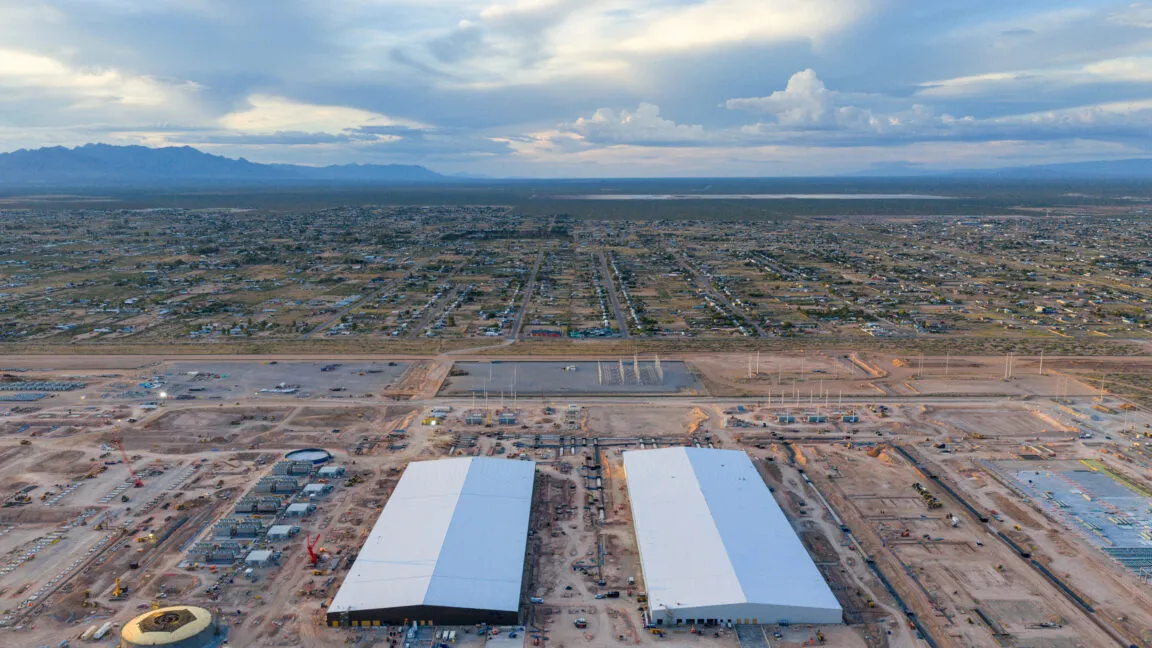
Meta's VP of Data Centers, Rachel Peterson, and Global Head of Net Zero, Blair Swedeen, announced a re-evaluation of the company's 2030 net-zero emissions goal. This shift signals a major reckoning for Big Tech as AI demand forces a fundamental rethink of sustainability timelines.
Meta is officially pulling back from its 2030 net-zero emissions commitment. This isn't a retreat from the climate fight, but rather a strategic pivot necessitated by the sheer, explosive scale of the AI boom. In a sustainability report released on November 19, 2026, Meta executives Rachel Peterson, VP of Data Centers, and Blair Swedeen, Global Head of Net Zero and Sustainability, confirmed that the company is re-evaluating its timelines, sequencing, and interim milestones, including the original 2030 target. The core reason for this shift is stark: the demand for AI infrastructure has grown faster than almost anyone projected, leading to a record percentage increase in greenhouse gas emissions that now exceeds the growth rates of its Big Tech competitors.
This is a critical moment for the entire industry. For years, the narrative around Big Tech has been a tug-of-war between massive computational power and environmental responsibility. Meta, like its peers, has been under intense pressure from investors, regulators, and the public to meet ambitious ESG (Environmental, Social, and Governance) targets. The 2030 net-zero goal was a powerful signal of commitment, a way to align corporate growth with global climate imperatives. However, the reality of training and running Large Language Models (LLMs) is that they are incredibly energy-intensive. The rapid deployment of new AI services, which requires exponentially more computational resources, has created an emissions curve that the company's original projections simply could not account for.
Peterson and Swedeen were clear in their report: “Our long-term ambitions haven’t changed, but our operating environment has.” This framing is key. It suggests that the goal remains the ultimate destination, but the path to get there is fundamentally different. The company is not abandoning its commitment; it is acknowledging that the current trajectory, driven by the insatiable hunger for AI compute, makes the 2030 deadline unattainable without a massive, immediate overhaul of its operational strategy. This re-evaluation is not just about setting a new date; it’s about rethinking the entire operational architecture of a modern tech giant.
What does this mean for the operational reality of Meta? It means a significant increase in capital expenditure (CapEx) and a fundamental shift in how they approach data center design and power sourcing. To meet the demands of next-generation AI, Meta needs more servers, more cooling, and more power than ever before. The challenge is that the power grid itself is not always ready to support this kind of hyper-growth, and the carbon intensity of the electricity being used is a major variable. The company must now find ways to decouple its growth from its emissions, which is a far harder engineering and logistical problem than simply building more servers.
This move puts Meta in a unique position, both as a leader and as a cautionary tale. On one hand, they are being transparent about the limits of their original projections, which is a positive step in corporate governance. On the other hand, they are signaling that the current pace of AI innovation is creating a sustainability crisis that the industry is only just beginning to understand. Competitors are watching closely. If Meta, a leader in the space, is having to adjust its timeline, it forces other companies to ask: how long can we maintain these aggressive net-zero targets while simultaneously racing to build the next generation of AI products? The answer, it seems, is that the timeline is far more complex and longer than previously assumed.
For investors, this is a major inflection point. ESG metrics are increasingly tied to valuation. A company that can demonstrate a clear, credible path to sustainability while maintaining aggressive growth is highly valued. By re-evaluating its milestones, Meta is essentially signaling a change in its risk profile. The market will now be scrutinizing not just the goal, but the process of achieving it. Will the new sequencing involve massive investments in renewable energy procurement, or will it require a fundamental redesign of AI models to be inherently more efficient? The latter is the holy grail of AI research, and the pressure to achieve it has never been higher.
This story's Key Insights and Take-aways are locked.
Create a free account to unlock Executive Actions for one credit.
Register to UnlockAlways free for Executives Club members. Join the Club
More in Technology

Anthropic mathematician claims Claude helped crack the Riemann hypothesis
If the proof holds, AI has toppled math's most famous open problem; if it does not, it is a case study in announcing breakthroughs before anyone verifies them.

AI's $4 Trillion Wipeout Erases Nasdaq's Gains for the Year
A brutal week took roughly $4 trillion off the AI sector and left the Nasdaq flat for the year, and the damage ran the full length of the supply chain.

Anthropic mathematician says AI proved the Riemann hypothesis. Verification will take time.
A single unverified claim from inside Anthropic now sits against more than 160 years of open mathematics, and the gap between asserting a proof and surviving peer review is the entire story.