
Meta reopens its 2030 net zero pledge, blaming AI infrastructure demand
The company's annual sustainability report puts timelines, sequencing and interim milestones back on the table, a signal that AI capex is now colliding with climate commitments across Big Tech.
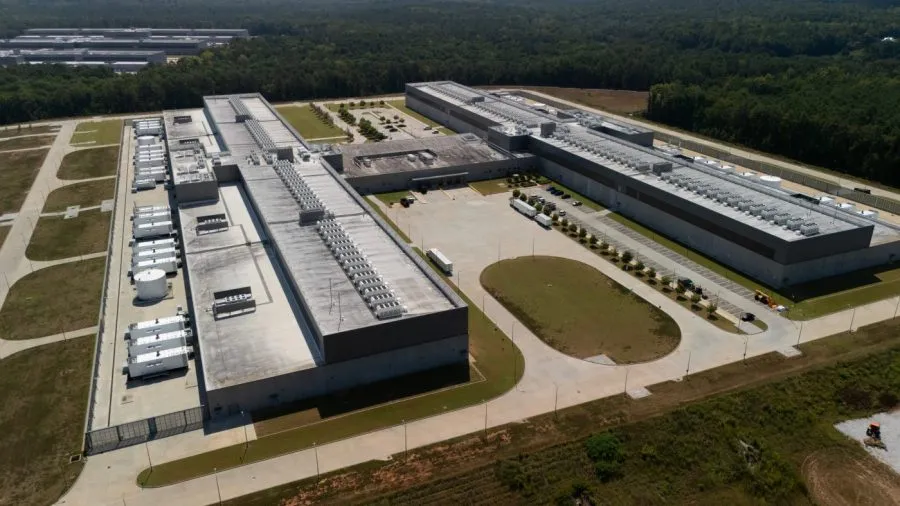
Meta said in its annual sustainability report that it is re-evaluating its timelines, sequencing and interim milestones, including the 2030 timeframe for its net zero emissions goal and its near-term intensity targets, citing rising demand for AI infrastructure. For executives and boards, it is the clearest sign yet that the AI buildout is forcing a public reckoning between compute growth and published climate deadlines.
Meta is putting its 2030 net zero deadline back on the table. In its annual sustainability report, the company said it is "re-evaluating our timelines, sequencing, and interim milestones - including the 2030 timeframe for our net zero emissions goal and our near-term intensity targets." The reason it gave is not a change of heart about climate. It is demand: the AI infrastructure boom is pulling more power, more hardware and more emissions into the company's footprint than the plan assumed.
That is a striking sentence for a company of Meta's scale to publish, and it is worth reading slowly, because the wording is doing real work. "Re-evaluating" is not "abandoning." Meta has not said it will miss the goal. It has said the schedule, the order of operations and the checkpoints along the way are all back in play. Those checkpoints matter most. Interim milestones are the mechanism that turns a distant 2030 promise into an annual accountability test. Move the milestones and you have effectively moved the goal without ever announcing a new one.
Then there is the phrase "near-term intensity targets." Intensity targets measure emissions per unit of something - per dollar of revenue, per unit of output, per megawatt-hour consumed. They are popular because they let a fast-growing company show progress while it grows. They are also, by design, forgiving. A company can cut its emissions per unit and still emit more in total, as long as the denominator grows faster than the numerator shrinks. For a business adding AI capacity at the pace Meta is, that distinction is the whole ballgame.
Why does AI push so hard on this? Because the buildout is physical. Training large models and then serving them to users runs machines around the clock, and those machines sit in data centers that draw power continuously. Historically, big tech firms have matched that load growth with clean energy procurement, typically through long-term power purchase agreements that fund new wind and solar projects. But procurement runs on its own clock: siting, permitting, transmission interconnection and construction can take years. Compute demand does not wait for the grid. When load arrives faster than supply, the gap gets filled with whatever is available, and the emissions math gets worse before it gets better.
The accounting trap is simple arithmetic. Absolute emissions are roughly intensity multiplied by activity. If activity - here, compute - grows faster than intensity falls, absolute emissions rise even when every efficiency metric improves. That is the collision Meta's report is flagging. And it is not a Meta-only problem. Net zero pledges with 2030 deadlines became a standard feature of corporate sustainability reporting over the past decade, often announced with great fanfare and built on assumptions about steady, predictable growth. AI broke the growth assumption.
For context, the credibility of these targets has always rested on two things: real reductions in a company's own operations and value chain, and the use of credits or offsets to cover what cannot yet be eliminated. The second bucket has drawn increasing scrutiny from investors and regulators, who want measurable cuts rather than accounting. That scrutiny is why the language in an annual sustainability report matters. A shifted timeline published quietly in a report is still a shifted timeline on the record, and it invites questions from shareholders, customers, employees and policymakers who took the original date seriously.
The second-order effects are where this gets interesting for anyone running a company. First, when a company of Meta's size signals that its clean power needs are growing faster than its ability to contract for them, renewable developers and grid operators read that as durable, inelastic demand. Second, the tradeoff is now explicit at the board level: AI capital expenditure and decarbonization capital expenditure are competing for the same balance sheet, not just the same grid. Third, moving a public goalpost carries a reputational cost that a quiet internal reforecast does not, which means the first major company to do it absorbs the scrutiny for everyone behind it.
What to watch next is concrete. Does Meta publish a new date, or leave the 2030 timeframe formally intact while the milestones slip? Does it separate absolute emissions from intensity in its reporting, or let the intensity number carry the story? Does it respond by contracting for more clean power, or by leaning harder on credits? And do peers with similar AI buildouts and similar 2030 pledges follow, or hold the line and let Meta take the hit?
The strategic stakes for executives are not abstract. Every company that has attached a public date to a climate goal now has to test that date against a demand curve that AI has bent upward. The choice is between restating the target on your own terms, with a credible plan attached, and having the miss discovered for you. Meta just showed which way a company of its size is leaning.
This story's Key Insights and Take-aways are locked.
Create a free account to unlock Executive Actions for one credit.
Register to UnlockAlways free for Executives Club members. Join the Club
More in Politics

Fifth Circuit Kills Pregnant Workers' Law Over Pandemic Proxy Votes
A procedural ruling, not a policy one, has blocked a federal pregnancy-accommodation law and put every pandemic-era statute in the crosshairs ahead of an expected Supreme Court appeal.

Measles kills a Virginia child under 5, the state's first death of 2026
Virginia's health department confirmed the death but withheld the child's vaccination status, leaving schools, clinics and employers to plan around the one detail that would explain the most.

Former Brazilian President Bolsonaro Hospitalized with Intestinal Obstruction
The health status of the former far-right leader raises immediate questions about political stability and the trajectory of Brazil's conservative movement.