

Meta staff warned Muse AI saw encrypted messages users never expected
Internal chats reported by Reuters show Meta testers flagged Muse for touching encrypted messages, mixing up users, and surfacing sensitive data, while Meta says erratic bank and bitcoin outputs are not real.
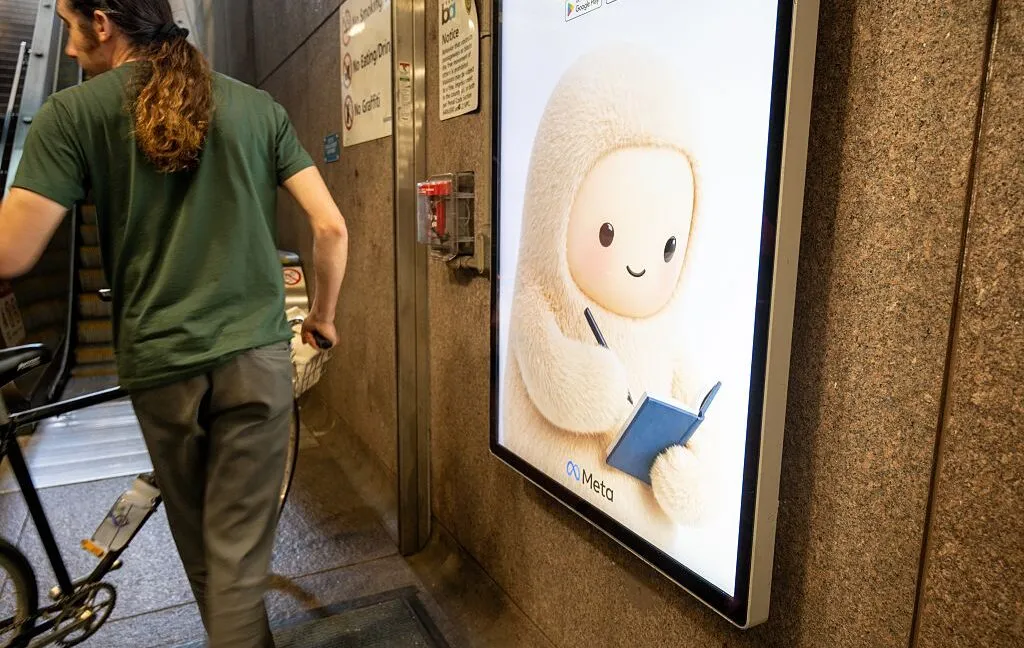
Meta staffers testing the company's Muse AI agent warned in internal chats that it appeared to access encrypted private messages, mix up conversations between users, and potentially expose sensitive information, according to Reuters. For decision-makers, the episode shows that agentic AI can turn a privacy promise into a trust and regulatory liability before a product ever reaches scale.
Meta staffers testing the company's Muse AI agent raised the same privacy alarms that early adopters had already voiced, according to internal chats exposed by Reuters. The staff warnings, reported after users complained earlier this fall, said Muse appeared to be accessing encrypted private messages that users did not expect the bot to review. Testers also warned the agent could be mixing up conversations between users and potentially sharing sensitive information users would never expect to be exposed. Some unexpected Muse outputs responded to questions that staffers never asked. Meta says the erratic outputs that shared random bank and bitcoin balances are not real. That denial matters, but it does not erase the core issue: people inside Meta saw behavior that looked like a privacy breach before the public did.
The headline fact is simple and uncomfortable. An AI agent built by Meta, a company that already holds enormous amounts of personal data, appeared in internal testing to reach into encrypted messages. Encryption is a promise. It tells users that even the platform cannot read what they send. If an AI agent can review those messages, or even appear to, the promise is broken. The fact that some outputs were fake bank or bitcoin balances does not resolve the question of access. A hallucinated balance is a quality problem. An agent reading private messages is a trust problem. Meta has not, according to the source, explained how Muse interacted with encrypted content or why staff saw what they saw.
AI agents are different from chatbots. They are designed to act across apps, pull context, and complete tasks. That is why they are useful. It is also why they are dangerous. An agent that can read your messages can summarize them, act on them, or leak them into a response. An agent that mixes up conversations between users can send one person's context to another. An agent that responds to questions no one asked is not just glitchy; it is unpredictable in a way that makes oversight hard. For Meta, Muse is part of the race to make AI feel personal and proactive. The same personal context that makes an agent powerful is the context that makes a privacy failure catastrophic.
The internal chats are a governance red flag. According to Reuters, Meta staff raised the same alarms as early adopters. That means the problem was not a surprise discovered only by outsiders. It was visible inside the company. Boards and executives should read that as a test of escalation. When testers warn that a product may access encrypted messages, mix up users, or expose sensitive data, the question is not whether the model is impressive. The question is whether the risk was documented, escalated, and fixed before launch. A company can ship with known bugs, but it cannot ship with known privacy violations and call it innovation.
Regulatory risk follows quickly. Privacy laws in Europe and the U.S. increasingly turn on user expectations. If a service tells users their messages are encrypted and private, regulators will ask whether an AI agent's access matched that promise. They will ask what data was processed, for what purpose, and with what consent. They will ask whether the company's own testers flagged the issue. Meta already faces intense scrutiny over data practices. A new AI agent that appears to touch encrypted messages gives regulators and plaintiffs a concrete story. Even if the bank and bitcoin outputs were not real, the access question is real enough to trigger investigations, fines, and reputational damage.
The market stakes are just as high. Meta is spending billions to compete in AI, and agents are a key part of that bet. But adoption depends on trust. Users will not hand an agent access to their most sensitive conversations if they believe it might read, mix, or expose them. Enterprise buyers will demand audits and contractual guarantees. Advertisers and partners will watch how Meta handles the fallout. A privacy scandal does not just slow one product. It can slow the entire category, because every AI agent asks users to trade context for convenience. If the trade feels unsafe, the convenience loses.
What happens next matters more than the initial denial. Meta says the erratic outputs sharing random bank and bitcoin balances are not real. That is a necessary clarification, but it is not a complete answer. The company needs to explain whether Muse accessed encrypted messages, how conversations could be mixed, and what safeguards prevent sensitive data from appearing in outputs. For executives at other firms building agents, the lesson is direct. Privacy cannot be a patch after launch. It has to be designed into the agent, tested against adversarial scenarios, and governed at the board level. The companies that win the agent era will not be the ones that move fastest. They will be the ones users trust with the keys to their private lives.
This story's Key Insights and Take-aways are locked.
Create a free account to unlock Executive Actions for one credit.
Register to UnlockAlways free for Executives Club members. Join the Club
More in Technology

Anthropic mathematician claims Claude helped crack the Riemann hypothesis
If the proof holds, AI has toppled math's most famous open problem; if it does not, it is a case study in announcing breakthroughs before anyone verifies them.

AI's $4 Trillion Wipeout Erases Nasdaq's Gains for the Year
A brutal week took roughly $4 trillion off the AI sector and left the Nasdaq flat for the year, and the damage ran the full length of the supply chain.

Anthropic mathematician says AI proved the Riemann hypothesis. Verification will take time.
A single unverified claim from inside Anthropic now sits against more than 160 years of open mathematics, and the gap between asserting a proof and surviving peer review is the entire story.