
Microsoft outage takes down NHS, schools and police, but spares airports
The government is still counting the damage, and the split between who went dark and who stayed up is the real story.
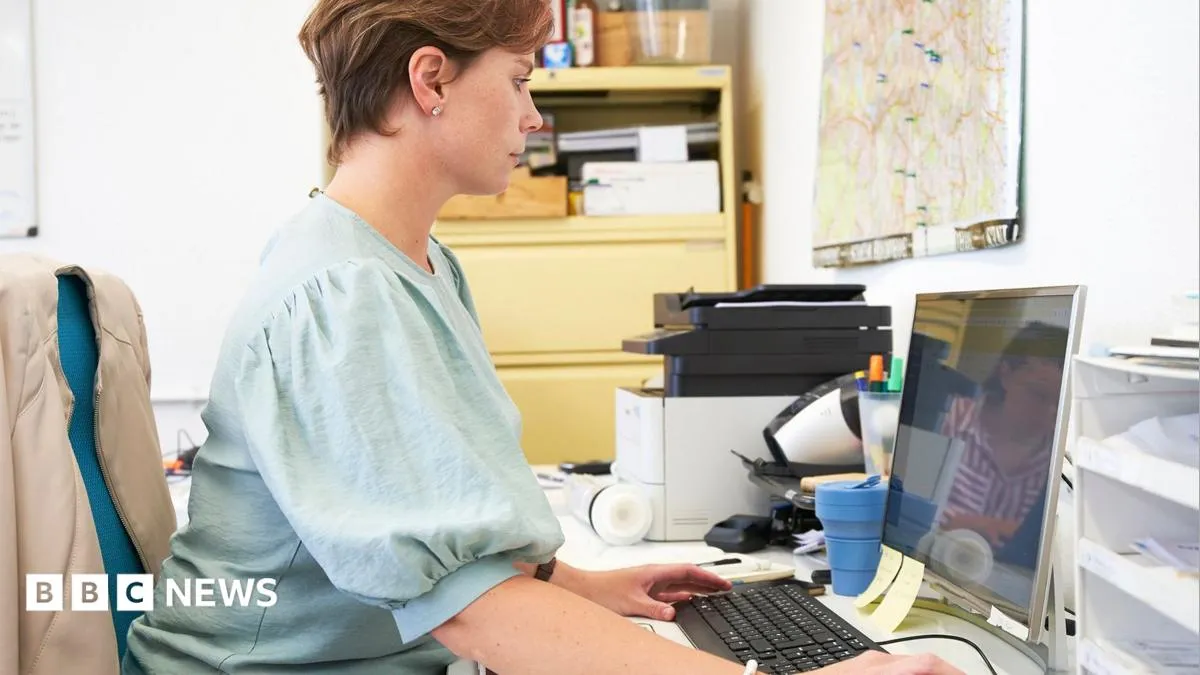
Microsoft suffered an outage that hit NHS services, schools and police forces, while major airports and intelligence services were unaffected, and the government is still assessing the impact. For decision-makers, the incident is a live test of how much operational risk sits inside a single vendor relationship.
Microsoft went down, and chunks of the British state went with it. NHS services, schools and police forces were hit by a Microsoft outage, while major airports and the country's intelligence services were not affected, and the government is still assessing the impact. That last clause is the one to sit with: nobody has yet put a number on how many hospitals, classrooms or police systems lost access, or for how long they were degraded.
The split is the story. In a country where the public sector runs on a handful of technology vendors, the fact that airports and intelligence services kept working while the NHS, schools and police did not says something about how unevenly resilience is distributed across government. The source does not say what caused the outage, which Microsoft products were involved, or how long services were down. What it does say is that the blast radius was wide enough to reach three separate parts of daily life at once, and narrow enough to miss two others. That contrast is not a detail. It is the whole question.
For context, Microsoft is not one product. It is a stack: Windows on the desktop, Microsoft 365 for email and documents, Teams for calls, identity systems for logging people in, and cloud infrastructure running underneath all of it. Public sector organisations have spent two decades consolidating onto that stack because it is cheaper and simpler than running many systems side by side. The trade-off is concentration risk. When one layer fails, everything that depends on it fails at the same moment. That is the mechanism that turns a vendor incident into a national one, and it is why a single company's bad day can show up as a cancelled appointment, a delayed case file or a police officer locked out of a system.
This is not hypothetical. In July 2024, a faulty software update from cybersecurity firm CrowdStrike crashed Windows machines worldwide, grounding flights, delaying surgeries and knocking banks offline. Microsoft itself has had repeated cloud outages over the years, including incidents that took down email, collaboration and cloud services for hours at a time. Those events pushed boards and regulators to start treating third-party technology failure as an operational risk rather than an IT problem. The cause of this outage has not been disclosed in the source, so it is too early to say whether it belongs in that category. But the shape of the event, a single vendor, multiple critical services, an ongoing assessment, is familiar.
The phrase 'still assessing the impact' is doing real work. It means the incident is not closed, affected organisations are still counting, and any official account of severity is provisional. In the UK, response to incidents affecting critical services typically runs through national cyber and resilience authorities working alongside the affected departments, and the first job is always the same: establish what is down, what is degraded, and what is still running on a backup. Until that picture is complete, no one can say whether this was an inconvenience or something closer to a systems failure. The absence of a number is itself information.
The second-order effects are where this gets expensive. Public sector bodies that lost access will face backlogs: appointments to rebook, casework to catch up on, reports filed late. Staff hours spent on manual workarounds are real cost, even when they never appear on a budget line. Contracts will be re-read, particularly clauses covering service credits, uptime guarantees and exit plans. Insurers and auditors will ask what the contingency was and whether it had been tested. And procurement teams, already under pressure to consolidate spending, will have to weigh the savings from standardising on one vendor against the risk of doing exactly that. Expect that calculation to get harder, not easier.
For executives and boards outside government, the lesson is not 'avoid Microsoft'. It is that dependency mapping is now a board-level exercise, not a job for the IT department alone. The questions worth asking are unglamorous: which of our critical processes stop if a single vendor goes dark, how long can we operate manually, and when did we last test that assumption? Most organisations discover the answer during the incident rather than before it. The ones that come out of events like this with their reputation intact are usually the ones that already knew, because someone had forced the question in a quiet meeting months earlier.
What happens next is a waiting game. The government's assessment will eventually produce a clearer picture of who was hit and how hard, and Microsoft will face questions about what failed and why. For now, the headline fact stands on its own: three pillars of daily British life, health, education and policing, were knocked offline by one company's outage, while the airports and the intelligence services kept flying and watching. That contrast is the part worth remembering, and the part every organisation dependent on a single platform should be asking about itself.
This story's Key Insights and Take-aways are locked.
Create a free account to unlock Executive Actions for one credit.
Register to UnlockAlways free for Executives Club members. Join the Club
More in Technology

Anthropic mathematician claims Claude helped crack the Riemann hypothesis
If the proof holds, AI has toppled math's most famous open problem; if it does not, it is a case study in announcing breakthroughs before anyone verifies them.

AI's $4 Trillion Wipeout Erases Nasdaq's Gains for the Year
A brutal week took roughly $4 trillion off the AI sector and left the Nasdaq flat for the year, and the damage ran the full length of the supply chain.

Anthropic mathematician says AI proved the Riemann hypothesis. Verification will take time.
A single unverified claim from inside Anthropic now sits against more than 160 years of open mathematics, and the gap between asserting a proof and surviving peer review is the entire story.