
Microsoft's Nadella: Lots of Critical Infrastructure Is 'Unpatchable'
The CEO downplayed Microsoft's Outlook outage and pointed at the harder problem: systems that cannot be fixed with a download, just as AI makes attacking them cheaper.
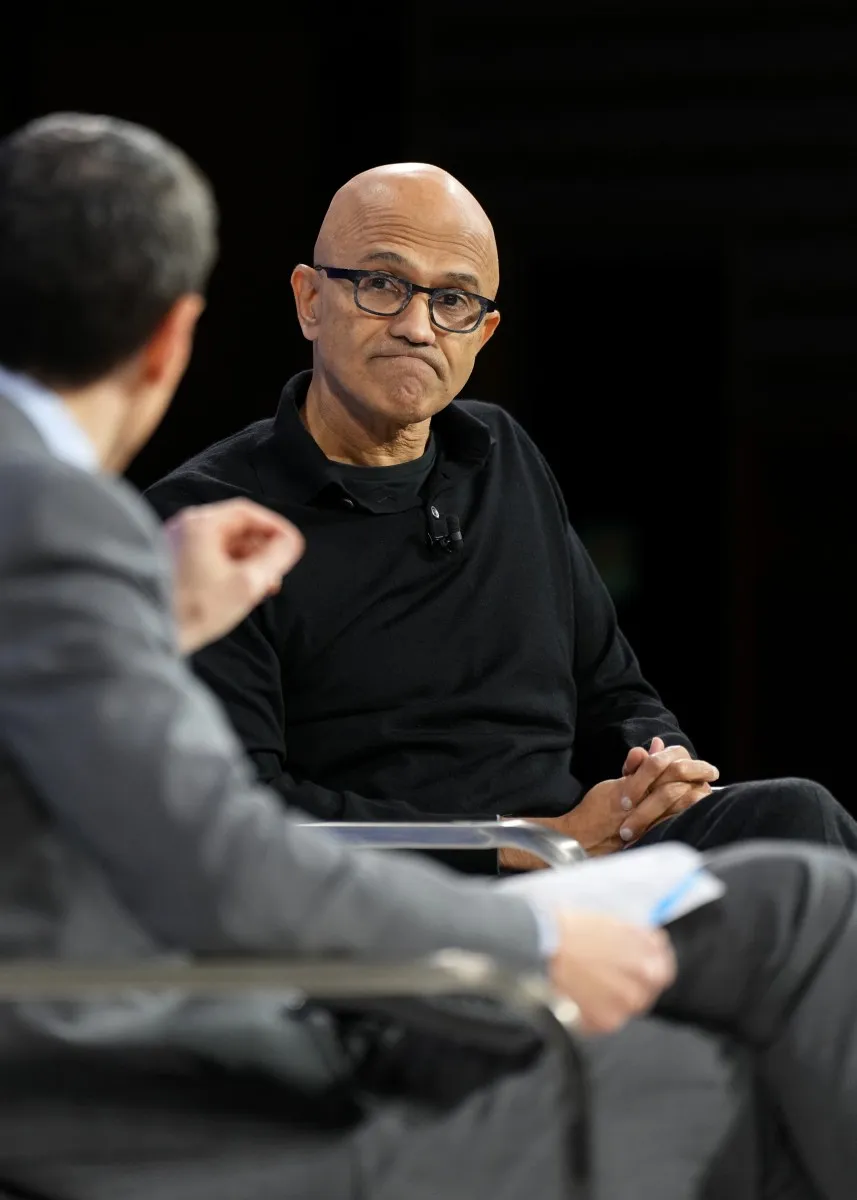
Microsoft CEO Satya Nadella said lots of the world's critical infrastructure is 'unpatchable' and downplayed the company's recent Outlook outage, framing AI as both an opportunity and a new challenge for securing the connected world. For decision-makers, the takeaway is that cyber risk now sits in assets no patch will ever reach, shifting spend from remediation toward detection, segmentation, and disclosure readiness.
Satya Nadella, Microsoft's CEO, put a blunt label on a problem most boardrooms would rather not say out loud: lots of the world's critical infrastructure is 'unpatchable.' He said it amid rising fears about AI-driven cyberattacks, and he did it while downplaying Microsoft's own recent Outlook outage, treating that disruption as a headline rather than the headline. That is the tension worth sitting with. The CEO of one of the largest cloud and security vendors is telling you the noisy failure you noticed is not the scary one. The scary ones are the systems nobody can fix with a download.
Nadella's fuller point was that AI is delivering both opportunity and new challenges for securing much of the connected world. Read that as two sides of the same coin. The same models that help defenders scan networks, triage alerts, and spot anomalies also collapse the cost of finding and exploiting weaknesses for attackers. And the target set is not evenly distributed. In practice, 'unpatchable' usually describes operational technology: the industrial controllers, embedded systems, sensors, and long-lived machines that run power, water, transport, manufacturing, and hospitals. These are not laptops. They are assets with decade-long service lives, proprietary firmware, and, often, vendors that no longer exist.
Why can't you just patch them? Because patching is a business decision, not a technical one. Taking a production line, a substation, or a scanning machine offline to install a fix means lost output, missed service levels, and, in some regulated environments, recertification and safety review. Historically, many operators decided the downtime risk outweighed the vulnerability risk, and the industry's answer became compensating controls: segment the network, monitor the traffic, restrict who and what can talk to the machine, and assume the device itself will never be clean.
That is why the historical record is worth remembering. The 2021 ransomware attack on Colonial Pipeline did not require attackers to commandeer a pipeline control system; it forced a shutdown because the business side of the company got hit. Attacks on food processing and other industrial operators have followed similar logic: go after the connective tissue, the IT networks, the vendors, the credentials, and let the operational side absorb the consequences. The lesson operators have drawn, and the one Nadella's word choice reinforces, is that the perimeter is not a wall around a plant. It is everything that touches it.
Regulators have spent the past few years pushing in the same direction. In the US, the SEC's rules require public companies to disclose material cyber incidents and describe how the board oversees cyber risk. The EU's NIS2 directive widened obligations across critical sectors. National agencies such as CISA coordinate with operators on resilience. None of that makes a 20-year-old controller patchable. What it does is move cyber from a CIO line item to an audit committee agenda, with disclosure clocks, board minutes, and personal reputational exposure attached.
For Microsoft, the framing cuts both ways. The company is one of the largest cloud providers and sells a sprawling security portfolio, so when its CEO says a big chunk of the world cannot be patched, he is describing a public risk and a commercial opening at the same time. That is not cynicism; it is the structure of the market. If you cannot fix the device, you buy detection, segmentation, identity controls, and monitoring around it. The vendor that supplies the cloud, the operating system, and the security stack has an obvious seat at that table.
AI then changes the tempo of the whole thing. Attackers get faster reconnaissance, better phishing, and automated attempts at scale. Defenders get faster triage, pattern recognition across enormous log volumes, and the ability to spot the weird thing in a sea of normal. The asymmetry never disappears, though. An attacker needs one gap; a defender has to cover every asset, including the ones with no patch path and no vendor left to call. That is why 'unpatchable' is such an effective word. It admits the fight cannot be won by upgrading.
The strategic stakes for peers are concrete. If you run anything physical, assume your asset inventory is incomplete, because most organizations discover unpatchable devices during an incident rather than before one. Boards should be asking where the compensating controls are, how long the company could survive with a plant dark, and whether cyber risk is priced into insurance, contracts, and M&A diligence. And every CEO should be ready for the test Nadella just faced: when a visible outage lands, can you explain why the invisible risk is the one that actually matters?
This story's Key Insights and Take-aways are locked.
Create a free account to unlock Executive Actions for one credit.
Register to UnlockAlways free for Executives Club members. Join the Club
More in Technology

Anthropic mathematician claims Claude helped crack the Riemann hypothesis
If the proof holds, AI has toppled math's most famous open problem; if it does not, it is a case study in announcing breakthroughs before anyone verifies them.

AI's $4 Trillion Wipeout Erases Nasdaq's Gains for the Year
A brutal week took roughly $4 trillion off the AI sector and left the Nasdaq flat for the year, and the damage ran the full length of the supply chain.

Anthropic mathematician says AI proved the Riemann hypothesis. Verification will take time.
A single unverified claim from inside Anthropic now sits against more than 160 years of open mathematics, and the gap between asserting a proof and surviving peer review is the entire story.