
Microsoft undercuts OpenAI: MAI Code 2 claims 98% of GPT-6.1 Sol at 40% price
The in-house coding model, launched at Ignite in San Francisco, puts a price war at the center of Microsoft's AI stack and forces every enterprise buyer to redo the build-versus-buy math.
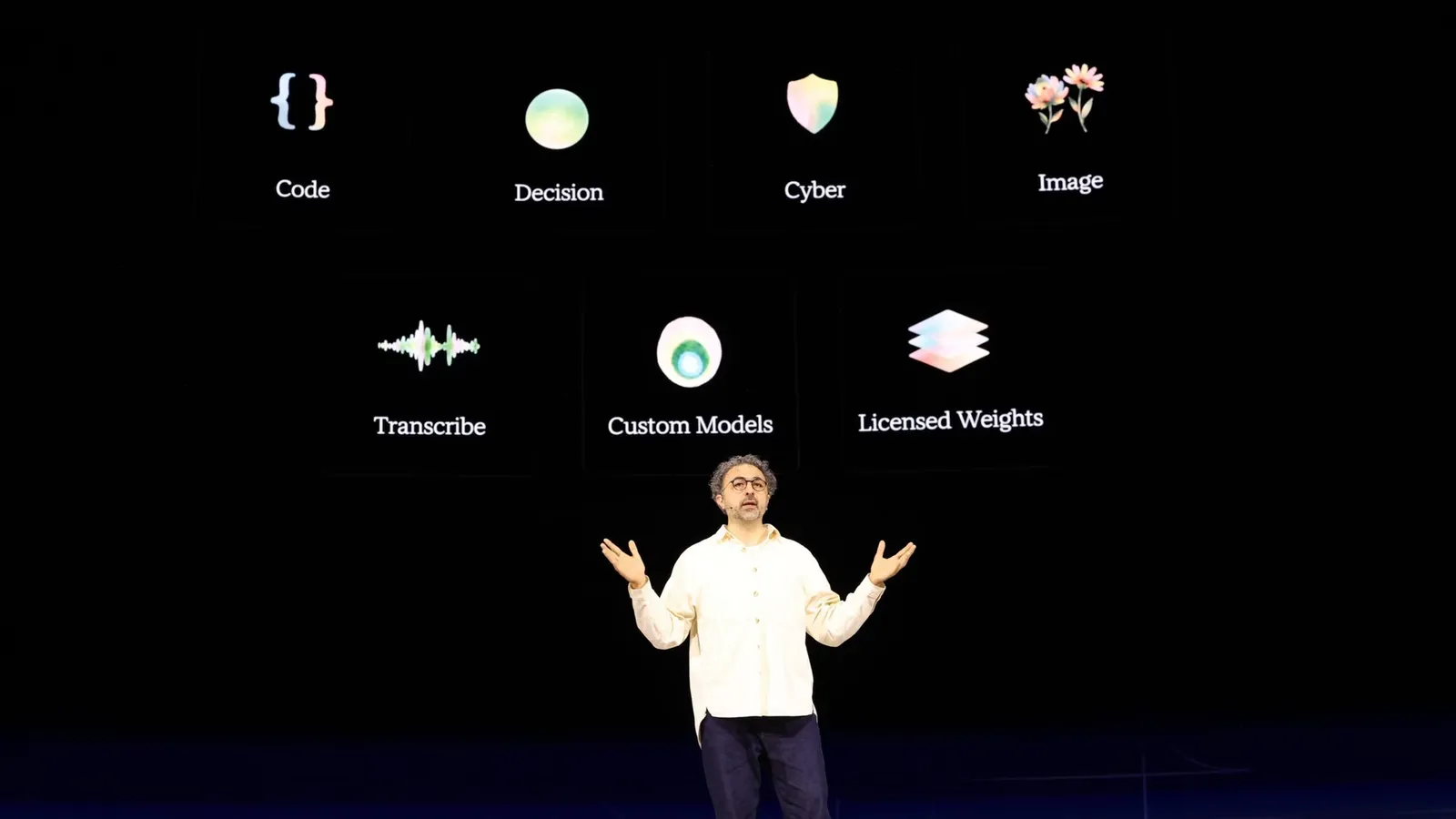
Microsoft released MAI Code 2, an in-house coding model it says delivers 98% of OpenAI's GPT-6.1 Sol performance at 40% of the price, unveiled at its Ignite conference in San Francisco on Tuesday alongside new security and image editing models. For enterprise buyers, the claim resets the economics of coding agents and turns model selection into a procurement fight over cost per completed task rather than raw capability.
Microsoft has a new coding model, and this time it built the thing itself. MAI Code 2 was unveiled at the company's Ignite conference in San Francisco on Tuesday, and Microsoft says it delivers 98% of the performance of OpenAI's GPT-6.1 Sol at 40% of the price. That is the whole pitch in a single line: near-parity on capability, less than half the cost, shipped by the company that has spent years writing some of the largest checks in the AI industry. New models for security and image editing launched alongside it.
The comparison is the story. Microsoft has historically been OpenAI's most important commercial partner and one of its largest backers, which makes a Microsoft-built model benchmarked against an OpenAI flagship an unusual thing to put on a keynote slide. The release also positions MAI Code 2 against Anthropic's Claude Opus, putting the in-house model in the same conversation as two of the most closely watched frontier labs in enterprise software. For anyone buying AI tooling, the message is blunt: the model layer is now a price war, and Microsoft is willing to fight it with its own supply rather than resell someone else's.
Forty percent of the price is not a rounding error. Coding assistants are among the most token-hungry workloads enterprises run, because agents read files, write patches, run tests and iterate in loops that can consume enormous volumes of tokens per task. Historically, inference has been one of the largest recurring line items in an AI budget, and it scales with usage rather than with headcount. Cut the unit cost by 60% and the math on every coding agent pilot changes: projects that failed a margin test at full price can clear it at 40%, and teams that rationed usage start to loosen the throttle. That is how a pricing claim turns into a deployment decision.
MAI Code 2 did not arrive alone. Microsoft launched new models for security and image editing alongside it at Ignite, a bundle that may matter more than any single benchmark. Enterprises rarely buy a model in isolation; they buy a stack, and the buyer is usually already inside Microsoft's productivity, cloud and identity estate. Bundling a cheaper coding model into that estate gives procurement one vendor to negotiate with and gives Microsoft one more reason for workloads to stay on its platform. The strategic logic is familiar from cloud: win the workload, then let the surrounding services compound.
The 98% figure deserves a caveat that Microsoft's own framing invites. The number is the company's claim, and the source material does not spell out which coding tasks, languages or evaluation sets produced it. Vendor benchmarks are typically run on the vendor's chosen tests, and performance in coding can mean anything from single-function completion to multi-file refactors that survive a real test suite. The honest read for a buyer is that 98% is a credible opening bid, not a settled fact. The only benchmark that counts is the one run on your own repositories, with your own review standards, measured in cost per merged pull request.
The second-order effects land hardest on the labs. OpenAI's commercial relationship with Microsoft has been one of the defining partnerships of the AI boom, and a Microsoft-built coding model that undercuts OpenAI's flagship on price changes the tone of that relationship, even if the two companies keep working together. Anthropic faces the same squeeze from a different direction: Claude Opus is now the reference point in a comparison where the challenger is cheaper. The broader pattern is commoditization at the model layer. When capability converges and price becomes the differentiator, margin migrates away from raw inference and toward distribution, proprietary data, workflow lock-in and the last mile of integration.
For engineering leaders, CFOs and boards, the practical consequence is that AI budgets need to be re-underwritten, not just trimmed. Contracts signed six months ago at frontier prices may now be priced against a market that has moved. The questions worth asking this quarter: what is our true cost per completed task, not per token; how much of our coding workflow is portable across models; and what does our vendor concentration look like if the cheapest credible model comes from the same company that already runs our email, our cloud and our identity layer. Cheap models are a gift. Cheap models plus deep lock-in are a negotiation you only get to have once.
This story's Key Insights and Take-aways are locked.
Create a free account to unlock Executive Actions for one credit.
Register to UnlockAlways free for Executives Club members. Join the Club
More in Technology

Anthropic mathematician claims Claude helped crack the Riemann hypothesis
If the proof holds, AI has toppled math's most famous open problem; if it does not, it is a case study in announcing breakthroughs before anyone verifies them.

AI's $4 Trillion Wipeout Erases Nasdaq's Gains for the Year
A brutal week took roughly $4 trillion off the AI sector and left the Nasdaq flat for the year, and the damage ran the full length of the supply chain.

Anthropic mathematician says AI proved the Riemann hypothesis. Verification will take time.
A single unverified claim from inside Anthropic now sits against more than 160 years of open mathematics, and the gap between asserting a proof and surviving peer review is the entire story.