
Mike Johnson plans to bolt SAVE America Act onto NDAA after voter ID shutdown
The Speaker says he will use a procedural merge after conservatives stalled the House, reshaping how fast laws move.

Speaker Mike Johnson (R-La.) announced on Monday he plans to attach the Safeguard American Voter Eligibility (SAVE) America Act to the National Defense Authorization Act (NDAA). The move comes after hard-line conservatives ground House business to a halt over a voter ID bill.
Speaker Mike Johnson (R-La.) announced on Monday that he plans to use an unusual procedural maneuver to merge the Safeguard American Voter Eligibility (SAVE) America Act with the National Defense Authorization Act (NDAA). The timing matters: he is making the case now because conservatives, specifically hard-line members, have already ground the House to a halt over the voter ID bill.
This is the core play. Johnson is trying to take a piece of election-focused legislation, the SAVE America Act, and attach it to the must-pass defense package. In plain terms, he is betting that attaching controversial provisions to the NDAA can be harder to block than moving them through a normal, standalone legislative path. The reason this is a big deal is that the House’s internal rules and procedural sequencing can decide whether policy lives or dies, even before the final votes happen.
To understand why this “merge” strategy is worth watching, you have to know how election bills and defense bills differ in legislative gravity. The NDAA is typically treated as must-pass because it is tied to the annual authorization process for defense programs. That creates a deadline and a political incentive to avoid shutdown-level fights over the entire package. The SAVE America Act, by contrast, sits closer to the heart of election administration and eligibility rules, which is exactly where the House has been stuck. Johnson’s announcement is effectively an attempt to relocate that fight from one legislative lane to another where the parties believe they can get a result without the same level of procedural resistance.
But Johnson is not operating in a vacuum. Hard-line conservatives have already said they would oppose any procedural rules that attempt to move the fight along through a workaround. That means his announcement is not just about what he wants to pass. It is about whether the House coalition can tolerate the method as much as it tolerates the content. When lawmakers disagree on procedures, it can turn the legislative calendar into a pressure cooker. The House can stall, negotiations can stretch, and even widely supported provisions can get tangled in the politics of “how” rather than “what.”
There is also a tactical reason a maneuver like this tends to attract attention: attaching election-related provisions to a heavyweight bill can change how lawmakers think about risk. For some members, the NDAA is an anchor that they can stand on publicly. For others, attaching SAVE to the defense bill might look like using the must-pass status of the NDAA as cover for policy changes that they do not want moved in that fashion. That tension can produce a second-order effect: it can shift the fight from the floor to the committee stage, or to the procedural calendar, where power is exercised through scheduling and rule votes.
For executives and board-level leaders who do not follow parliamentary procedure day-to-day, the relevance is still real. Large, politically charged legislative packages often spill into regulatory and operational planning. Election administration rules can affect compliance obligations across jurisdictions. If the legislative process becomes more volatile, implementation timelines can shift, and uncertainty can increase for organizations that anticipate rulemaking, guidance, and enforcement. Even when a company is not directly in the policy lane, volatility in election-related frameworks can ripple into vendors, public-facing systems, and administrative workflows that depend on stable guidance.
The second-order market implication is that policy uncertainty can hit timing. Budgets and procurement cycles often assume that rules will move on a predictable calendar. When the House halts and procedural battles escalate, the “when” question becomes as important as the “whether.” That uncertainty can affect contracting decisions, compliance resourcing, and risk management for any organization that interacts with state and local election infrastructure.
In Washington terms, Johnson’s gambit is about momentum. In corporate terms, it is about execution risk under coalition stress. This is where peers should pay attention. The NDAA’s must-pass status can be leveraged, but it can also provoke a backlash if hard-line conservatives treat the maneuver as an unacceptable procedural shortcut. If Johnson’s approach succeeds, it demonstrates that procedural strategy can override a stalled agenda. If it fails, it signals that intra-party resistance can be strong enough to block even high-gravity vehicles like the NDAA, prolonging uncertainty.
Either outcome matters for decision-makers watching how legislation actually moves. Johnson has made his move public after conservatives grounded the House over a voter ID bill. Now everyone has to watch the next question: can the coalition accept the “merge with NDAA” method, or will procedural opposition keep the legislative logjam in place?
This story's Key Insights and Take-aways are locked.
Create a free account to unlock Executive Actions for one credit.
Register to UnlockAlways free for Executives Club members. Join the Club
More in Politics
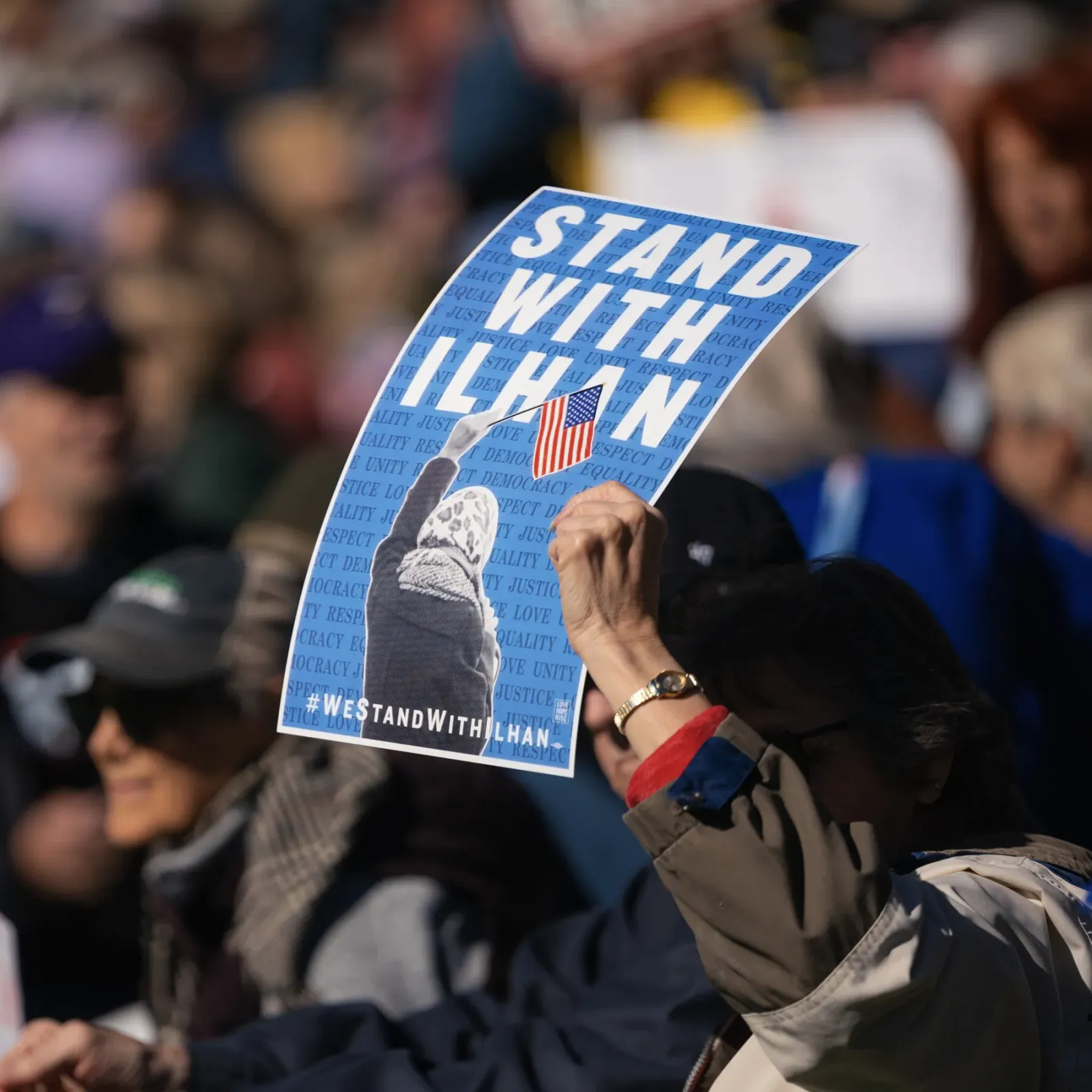
Obama Defends Ilhan Omar After Agents Search Her Home in Trump Inquiry
The former president's intervention raises the stakes in a federal probe into immigration paperwork that has put a prominent progressive lawmaker in the crosshairs.

Blair-era minister: cut welfare to fund youth job support
Alan Milburn's call for welfare cuts to fund employment support opens a Labour fight over benefits and the Neet crisis.
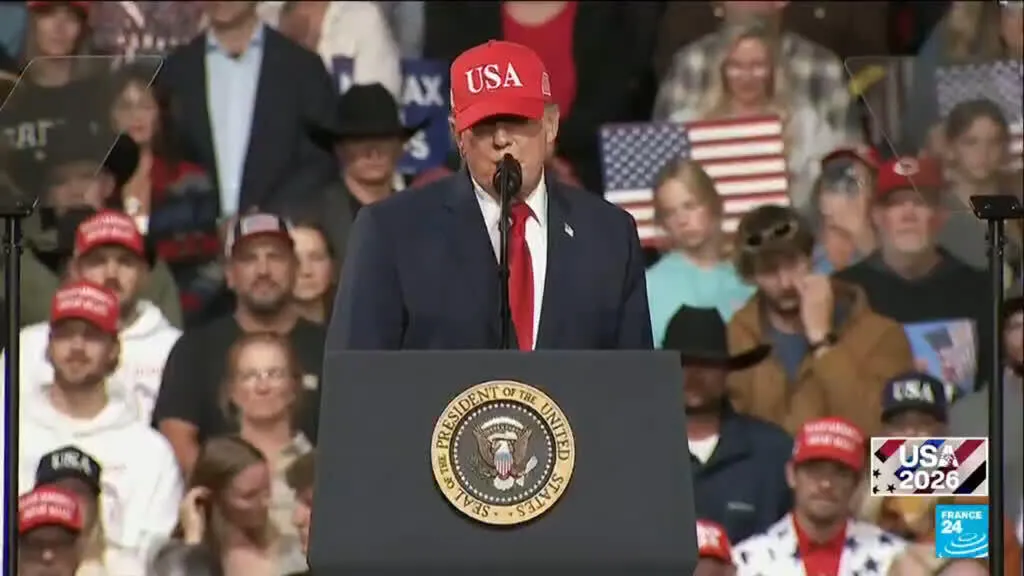
Hot September CPI: energy costs surge, voters feel the squeeze before midterms
The latest inflation print lands as Trump campaigns for GOP control of Congress, putting cost-of-living worries at the center of the midterm fight.