
MiniMax founder Yan Junjie drops off billionaire list after $11.6B loss
A $55 billion market-value collapse at the Chinese AI developer shows how fast investors reprice an arms-race laggard, and why the founder's $11.6 billion hit is the same signal twice.
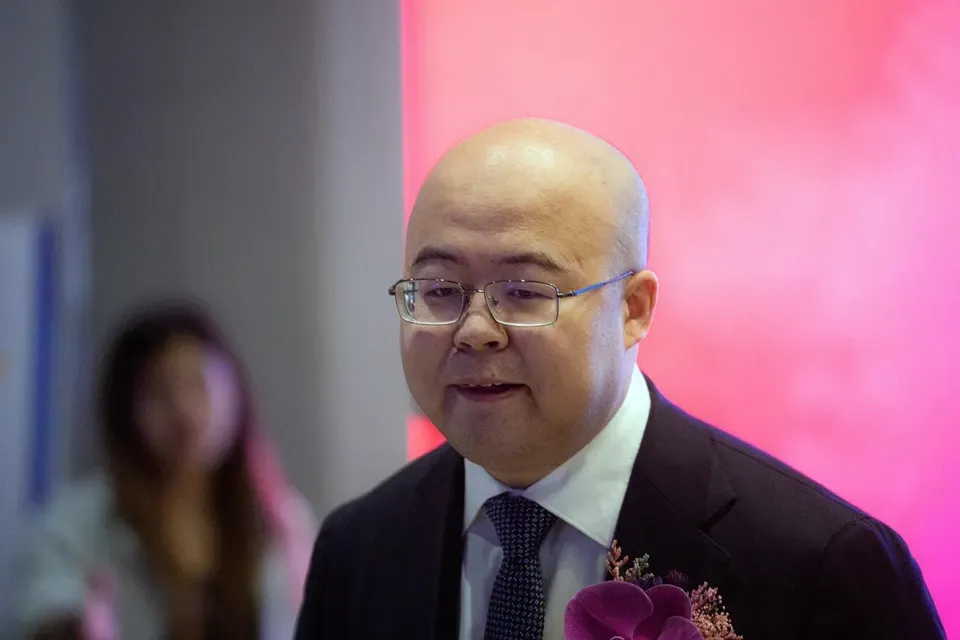
Yan Junjie, founder of the Chinese AI model developer MiniMax, has lost $11.6 billion and fallen out of the billionaire ranks after the company shed $55 billion in market value, with analysts saying it is falling behind in China's red-hot AI arms race. The wipeout shows how quickly investors re-underwrite frontier-AI leadership claims, and why concentrated founder stakes and researcher retention become the real exposure for peers.
Yan Junjie is no longer a billionaire. The founder of MiniMax, the Chinese AI model developer, has lost $11.6 billion, according to Forbes, after the company shed $55 billion in market value. The two figures describe the same wreck from different seats: the corporate decline came first, and the personal one is the founder's share of it surfacing on a global wealth ranking. Falling off that list is a scoreboard change, not an operating event, but it is the cleanest marker yet of how hard the market has repriced China's AI trade at the top end. Read the arithmetic closely. An $11.6 billion personal hit against a $55 billion corporate decline implies founder ownership in the neighborhood of a fifth of the business, which is roughly what you would expect from a founder-led company that has reached the public market. That ratio is also the whole lesson: founders do not diversify, so when the narrative sours, their net worth becomes the story.
Analysts blame positioning. MiniMax, in their read, is falling behind in China's red-hot AI arms race, and that phrase deserves unpacking. In frontier AI, lagging is not a communications problem, it is a product problem. Buyers of models choose on capability first and cost second, and both are set by how much compute and engineering talent a lab can throw at its next training run. A model that trails on benchmarks loses the developers who build on top of it, and losing developers means losing the feedback loop that makes the next model better. Momentum in this industry compounds in both directions. That is why a competitive gap tends to show up in a valuation almost immediately rather than gradually.
Why so fast? Because AI valuations rest on a leadership assumption, not on current cash flow. Investors in model developers are underwriting a future in which the front-runner captures outsized economics while everyone else competes on price. When evidence arrives that a company is not that front-runner, there is no floor of earnings to catch the stock. There is only a discount rate and a story, and the story just changed. A $55 billion decline is the market saying it has re-underwritten the company, not trimming its forecast at the edges.
Context matters here, because China's AI market is unusually unforgiving. Competition typically runs on two fronts at once: well-funded labs attached to large internet platforms that can absorb losses and route demand through their own clouds, and open-weight models that give away capable technology and put downward pressure on pricing across the board. In that environment, a commercial model developer has to earn its premium every single quarter. There is very little room for a company to be merely good. Being good is the baseline; being behind the frontier is expensive.
The second-order damage is where boards should look hardest. The most valuable asset at an AI lab is not the weights, it is the researchers who produce the next set of weights. A collapsing share price makes retention harder, because equity stops working as compensation, and it makes recruiting harder, because the best candidates can pick their employer. It also raises the cost of everything the company needs next: compute contracts, data, and the patience of any investor being asked to fund a longer race. None of those pressures show up on day one. They show up over the following four to eight quarters, which is exactly the window in which the company needs to close the gap.
Founder wealth is the visible part of an invisible problem. A concentrated, illiquid stake in a single company is a high-beta bet on one team, one market, and one technology cycle, and it cuts both ways. The same structure that creates billionaires on the way up removes them on the way down. For Yan Junjie, the personal outcome is a ranking change. For MiniMax, the question is whether a lag in the arms race is a temporary gap or a structural verdict, and those are very different futures with very different funding implications.
The strategic read for anyone running a capital-intensive technology business is blunt. In winner-take-most markets, valuation is a claim about rank, and rank can be revised faster than any operating plan can be fixed. That argues for watching leading indicators, model quality, developer adoption, retention of senior talent, and pricing power, before the market does the watching for you. MiniMax's $55 billion repricing and its founder's $11.6 billion hit are the same signal delivered twice: in a race this fast, the penalty for falling behind arrives long before the explanation does.
This story's Key Insights and Take-aways are locked.
Create a free account to unlock Executive Actions for one credit.
Register to UnlockAlways free for Executives Club members. Join the Club
More in Business

S&P 500 Enters Correction, Down 10% From Its High on AI Worries
The index's slide past the 10 percent line is a symbolic verdict on investor mood, and the AI trade that powered the rally is now the thing testing it.

Dow and S&P 500 enter correction as Nasdaq logs worst week since 2020
All 11 S&P 500 sectors fell more than 1% in the same week for the first time since April 2025, a breadth signal that matters more than any single index level.

Chip stocks lose $2.3 trillion in a week, worst run in 25 years
A $2.3 trillion weekly wipeout in semiconductors is forcing every board with an AI story to ask whether it owns a thesis or just a crowded trade.