
Musk calls GOP spending 'pretty foolish'; Trump shrugs: 'He's a friend'
A donor who spent hundreds of millions backing Republicans says he is not MAGA and regrets the money, and Trump's refusal to fight back tells funders more than a feud would.
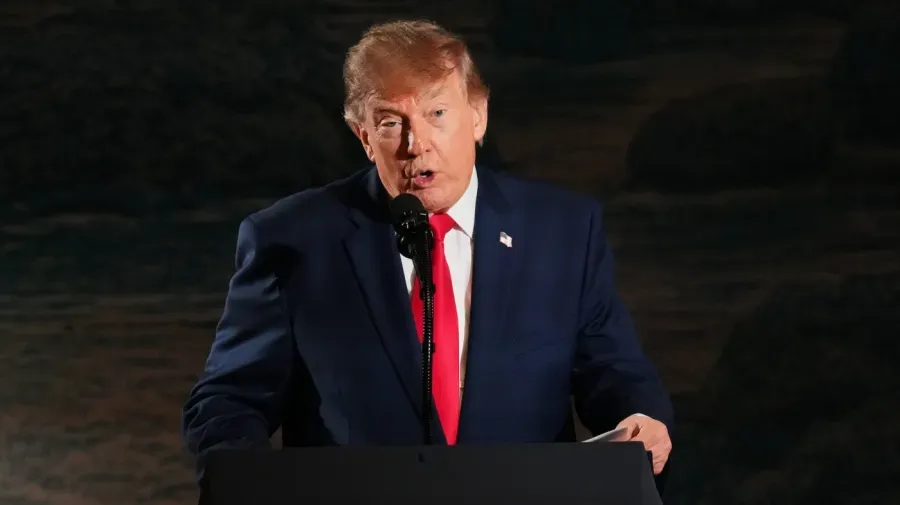
Elon Musk says he is not part of Trump's MAGA movement and feels 'pretty foolish' about the hundreds of millions he spent backing Republicans in the midterms, and President Trump brushed it off by calling him 'a friend of mine' to NBC News. The non-feud matters because it keeps the largest checkbooks in politics inside the tent while lowering the social cost for other mega-donors to sit out the next midterm cycle.
Elon Musk says he is not part of President Trump's MAGA movement, and that the hundreds of millions of dollars he spent backing Republicans in the midterms left him feeling "pretty foolish." Trump's response, delivered to NBC News in a phone call, was about as soft as a response gets: "He's a friend of mine." No counterpunch. No correction of the record. No threat to the money. Just a shrug from a president whose public reputation is built on hitting back, aimed at one of the largest political donors in the country.
That is the entire exchange, and it is worth sitting with. A donor at Musk's scale publicly distancing himself from the movement he bankrolled, and calling his own spending foolish, is normally the kind of thing that triggers a public break, a round of recriminations, and a scramble among other donors to pick a side. Trump, according to NBC News, declined to take the bait. For anyone who writes checks into politics, or who runs a company that depends on Washington not noticing them, the non-feud is the signal.
Start with the money. Musk described spending in the hundreds of millions of dollars backing Republicans in the midterms. That is not a rounding error in any party's budget. It is the kind of sum that funds field operations, television buys, and turnout machines across dozens of races at once. When a single donor operates at that altitude, they stop being a supporter and start being infrastructure. Musk now says he does not consider himself part of MAGA at all, which reframes the relationship from alliance to transaction, and a regretted one at that.
Trump's "he's a friend of mine" line does two things at once. It refuses to elevate the split into a referendum on the movement's direction, and it keeps a very large checkbook inside the tent. Historically, political operations have handled defections from mega-donors in one of two ways: punish them publicly, or absorb the criticism and keep the relationship warm. Trump chose the second. For a president who built a public reputation on hitting back, the restraint is the story.
For context on why this travels beyond two personalities: modern American campaigns are financed by a relatively small number of very large donors, and the midterms are where that money gets deployed. A donor who publicly regrets a nine-figure commitment makes it easier for other large givers to sit out, or to demand more control over where their money goes. It also hands the opposing party a ready-made line: even the people who funded this say it was a mistake.
There is a corporate dimension too. Musk runs companies that sit at the intersection of federal contracts, regulation, and public opinion. Executives in that position typically try to keep political exposure low, because every public alignment invites scrutiny from the other party, from regulators, and from customers. Saying out loud that the money was foolish is one way to reset that exposure. It is also a bet that the relationship is durable enough to survive the comment.
The strategic read for boards and operators is that political capital now behaves like a balance-sheet item, and it can be marked down in public. A founder or CEO who becomes the face of a political coalition inherits that coalition's volatility. The historically safer posture has been to fund quietly, stay out of the branding, and preserve optionality on both sides of the aisle. Musk just demonstrated what the opposite looks like, and Trump just demonstrated that the cost of it may be lower than expected, at least for now.
What to watch from here: whether other large Republican donors follow Musk's public distancing, whether the warm tone from the White House holds, and whether any of this changes how the next round of midterm money gets allocated. The headline is a friendship. The underlying story is a donor class recalculating in real time, with the biggest checkbook in the room going first.
This story's Key Insights and Take-aways are locked.
Create a free account to unlock Executive Actions for one credit.
Register to UnlockAlways free for Executives Club members. Join the Club
More in Politics

Fifth Circuit Kills Pregnant Workers' Law Over Pandemic Proxy Votes
A procedural ruling, not a policy one, has blocked a federal pregnancy-accommodation law and put every pandemic-era statute in the crosshairs ahead of an expected Supreme Court appeal.

Measles kills a Virginia child under 5, the state's first death of 2026
Virginia's health department confirmed the death but withheld the child's vaccination status, leaving schools, clinics and employers to plan around the one detail that would explain the most.

Former Brazilian President Bolsonaro Hospitalized with Intestinal Obstruction
The health status of the former far-right leader raises immediate questions about political stability and the trajectory of Brazil's conservative movement.