
Musk's $43B chip loan comes with a rule: don't launch the collateral
Lenders backing SpaceX's $43 billion AI-chip debt package want the semiconductors kept within reach on Earth, a demand that collides head-on with Musk's orbital data center ambitions.
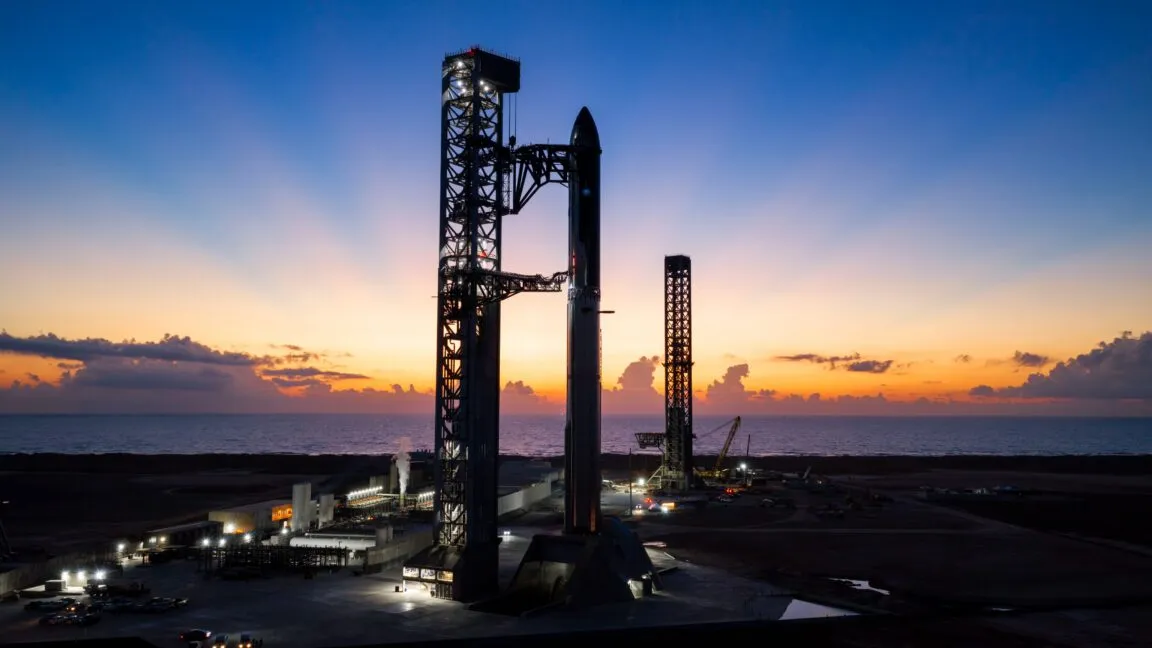
Lenders behind SpaceX's $43 billion debt package, which is secured by advanced AI chips, have tried to bar Elon Musk from launching that collateral into space as part of his plan for orbital data centers, according to people familiar with the matter. For decision-makers, the standoff exposes a new financing fault line: when a borrower's flagship vision can physically move the security out of a creditor's reach, loan terms, recovery assumptions, and the cost of capital for frontier infrastructure all shift.
The lenders behind SpaceX's $43 billion debt package have one request for Elon Musk: keep the collateral on Earth. The bonds are secured by the company's advanced AI chips, and the creditors backing the deal have tried to bar Musk from firing those same semiconductors into orbit as part of his plan for space-based data centers, according to people familiar with the matter, as reported by Ars Technica. That is not a metaphor. The chips are the security. If they leave the planet, the lenders lose their grip on the asset standing behind their money. SpaceX has said it plans to use the chips tied to this debt deal on Earth.
The friction becomes obvious once you line up the two plans. Musk, the world's richest man, has outlined ambitions to power AI models with data centers cooled by the vacuum of space, a pitch that would require packing satellites full of advanced chips. That is a long-horizon bet on compute moving off-planet. The debt deal, by contrast, is a nearer-term financing backed by hardware that lenders expect to seize and sell if SpaceX defaults. Both can be true at once, and that is precisely the problem. The vision points up. The loan documents point down.
Secured lending works because the lender can reach the asset. In a default, a secured creditor typically moves to take possession of the collateral and sell it to recover what it is owed. The whole structure depends on that chain: locate the asset, take control, liquidate. A chip sitting in a rack on Earth is hard enough to repossess. A chip in low Earth orbit is effectively unreachable. There is no repo man for satellites. Even if a lender could identify which chips were its collateral, the cost and mechanics of retrieving them, or of selling them where they sit, would change the math entirely. Historically, lenders price that kind of uncertainty into covenants, rates, or both.
That is why loan agreements for asset-backed deals commonly include covenants governing where collateral can live and how it can move. Borrowers typically negotiate room to operate, while lenders push for notice requirements, location limits, and restrictions on sale or transfer. The SpaceX package appears to have produced a sharper version of that fight: not where the chips sit on a map, but which planet they sit on. The lenders' concern, per people familiar with the matter, is specific and practical. If the group later decided to shoot the chips into space, creditors could be left unable to reclaim and sell the semiconductors in the event of a default.
The reason Musk wants chips up there is the reason data centers are so expensive down here. Cooling and power are historically among the largest cost and constraint lines for AI infrastructure, and terrestrial sites increasingly compete for electricity, land, and water. The vacuum of space offers a different physics: no air to cool, abundant sunlight, and radiative cooling as a design premise. Whether that math closes is a separate question. What matters for this debt deal is that the destination and the collateral are the same object. Every chip launched is a chip the lenders cannot touch.
This is a governance problem dressed as a logistics problem. Creditors are being asked to underwrite a borrower whose flagship vision could, in principle, move the security out of legal and physical reach. That is a novel twist on an old tension between founders with grand plans and lenders who want a floor under their downside. It also hints at what financing orbital compute may require if the assets really do leave the ground: structures that account for assets a creditor cannot practically recover, whether through different collateral, different pricing, or protections that do not depend on repossession.
For executives and boards, the lesson generalizes well beyond rockets. Any hardware-heavy borrower pledging physical assets should expect lenders to ask where those assets sit, whether they can move, and who controls the decision to move them. The answer shapes recovery values, and recovery values shape pricing. SpaceX's position is that the chips in this deal stay on Earth, which resolves the immediate tension on paper. But the broader plan to put data centers in orbit remains alive, and that keeps the underlying question open for everyone financing frontier infrastructure.
Watch three things. First, whether a launch restriction ends up in the final loan documents or stays an informal understanding. Second, whether SpaceX keeps chip deployment tied to this debt firmly terrestrial. Third, whether other orbital compute ventures hit the same wall when they seek credit. The pattern to note is simple: when collateral can leave the planet, the terms of the loan change, because a lender's ultimate leverage is the ability to take the asset back.
This story's Key Insights and Take-aways are locked.
Create a free account to unlock Executive Actions for one credit.
Register to UnlockAlways free for Executives Club members. Join the Club
More in Technology

Anthropic mathematician claims Claude helped crack the Riemann hypothesis
If the proof holds, AI has toppled math's most famous open problem; if it does not, it is a case study in announcing breakthroughs before anyone verifies them.

AI's $4 Trillion Wipeout Erases Nasdaq's Gains for the Year
A brutal week took roughly $4 trillion off the AI sector and left the Nasdaq flat for the year, and the damage ran the full length of the supply chain.

Anthropic mathematician says AI proved the Riemann hypothesis. Verification will take time.
A single unverified claim from inside Anthropic now sits against more than 160 years of open mathematics, and the gap between asserting a proof and surviving peer review is the entire story.