
Musk Vows More Shanghai Output as Tesla China Sales Hit Four-Year Low
The CEO's Thursday pledge to ramp production answers the question that has hung over Tesla's biggest overseas plant: stay and fight in China, or quietly pull back. Here is what that bet actually costs.
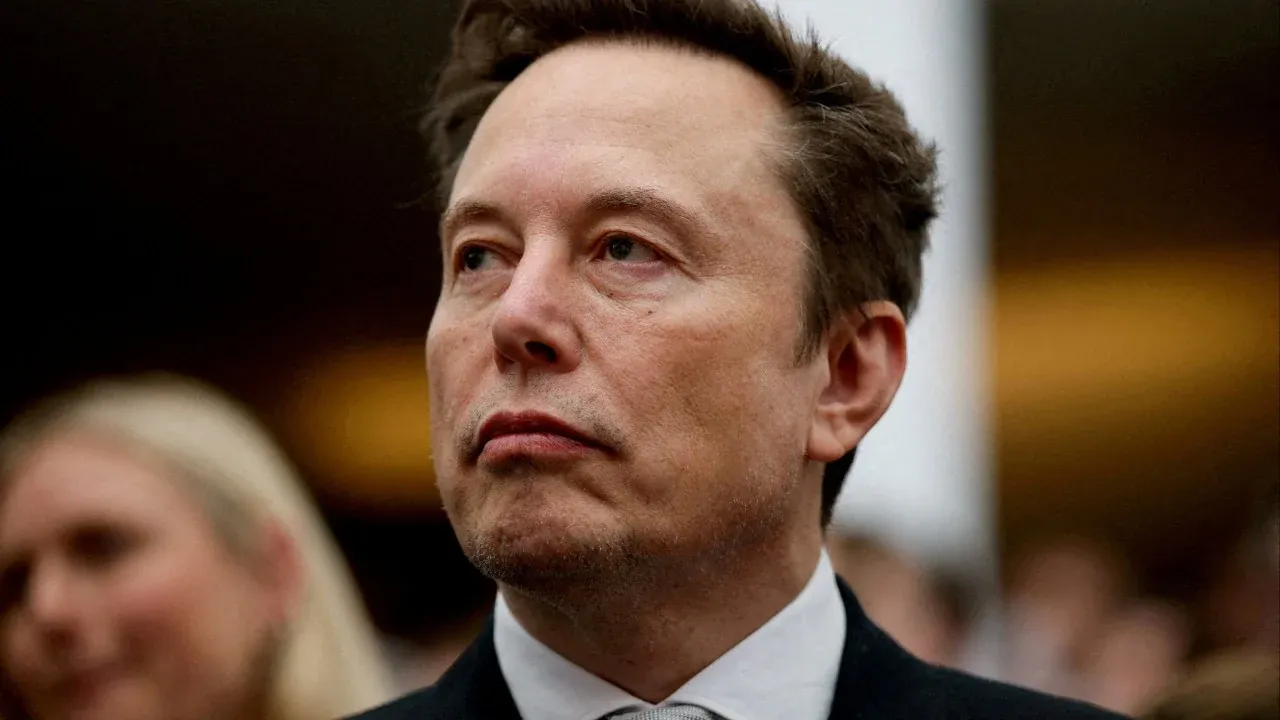
Tesla CEO Elon Musk pledged to raise output at the company's Shanghai Gigafactory even as Tesla's sales in mainland China fell to a four-year low amid an economic slowdown. Analysts say the upbeat signal could calm fears about Tesla's Shanghai future after speculation that the company might scale back production if Chinese sales kept declining.
Elon Musk has promised more cars, not fewer. The Tesla CEO said on Thursday that the company intends to ramp up production at its Shanghai Gigafactory, even as the carmaker's sales in mainland China slid to a four-year low, dragged down by an economic slowdown in the world's largest electric-vehicle market. That is the whole tension in one sentence: the demand curve is pointing down, and the CEO of the world's most watched EV maker is pointing the factory up. Analysts quoted on the decision said Musk's upbeat statement could help quell fears about Tesla's future in Shanghai, which had been building after speculation that the company might scale back production if its sales in China continued to decline. So the pledge lands as a stabilizer, not just a production target.
The reason that matters is that the alternative was on the table. Until Musk spoke, the read in the market was that a continued slide in Chinese sales could force Tesla to throttle back at the plant, cutting shifts, idling lines, or trimming the volume it ships out of Shanghai. That is the standard playbook when a key market softens: protect margin, let utilization dip, wait for demand to return. Musk chose the opposite. Promising to increase output is a statement about what Tesla believes about the next 12 to 24 months, not about this quarter, and it is the kind of statement suppliers, local partners, and rival automakers all price in immediately.
For context on why Shanghai carries such weight: it is Tesla's first manufacturing base outside the United States, the plant that turned the company from a niche American exporter into a genuinely global manufacturer. It also serves as an export hub, feeding vehicles into markets across Asia and Europe rather than serving China alone. That dual role is exactly what makes the output pledge strategic rather than merely optimistic. A factory built to serve two demand pools can keep running hot even when one of them cools, because volume can be redirected. It also gives Tesla a cost structure that domestic challengers and legacy automakers with smaller Chinese footprints struggle to match: scale, local sourcing, and a supply chain clustered around the plant.
The backdrop Musk is pushing against is a genuinely difficult one. China's economy has been slowing, and consumers there have turned more cautious about big-ticket purchases, cars very much included. On top of that, the country's EV sector has been locked in a prolonged price fight, with automakers trading margin for volume as dozens of brands compete for the same buyers. In a market like that, headline sales declines are common and rarely a verdict on a single company's product. But they are still a verdict on something: whoever cannot hold volume through the downturn is the one who gets squeezed out when demand returns. That is the lens through which to read Musk's comment. He is not arguing that Chinese demand is strong. He is signaling that Tesla intends to be standing, at full tilt, when it is again.
There is also a signaling layer that has nothing to do with cars. Tesla's Shanghai operation has been a marquee foreign investment in China, a plant that local authorities point to when they want to demonstrate that global manufacturers still bet on the country. A promise to raise output reinforces that story and keeps the relationship warm with the local supply base and workforce that Tesla depends on. A promise to cut production would do the reverse, and it would do it loudly. For a CEO who runs a company with manufacturing footprints on multiple continents, choosing which plant to feed is a geopolitical act as much as an operational one, and Musk just fed the one in China.
The second-order effects are where executives outside Tesla should be paying attention. First, suppliers tied to the Shanghai cluster now have a reason to plan for higher volumes, which affects everything from battery component orders to logistics contracts. Second, rival automakers with Chinese capacity have a new benchmark to answer to: if Tesla keeps pushing volume into a soft market, the price pressure they were already absorbing does not ease, it intensifies. Third, investors in Tesla's peers should expect the same question to be asked of every management team with China exposure, which is simply, are you defending share or protecting margin, and can you say why out loud?
For boards and operators in any capital-intensive business, the Tesla case is a clean study in how to talk about a bad number. Musk did not dispute the four-year low or spin the slowdown away. He paired the weak data point with a forward commitment, which is the only combination that buys credibility with analysts and suppliers at the same time. The risk is obvious and worth stating plainly: if Chinese sales keep falling and the extra output has nowhere to go, the pledge becomes a capacity problem rather than a confidence signal. The reward is equally clear. If demand stabilizes, Tesla will have held its scale, its cost base, and its position in the one market every automaker has to win. That is the trade Musk just made in public, and it is now the number to watch.
This story's Key Insights and Take-aways are locked.
Create a free account to unlock Executive Actions for one credit.
Register to UnlockAlways free for Executives Club members. Join the Club
More in Business

S&P 500 Enters Correction, Down 10% From Its High on AI Worries
The index's slide past the 10 percent line is a symbolic verdict on investor mood, and the AI trade that powered the rally is now the thing testing it.

Dow and S&P 500 enter correction as Nasdaq logs worst week since 2020
All 11 S&P 500 sectors fell more than 1% in the same week for the first time since April 2025, a breadth signal that matters more than any single index level.

Chip stocks lose $2.3 trillion in a week, worst run in 25 years
A $2.3 trillion weekly wipeout in semiconductors is forcing every board with an AI story to ask whether it owns a thesis or just a crowded trade.