
Nadella: Copilot Is 'the New Operating System for Work.' Office Now Lives Inside
Word, Excel and PowerPoint are now generally available inside Copilot, which turns Nadella's Ignite soundbite into a distribution play that every enterprise software buyer now has to price in.
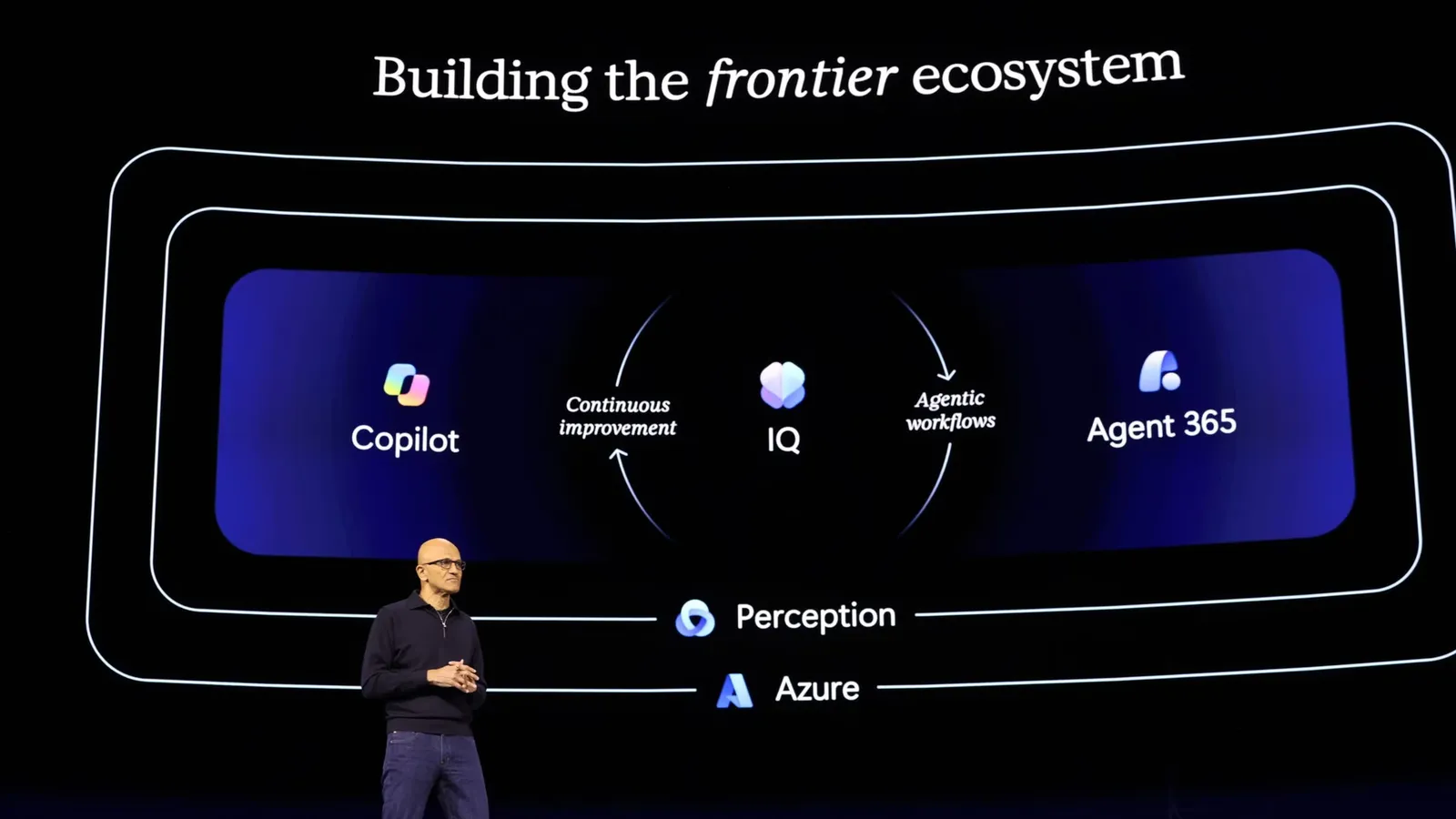
Microsoft chief executive Satya Nadella told Ignite in San Francisco on Tuesday that Copilot is 'the new operating system for work,' as the company confirmed that Word, Excel and PowerPoint are built into Copilot and that Office in Copilot is now generally available. For decision-makers, the shift matters less as a product launch than as a bundling move: the assistant now sits inside the apps where documents already live, raising immediate questions about seat economics, licensing renewal and document governance.
Satya Nadella walked onto the Ignite stage in San Francisco on Tuesday and called Copilot 'the new operating system for work.' The line got the applause. The detail underneath it is what matters: Microsoft has built Word, Excel and PowerPoint directly into Copilot, and Office in Copilot is now generally available, according to Microsoft's Ignite news page. Generally available is the phrase to underline. In enterprise software it is the difference between a demo the IT team tolerates and a product that procurement can actually sign off on. Until a feature clears that bar, most large organizations will not put it in front of thousands of employees.
Microsoft paired that with a second piece of shipping news. Home, the surface that brings Chat and Cowork together in one place, is also generally available, per the same Ignite news page. Plain English: the company is collapsing separate Copilot entry points into a single front door, so a user does not have to guess whether a task belongs in a chat window or a shared workspace. The announcement also pointed to Code, though the excerpt of the news page cut off before the details. The direction of travel is clear enough. Copilot stops being an app you open and starts being the place the work happens.
Why does the GA label carry so much weight? Because enterprise adoption historically runs through a gated process. Features typically sit in preview for months, and preview tools often fall outside the standard support, data-handling and compliance commitments that big buyers require before a broad rollout. IT leaders generally use that window to run security reviews, negotiate licensing and test whether the tool survives contact with real workflows. Clearing GA signals that Microsoft is now willing to have those conversations at scale, and that the feature set is stable enough to be written into a contract rather than a pilot memo.
Nadella's 'operating system' framing is aggressive, but it is not random. Operating systems have never been valued for any single application. They are valued because they own the front door, the place where a user starts and where context accumulates. For three decades the front door of work was the file: a document, a spreadsheet, a deck. Putting Word, Excel and PowerPoint inside Copilot is an attempt to move the front door to the prompt, with the file becoming an output rather than a starting point. If that works, Microsoft is not selling an assistant. It is selling the layer that decides which assistant, which document and which data get pulled into a task.
That is also where the competitive pressure lands. Every company selling an AI assistant into the enterprise now has to answer a blunt question: why buy a helper that sits beside Office when the incumbent ships one inside it, on top of software the customer already pays for? Bundling is the oldest distribution weapon in software, and it is especially potent when the bundled product touches the two things enterprises hate to change, namely their document formats and their permission structures. Nadella did not need to name rivals on stage. The packaging said it for him.
What the announcement did not resolve, at least in the excerpt available, is money. The Ignite news page did not spell out how Office in Copilot is priced, whether existing Copilot subscribers get it inside their current seats, or how the company intends to reconcile per-app licensing with a single assistant subscription. Those are the questions a CFO should be asking before the next renewal cycle, not after. A capability that is technically available and a capability that is economically sensible across 10,000 seats are two very different purchases, and the gap between them is where budgets quietly break.
Then comes governance, which tends to arrive late and cost the most. Once an assistant can draft, edit and restructure the documents that become contracts, board packs and regulatory filings, someone has to own the audit trail. In most organizations that means answering a set of unglamorous questions: who approved a given version, whether the AI's changes are distinguishable from a human's, where the underlying data was processed, and what happens when a customer or regulator asks for the record. These are typically the details that decide whether a rollout is praised or paused six months in.
The strategic stakes for peers in similar seats are straightforward. Microsoft has just raised the baseline expectation for what an AI assistant in the enterprise includes: not a chatbot bolted onto a suite, but the suite itself, reachable through a single conversational surface. Every CIO, COO and CFO now has a comparison to make that did not exist a week ago, between renewing the stack they already run and stitching together point tools that promise similar output. The winner of that comparison will not be decided by demos. It will be decided by seat economics, audit trails and whether employees actually change where they start their day.
This story's Key Insights and Take-aways are locked.
Create a free account to unlock Executive Actions for one credit.
Register to UnlockAlways free for Executives Club members. Join the Club
More in Technology

Anthropic mathematician claims Claude helped crack the Riemann hypothesis
If the proof holds, AI has toppled math's most famous open problem; if it does not, it is a case study in announcing breakthroughs before anyone verifies them.

AI's $4 Trillion Wipeout Erases Nasdaq's Gains for the Year
A brutal week took roughly $4 trillion off the AI sector and left the Nasdaq flat for the year, and the damage ran the full length of the supply chain.

Anthropic mathematician says AI proved the Riemann hypothesis. Verification will take time.
A single unverified claim from inside Anthropic now sits against more than 160 years of open mathematics, and the gap between asserting a proof and surviving peer review is the entire story.