
Nadella Offered 60,000 Microsoft Staff a Buyout. AI Is the Reason, Not Layoffs.
Microsoft's CEO says AI drove the October buyout offer to 60,000 employees, and the logic is not the simple automation story most people assume.
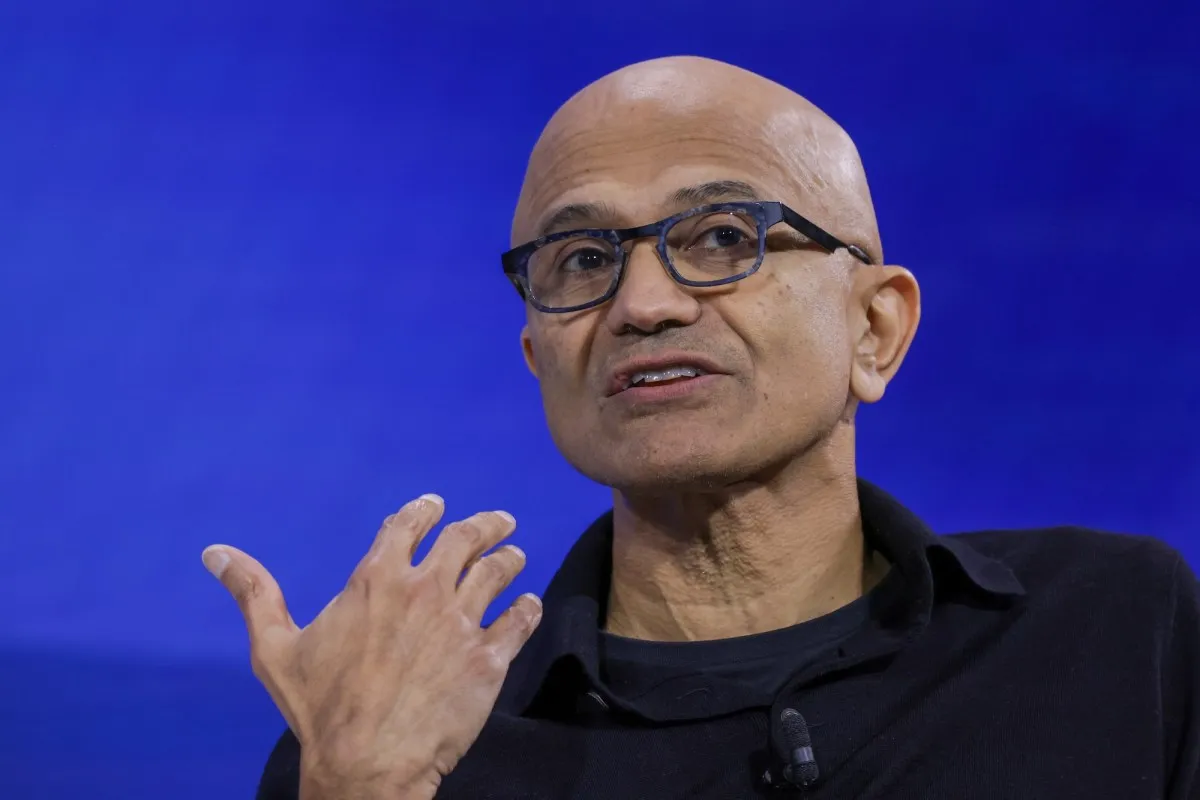
Microsoft CEO Satya Nadella offered buyouts to 60,000 employees in October, urging voluntary exits instead of another mass layoff, and explained the decision as an AI-driven call. For executives and boards, the choice of instrument, not just the size of the cut, is now the strategic question worth copying or rejecting.
Satya Nadella, Microsoft's CEO, offered buyouts to 60,000 employees in October, asking tens of thousands of people to voluntarily walk away rather than go through another mass layoff. That is the number, and the number is the story: not a rounding-error reduction, not a quiet attrition target, but a formal exit offer extended to a workforce measured in the tens of thousands. And when Nadella explained why he did it, he pointed at AI.
The twist is that AI is not the reason most people would guess. The obvious read is substitution: the software got good enough, so the people who used to do the work are no longer needed. The reporting frames the answer differently, and that difference is the whole point. AI is the driver, but not in the simple sense that the machine took the job. For anyone running a large organization, that distinction is not academic. It changes what you are actually deciding when you sign off on a workforce reduction, and it changes who should be worried.
Start with the instrument Nadella chose. A buyout is not a layoff with better manners. It is a different transaction with a different set of costs, and the difference shows up fast. Companies typically reach for voluntary exit programs when they want to shrink or reshape a workforce without publicly naming the people they want gone. A layoff is a decision made about you. A buyout is a decision you make about yourself. That gap matters for morale, for litigation risk, and for how the people who stay read the next all-hands meeting. For a CEO, that is the appeal: you get the reduction without the scene.
There is also a legal and reputational arithmetic. In the United States, large layoffs typically trigger notice obligations and a specific kind of public damage: the single-day headline, the Slack channels going quiet, the list of names circulating. Voluntary programs can spread the same reduction over months and let a company avoid the moment where it is seen to be choosing individuals. In Europe, where consultation with works councils and employee representatives is often required before collective redundancies, a voluntary phase can be the difference between a negotiation and a fight.
Now layer on AI. Across big tech, AI has become the line item that eats the budget. Data centers, chips, power, and specialized talent all compete for the same dollars, and headcount is one of the few levers a CEO can pull quickly. The pattern in recent years has been to keep hiring aggressively for AI-specific roles while trimming elsewhere. That is not a story about machines replacing people wholesale. It is a story about where a company decides its next dollar goes, and what it is willing to give up to fund it.
That reframing changes who is exposed. If AI were simply automating tasks, the risk would fall hardest on the most routine roles. If instead AI is redirecting capital, the risk falls wherever the money is not going, which can include experienced, expensive, mid-level people whose work is not obviously automatable. A buyout is a blunt instrument for that job, but it is a fast one. It also lets a company discover, at scale, which employees were already halfway out the door, and it does so without a manager having to make the call.
The signal to the people who stay may matter more than the exits themselves. When 60,000 colleagues are offered the door, the ones who remain learn something about how leadership views the future of their function. That is a cultural event, not just an HR one, and it tends to surface later in attrition, in recruiting, and in how hard it becomes to hire the AI specialists the same company is now chasing. Buyouts are also a slow-motion event. The reduction lands in waves, which means the culture absorbs it in waves.
For peers in the C-suite, the Microsoft decision is a template worth studying rather than copying. The question is not whether to cut. It is which instrument to use, what story that instrument tells, and whether the AI rationale survives contact with the people who have to execute it. Nadella's answer, as reported, is that AI is the reason, just not the one the headline writes for itself. Boards should expect that same question in their next workforce review, and they should arrive with a better answer than blaming the technology.
This story's Key Insights and Take-aways are locked.
Create a free account to unlock Executive Actions for one credit.
Register to UnlockAlways free for Executives Club members. Join the Club
More in Business

S&P 500 Enters Correction, Down 10% From Its High on AI Worries
The index's slide past the 10 percent line is a symbolic verdict on investor mood, and the AI trade that powered the rally is now the thing testing it.

Dow and S&P 500 enter correction as Nasdaq logs worst week since 2020
All 11 S&P 500 sectors fell more than 1% in the same week for the first time since April 2025, a breadth signal that matters more than any single index level.

Chip stocks lose $2.3 trillion in a week, worst run in 25 years
A $2.3 trillion weekly wipeout in semiconductors is forcing every board with an AI story to ask whether it owns a thesis or just a crowded trade.