
Nadella warns AI is finding security bugs faster than companies can patch
Microsoft's CEO says fixes now have to ship "instantaneously," turning every patch cycle into a race that most governance processes were never built to run.
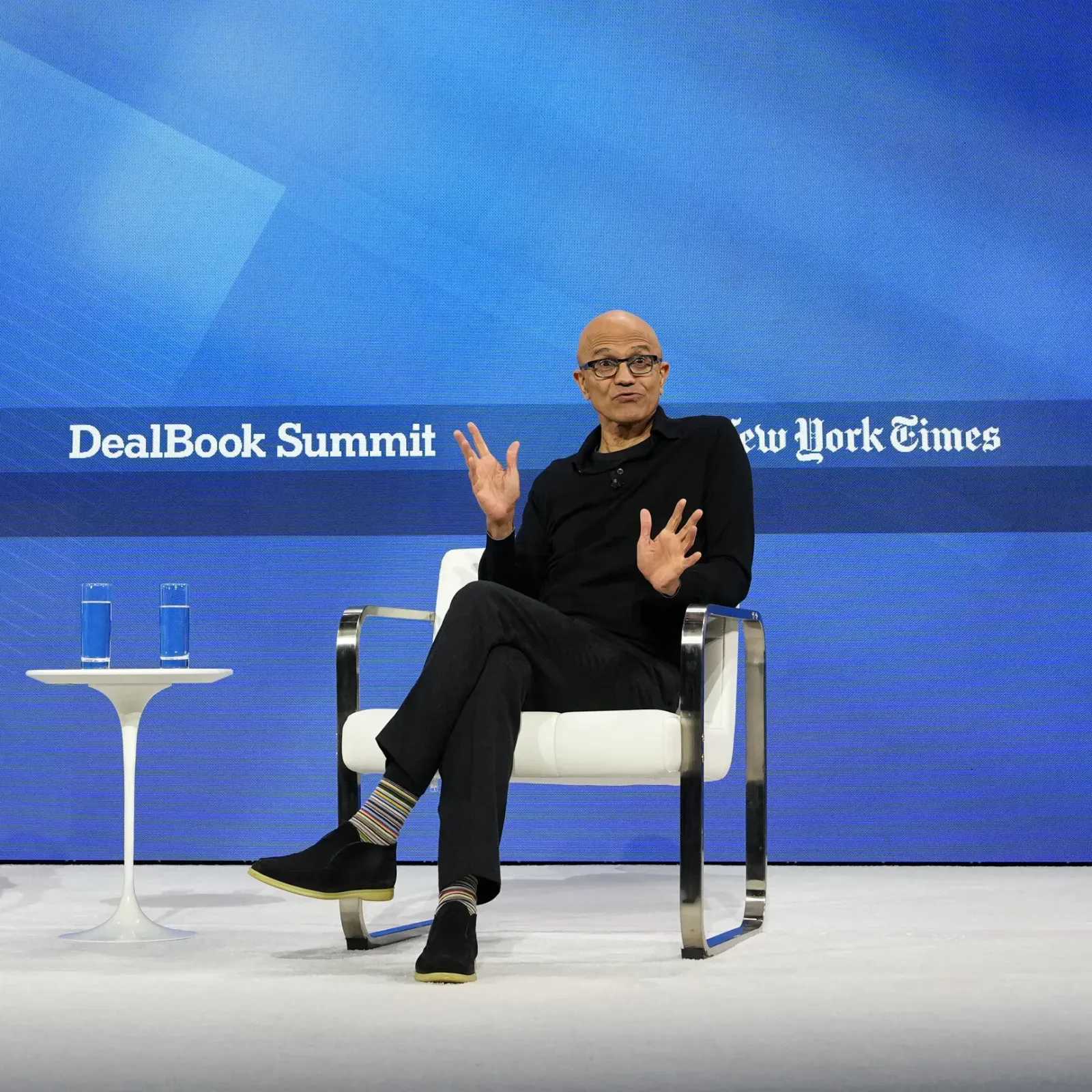
Microsoft chief executive Satya Nadella said AI tools are surfacing cybersecurity bugs at a breakneck pace, forcing companies to build and deploy fixes "instantaneously." For decision-makers, that compresses the window between discovering a vulnerability and shipping a patch, putting security, legal, and disclosure clocks on the same accelerated timeline.
Satya Nadella, Microsoft's chief executive, says artificial intelligence tools are surfacing cybersecurity bugs at a pace the industry has never had to absorb, and that the fix now has to move just as fast. Companies, he said, are being forced to create patches and deploy them "instantaneously." That single word is the story. Software has always shipped with flaws; what is new is the speed at which those flaws are being found, and the pressure that puts on the teams responsible for closing them.
The warning reframes a debate that has mostly run the other way. In recent years, much of the loudest AI-and-security conversation has centered on attackers: models that draft phishing emails, generate malware variants, or scan for weaknesses at machine speed. Nadella's point is that the same capability cuts toward defenders, and that this is not purely good news. If discovery accelerates but remediation does not, the gap between "we know about the bug" and "the bug is fixed" becomes the most dangerous window in enterprise computing. He described a breakneck pace of discovery paired with an expectation of instant fixes, which is a very different operating reality from the one most security organizations were designed around.
For context, enterprise software patching has historically run on a cadence, not a sprint. Large vendors typically bundle fixes into scheduled releases, often monthly, so customers can test changes in staging environments before they reach production. That rhythm exists for a reason: a patch that breaks a payroll system or a hospital's scheduling software can cause more damage than the vulnerability it closes. Speed and stability trade off against each other, and security teams have spent decades calibrating where to sit on that curve. "Instantaneously" moves the needle hard toward speed, and every organization running critical infrastructure will feel the tension between shipping now and shipping safely.
The second-order effects land on the board, not just the security team. Public companies in the United States already face disclosure expectations around material cyber incidents, and regulators have pushed for faster, more transparent reporting. For context, the SEC adopted rules requiring disclosure of material cybersecurity incidents within four business days of determining materiality. If AI compresses the time between discovery and exploitation, the window in which a company must decide what is material, what to disclose, and when, compresses with it. Legal, communications, and security now share a clock that runs faster than the one most governance processes were built for, and boards that have not rehearsed that decision will be making it live.
There is also a talent math problem underneath the speed problem. Security teams are typically outnumbered by the surface area they defend, and hiring has not kept pace with that gap. AI-assisted discovery multiplies the queue of findings; AI-assisted remediation is the only plausible way to work through it. That shifts the skill set that matters: less time spent hunting, more time spent triaging, validating, and shipping fixes without breaking production. Companies that treat AI purely as a detection tool will drown in their own findings. The ones that wire it into the remediation pipeline, with human review where the blast radius is large, will be the ones that keep up.
Nadella's framing also carries a commercial subtext, whether or not he intended one. Microsoft sells both the AI tooling and the cloud infrastructure where much of this work happens, so the pitch to enterprise buyers increasingly sounds like this: the threat is accelerating, and you need automation to match it. That is a real argument, and it is also a sales argument. Buyers should treat it accordingly, which means asking vendors hard questions about what their AI actually does inside the remediation loop, how findings get prioritized, and who is accountable when an automated fix goes wrong.
The bigger picture is that AI is compressing every operational clock at once. Code gets written faster, vulnerabilities get found faster, and now fixes are expected to ship faster. Organizations that built their governance, testing, and disclosure processes around a monthly rhythm are being asked to run them at a weekly or daily one. The executives who get this right will not be the ones who buy the most AI. They will be the ones who redesign the pipeline around it, decide in advance what can be automated and what cannot, and accept that "we will patch it next cycle" is no longer a defensible answer.
This story's Key Insights and Take-aways are locked.
Create a free account to unlock Executive Actions for one credit.
Register to UnlockAlways free for Executives Club members. Join the Club
More in Business

S&P 500 Enters Correction, Down 10% From Its High on AI Worries
The index's slide past the 10 percent line is a symbolic verdict on investor mood, and the AI trade that powered the rally is now the thing testing it.

Dow and S&P 500 enter correction as Nasdaq logs worst week since 2020
All 11 S&P 500 sectors fell more than 1% in the same week for the first time since April 2025, a breadth signal that matters more than any single index level.

Chip stocks lose $2.3 trillion in a week, worst run in 25 years
A $2.3 trillion weekly wipeout in semiconductors is forcing every board with an AI story to ask whether it owns a thesis or just a crowded trade.