
NASA's Moon shakeup hands Lockheed's Orion a mission it wasn't built for
The Artemis revamp gives SpaceX and Blue Origin more room to maneuver, but Lockheed's Orion program manager says the capsule now carries risk it was never designed for.
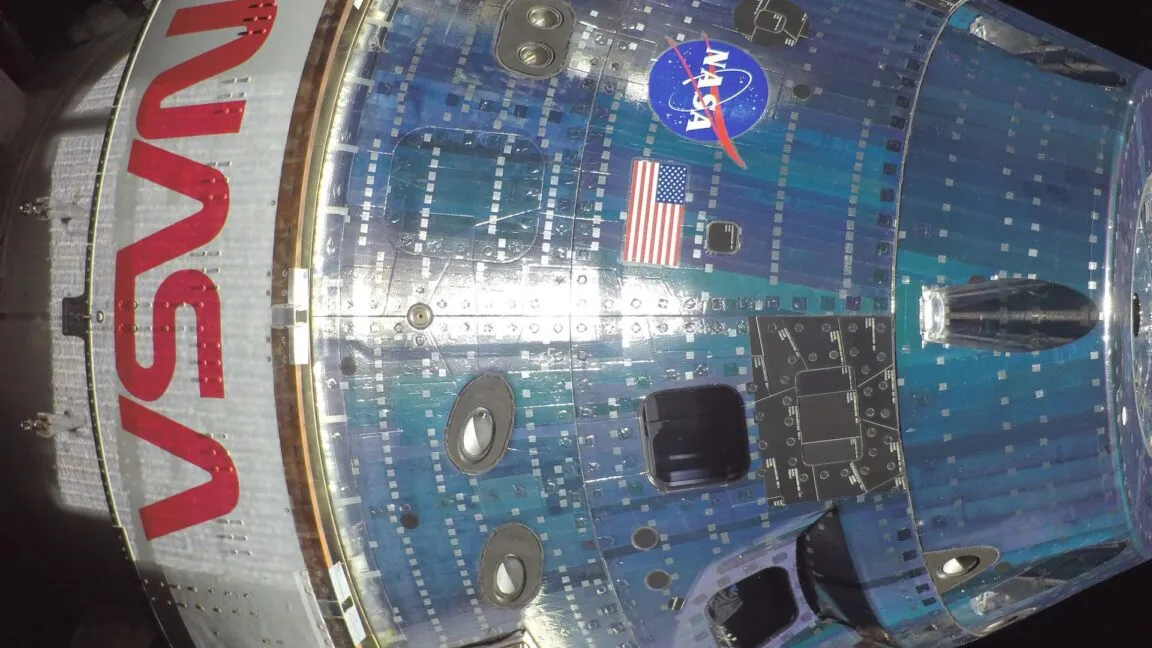
NASA has reshuffled its Artemis Moon plans so SpaceX's Starship docks with Orion in Earth orbit and Blue Origin's Blue Moon meets it in low-lunar orbit, giving both lander providers more flexibility. Lockheed Martin's Orion program manager, Kirk Shireman, says the changes load new burden onto a capsule built for a different mission, a warning that puts schedule and cost risk squarely on the incumbent prime.
NASA's overhaul of the Artemis program was pitched as flexibility for the companies building Moon landers. The bill is landing somewhere else: on Orion, the crew capsule that Lockheed Martin builds for the agency. Kirk Shireman, Lockheed's Human Spaceflight Exploration and Orion program manager, told Ars Technica that the revised architecture pushes the spacecraft into a role it was not designed to fill. His warning is blunt: "We also have a responsibility to not go too fast and cut too many corners."
Here is what changed. Under the new plan, SpaceX's Starship will dock with Orion in Earth orbit and then travel to the Moon in tandem with it. Blue Origin's Blue Moon lander will now rendezvous with Orion in low-lunar orbit rather than earlier in the journey. Both shifts give the lander providers more room to maneuver on the way to the surface. Both also move complexity, risk, and work onto Orion.
That matters because Orion was designed around a specific mission profile: launch, transit, rendezvous, return. Move the rendezvous point and you change the propulsion budget, the life support timeline, the navigation problem, and the abort calculus. A docking in Earth orbit means Orion has to loiter, hold attitude, and support a docked stack for longer than originally planned. A low-lunar-orbit rendezvous means the capsule has to operate deeper into the mission before handing crew off to a lander. These are not cosmetic edits to a flight plan. They are engineering problems with mass, power, and thermal consequences, and they arrive on a vehicle with a limited flight history.
Shireman's quote is the tell. "Not go too fast and cut too many corners" is program-manager language for schedule pressure, and it is the kind of sentence that gets written down because someone wants it on the record. NASA has every incentive to move quickly on Artemis, its effort to return humans to the Moon. Orion, by contrast, has a fixed design envelope. Historically, when agencies compress timelines on vehicles with thin test records, the margin for error shrinks faster than the schedule does.
The commercial read is just as interesting. SpaceX and Blue Origin just gained architectural freedom. Lockheed, the incumbent, just gained burden. That asymmetry is the real story for anyone tracking how NASA buys human spaceflight. Newer entrants get to optimize their own vehicles around the mission; the legacy prime absorbs the integration risk of making someone else's flexibility work. It is a familiar pattern in government contracting, and it rarely shows up in the press release.
The second-order effects run through the supply chain. If Orion needs new analysis, new software, new testing, or new certification work, that is cost and calendar, and both flow downhill to subcontractors, test ranges, and the workforce that supports them. Congress funds programs, not intentions, so any re-scoping eventually becomes a budget conversation. For investors with exposure to aerospace primes, the question is not whether Orion can do the job. It is who pays for the changes and who carries the schedule risk if the answer is no.
For executives outside aerospace, the pattern is worth internalizing. When your biggest customer redesigns the system around you, your product's original assumptions quietly become liabilities. The companies that handle this well do three things early: they re-price the work, they re-scope the commitments, and they put the risk in writing before the ink dries on the new architecture. The ones that handle it badly discover the problem in integration testing, when the options are gone.
None of this means the Artemis plan is doomed. It means the plan has a cost, and the cost has a name. NASA wants to land humans on the Moon, and it wants the landers to have room to operate. Lockheed wants Orion to fly safely within the envelope it was built for. Those two goals are not automatically in conflict, but they are no longer automatically aligned either. Shireman's job is to make them align, and his public caution suggests he intends to be the person who says no when the schedule asks for yes.
What to watch next: whether NASA adjusts the rendezvous architecture again, whether Lockheed gets additional scope or schedule relief, and whether the agency's public timeline survives contact with the engineering. The headline number in this story is not a dollar figure. It is the gap between what Orion was designed to do and what the new plan asks of it. That gap is where the next round of cost, delay, and argument will live.
This story's Key Insights and Take-aways are locked.
Create a free account to unlock Executive Actions for one credit.
Register to UnlockAlways free for Executives Club members. Join the Club
More in Technology

Anthropic mathematician claims Claude helped crack the Riemann hypothesis
If the proof holds, AI has toppled math's most famous open problem; if it does not, it is a case study in announcing breakthroughs before anyone verifies them.

AI's $4 Trillion Wipeout Erases Nasdaq's Gains for the Year
A brutal week took roughly $4 trillion off the AI sector and left the Nasdaq flat for the year, and the damage ran the full length of the supply chain.

Anthropic mathematician says AI proved the Riemann hypothesis. Verification will take time.
A single unverified claim from inside Anthropic now sits against more than 160 years of open mathematics, and the gap between asserting a proof and surviving peer review is the entire story.