
Netanyahu's last stand: tapped lawmakers, a coup claim, a decade on the line
Israel's caretaker PM is attacking the vote's legitimacy while a corruption trial that could jail him waits, and analysts warn political violence is rising.
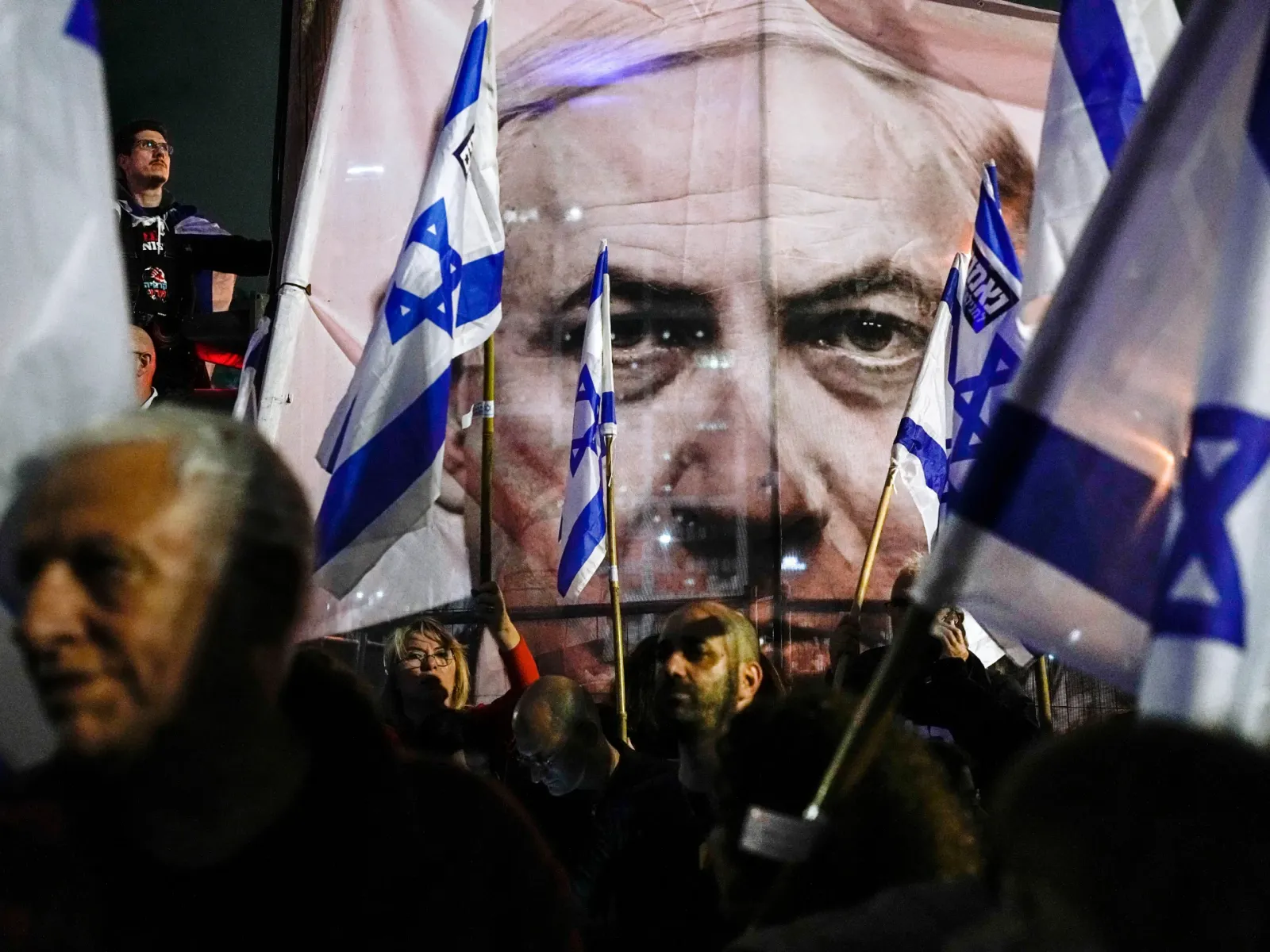
Israel's caretaker Prime Minister Benjamin Netanyahu is attacking the legitimacy of the October 27 election while his corruption trial, which could send him to prison for up to a decade, waits in the background. For anyone tracking Middle East risk, the consequence is a longer and more volatile government formation window in which the country's legal and security institutions are themselves in play.
Israel's Shin Bet domestic intelligence agency, led by Netanyahu ally David Zini, reportedly sought permission to tap the phones of five Arab lawmakers over suspected foreign interference, and to have politicians who are Palestinian citizens of Israel arrested on election day. The attorney general rejected both requests, according to Al Jazeera. Opposition leaders including Yair Lapid and Joint List chief Yousef Jabareen called the measures evidence of an "attempted coup". Law enforcement officials are said to be investigating whether the prime minister's office itself fabricated the vote-buying allegations that underpinned the push.
That is the immediate fight. The longer one is the reason it is happening. Netanyahu, Israel's caretaker prime minister since the October 27 election, is on trial for bribery, fraud and breach of trust in three separate cases. The trial has run since May 2020 and has been repeatedly delayed by his duties as prime minister. If found guilty, he could face a prison sentence of up to a decade. Losing the premiership, in other words, is not merely a career event. As Israeli analyst Ahron Bregman of King's College London put it: "Netanyahu is behaving like a wounded animal. For him, losing the elections is not just a political but also a personal matter, not least because of his corruption trial, which could result in him being sent to jail. Losing the premiership is losing his shield. Hence, for Netanyahu, nothing is off the table."
Since the vote, Netanyahu has launched a series of attacks on his opponents and called into question the legitimacy of the result. He is likely on his way out of power, provided the opposition, led by Gadi Eisenkot, can form a viable government. That may require leaning on parties representing Palestinian citizens of Israel, and Netanyahu has used that prospect to tarnish the Arab parties, baselessly accusing them of cheating in the elections.
The environment he has helped generate has already produced threats. In the days after the election, right-wing protesters gathered outside Eisenkot's home, warned him not to form a government with the Arab-led parties and called him a "traitor". In a letter shared publicly, Rabbi Gedalia Axelrod, a former head of Haifa's rabbinical court, evoked din rodef, the "law of the pursuer", the same principle invoked by Yigal Amir to justify his killing of former Prime Minister Yitzhak Rabin in 1995 over the Oslo Accords agreement with the Palestinians. Ofer Cassif, a member of parliament representing the left-wing Hadash party, said: "The longer it takes for Eisenkot to form a government, the higher the risk of political violence becomes. Netanyahu is willing to do anything, and I mean anything, to stay in power. He's a psychopath. People on the right talk about civil war, and I'm not ready to discount that... Netanyahu built a cult around him, and it may easily raise arms against his rivals."
Two other clocks are running. Calls for a state inquiry into Netanyahu and his government's failings in the run-up to the Hamas-led October 7, 2023 attack have persisted for almost as long as the war in Gaza that followed, and have grown more urgent after a series of reports suggesting he had been personally warned by senior Egyptian and Emirati officials about a potential attack. Establishing that inquiry featured prominently on the legislative slate of parliament's new session last week. Meanwhile, both the war and the constitutional crisis triggered by his attempts to weaken judicial oversight over the government have provided useful cover against the corruption charges he has faced since 2019.
It remains unclear what, if any, immediate legal consequences Netanyahu may face for his alleged efforts to undermine the legitimacy of the election. Aides accused of passing false information to the police on the eve of the election could face criminal scrutiny. Zini, the Shin Bet chief, could see both his agency's independence and his own position fundamentally undermined by allegedly participating in efforts to subvert the democratic process. Critics have also accused Netanyahu of deliberately fomenting war with Iran to retain office.
Yossi Mekelberg, a senior consulting fellow at Chatham House, framed the calculation bluntly: "Netanyahu battles for his survival and doesn't care if those around him disappear into oblivion, but he might not succeed this time. He doesn't care about them, or even his political legacy. All he cares about is survival, about fighting for the next day and trying to cling on, no matter what the cost." For analysts and a number of Israel's politicians, his actions reflect an overriding determination to stay in power or, failing that, to engineer a government that is reliant on the support of him and his allies.
The tell will be timing. The longer Eisenkot's coalition talks drag, the wider the window for the kind of pressure that has already put protesters outside his home and a rabbinical letter into circulation. Watch three things: whether the attorney general's office opens a formal probe into the prime minister's office, whether the state inquiry into October 7 reaches the Knesset's agenda, and whether Shin Bet's leadership survives the tap request. For anyone who tracks how democratic institutions bend under legal pressure, this is the file to watch, and it is being written in real time.
This story's Key Insights and Take-aways are locked.
Create a free account to unlock Executive Actions for one credit.
Register to UnlockAlways free for Executives Club members. Join the Club
More in Politics

Fifth Circuit Kills Pregnant Workers' Law Over Pandemic Proxy Votes
A procedural ruling, not a policy one, has blocked a federal pregnancy-accommodation law and put every pandemic-era statute in the crosshairs ahead of an expected Supreme Court appeal.

Measles kills a Virginia child under 5, the state's first death of 2026
Virginia's health department confirmed the death but withheld the child's vaccination status, leaving schools, clinics and employers to plan around the one detail that would explain the most.

Former Brazilian President Bolsonaro Hospitalized with Intestinal Obstruction
The health status of the former far-right leader raises immediate questions about political stability and the trajectory of Brazil's conservative movement.