
Newsmax Sues Fox Over $22B Roku Deal, Claims DOJ Let 'Effective Monopoly' Close
The antitrust complaint, filed in San Jose federal court, targets an acquisition that already closed, raising the stakes for media dealmakers who assumed regulatory silence meant safety.
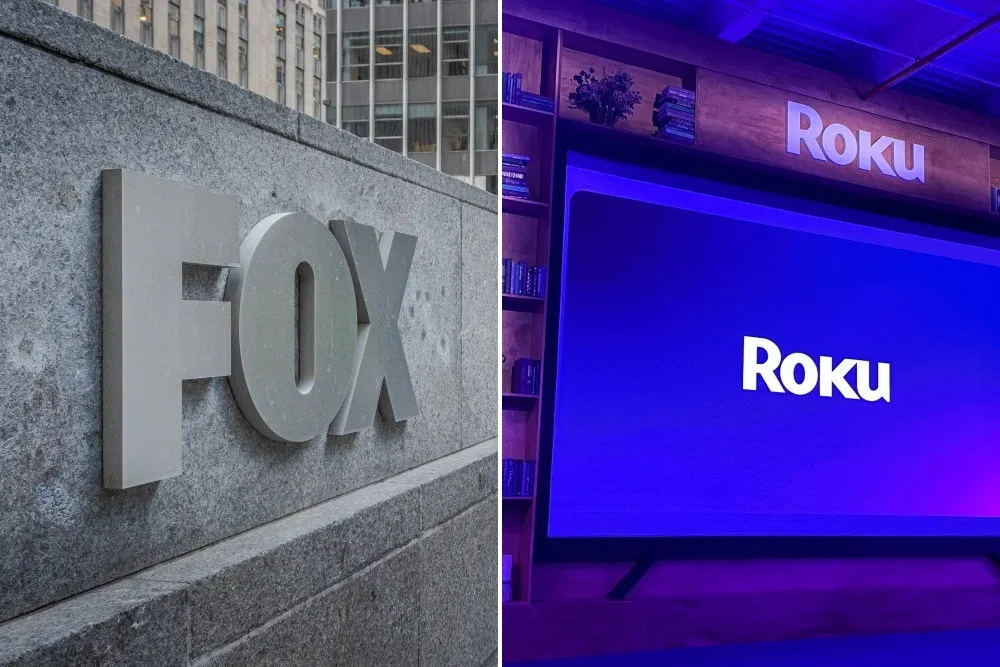
Newsmax has filed an antitrust lawsuit against Fox Corp. over its $22 billion acquisition of Roku, which closed earlier this month, claiming the Justice Department "allowed this merger to an effective monopoly to close unchallenged." For executives and boards, the case tests how much antitrust risk remains after a deal closes, especially when regulators decline to challenge a transaction upfront.
Newsmax has filed an antitrust lawsuit against Fox Corp. over its $22 billion acquisition of Roku, a deal that closed earlier this month. The complaint was filed in federal court in San Jose, according to Deadline, and it takes direct aim at the government's decision not to block the transaction. In the lawsuit, Newsmax claims the Justice Department "allowed this merger to an effective monopoly to close unchallenged." That is the headline fact, and it lands with unusual force because the deal is already done. This is not a pre-closing challenge designed to stop a merger before signatures. It is a post-closing attack on a completed acquisition, which makes the legal and strategic stakes bigger for every media, tech, and streaming company watching.
The core allegation is that the DOJ had the power to intervene and did not. Newsmax's complaint, as described by Deadline, frames the Roku acquisition as a step toward an effective monopoly, and it argues that regulators let that happen without a court fight. The $22 billion price tag matters because it signals scale. Fox Corp. is a major media player; Roku is a streaming platform and connected-TV operating system with a central role in how audiences find and watch content. When a company with Fox's content and distribution muscle buys a gateway to the living room, rivals do not just lose a competitor. They can lose access to viewers. That is the theory Newsmax is putting in front of a federal judge in San Jose.
For context, most merger challenges in the United States happen before a deal closes. Companies above certain thresholds typically file under the Hart-Scott-Rodino Act, and the DOJ or FTC can sue to block the transaction, demand fixes, or let it proceed. If regulators do not act, the deal usually closes, and the parties assume the biggest antitrust risk is behind them. Newsmax's lawsuit challenges that assumption. It says the DOJ "allowed this merger to an effective monopoly to close unchallenged," which is both a legal argument and a political one. It puts the agency's inaction on the record and asks a court to treat the closed deal as a live antitrust problem.
The timing is what makes this case notable. The Roku acquisition closed earlier this month. Newsmax filed in San Jose federal court. That sequence means the fight is not about whether the deal can be signed or financed. It is about whether the deal can stand as structured. Private antitrust plaintiffs can bring cases even when the government does not, though they face a high bar. They must show harm to competition, not just harm to a rival. Newsmax will need to convince the court that Fox's ownership of Roku creates an illegal concentration of power in streaming distribution. Fox, for its part, will likely argue that the market is competitive, that Roku faces plenty of alternatives, and that the government's decision not to challenge the deal should carry weight. Those arguments are not in the excerpt, but they are the standard lines of defense in merger litigation.
The posture matters more than any single procedural argument. Newsmax is not asking for a polite regulatory review. It is asking a federal court to scrutinize a $22 billion acquisition that the Justice Department let close. For executives, the message is that regulatory silence is not the same as regulatory approval. A no-action decision may reduce immediate risk, but it does not erase private litigation risk. Boards that treat a closed deal as bulletproof could be surprised when a competitor, a consumer group, or a state attorney general decides to test the theory in court.
The second-order effects stretch beyond Fox and Roku. Media companies are racing to control streaming distribution because that is where audiences are moving. Roku sits at the intersection of hardware, software, advertising, and content discovery. If a court takes Newsmax's claims seriously, it could force remedies that change how Fox integrates Roku, how Roku treats rival apps, or how much leverage Fox can exert in carriage negotiations. Even if the lawsuit fails, the discovery process could expose internal documents about competition, pricing, and platform power. That is a reputational and strategic risk that does not show up on the deal model.
For peers in similar roles, the playbook is clear. First, do not assume that a closed deal is immune from antitrust attack. Second, track private litigation risk alongside agency review. Third, prepare for the possibility that a competitor uses the courts to slow integration, extract concessions, or simply create uncertainty. The Newsmax suit may or may not succeed on the merits, but it already proves that the antitrust fight over streaming distribution is not over when the closing bell rings. The case is now in federal court in San Jose, and the next moves by Fox, Newsmax, and the DOJ will determine whether this becomes a one-off complaint or a new template for challenging media consolidation after the fact.
This story's Key Insights and Take-aways are locked.
Create a free account to unlock Executive Actions for one credit.
Register to UnlockAlways free for Executives Club members. Join the Club
More in Business

S&P 500 Enters Correction, Down 10% From Its High on AI Worries
The index's slide past the 10 percent line is a symbolic verdict on investor mood, and the AI trade that powered the rally is now the thing testing it.

Dow and S&P 500 enter correction as Nasdaq logs worst week since 2020
All 11 S&P 500 sectors fell more than 1% in the same week for the first time since April 2025, a breadth signal that matters more than any single index level.

Chip stocks lose $2.3 trillion in a week, worst run in 25 years
A $2.3 trillion weekly wipeout in semiconductors is forcing every board with an AI story to ask whether it owns a thesis or just a crowded trade.