
Nick Bostrom: AI Could Push Lifespans to 1,400, and He Calls That Conservative
The former Oxford professor says safe superintelligence could unlock antiaging breakthroughs, while delaying AI means millions die each year.
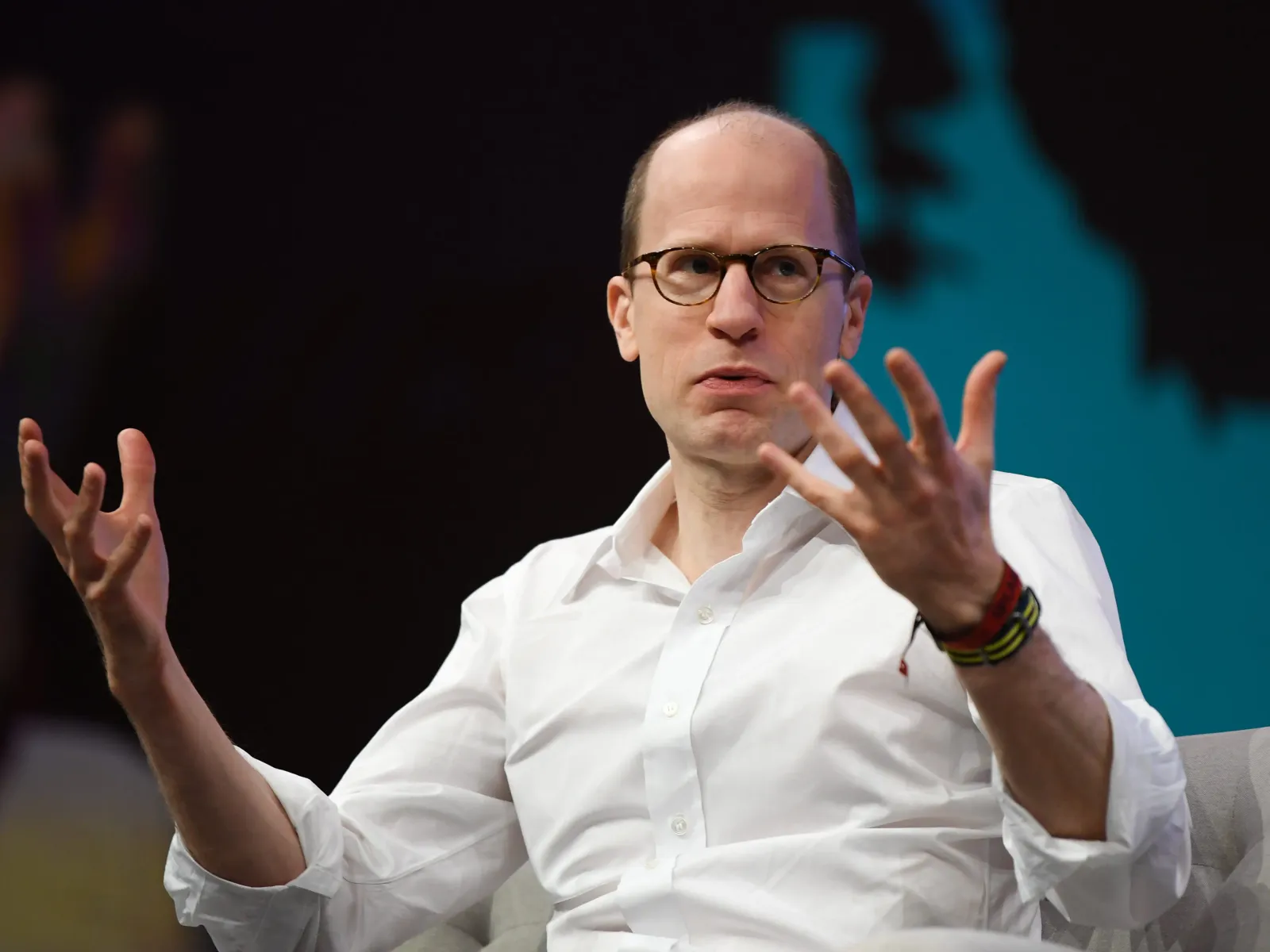
Nick Bostrom, Swedish philosopher and former Oxford professor, said on the a16z show that AI-driven biomedical breakthroughs could extend human life expectancy to roughly 1,200 to 1,400 years by eliminating aging, calling that a conservative lower bound. For decision-makers, his argument reframes the AI safety debate as a trade-off between slower development and what he says are millions of deaths each year from delay.
Nick Bostrom, the Swedish philosopher and former Oxford professor, says humans could live for more than a millennium if AI unlocks breakthroughs in biomedicine and antiaging research. On an episode of the a16z show released on Thursday, Bostrom put a number on it: "If you think about what our life expectancy would be if we weren't aging, it's something on the order of, you know, 1,200, maybe 1,400 years or so," he said. He called that figure "quite a conservative lower bound," because a world without aging might also reduce other mortality risks, such as accidents. This is not a promise of immortality. It is an actuarial thought experiment about what happens when the dominant cause of death is removed.
The logic matters for anyone trying to parse the AI safety fight. If aging were eliminated, life expectancy would no longer be capped by biological decline. It would be shaped by everything else that can kill a person. Bostrom argues advanced AI could attack those risks too, pushing the ceiling higher still. For context, Bostrom studies human enhancement and emerging technologies. At Oxford, he founded the Future of Humanity Institute in 2005 as a multidisciplinary research group. It closed in 2024, but Bostrom remains a prominent voice in debates about where technology is taking the human species.
His comments land in a widening argument over AI safety. Many researchers have called for AI development to be slowed so alignment issues can be addressed and guardrails can keep advanced AI aligned with human interests. Bostrom does not dismiss that concern. He says the trade-off between speed and safety is complicated. "I think that's only one of many different considerations that would come into an all things considered evaluation here," he said. He acknowledged the safety case: "On the one hand, you might think that if you took some extra time with this AI transition, maybe we could build AI more safely." He also said alignment research could reduce existential risk: "So you might think that if we spend more time doing AI alignment research, the existential risk from developing AI goes down at some rate."
Then he flipped the ledger. "And then on the other hand, every year that we delay it, we have millions and millions of people dying," Bostrom said. That is the sharp edge of his argument. It turns a technical debate about model alignment into a moral calculation about lives lost to delay. For executives and boards, that framing is not just philosophical. It changes how companies justify AI road maps, how they discuss safety investments, and how they weigh regulatory pressure against competitive urgency. A CEO who says "we are moving carefully" can be asked: careful compared with what, and at what cost?
The longevity angle adds another layer. If AI could unlock biomedical breakthroughs and antiaging research, the beneficiaries would not be limited to tech investors. Insurers, pension funds, pharmaceutical companies, hospital systems, and regulators would all face a different world. Retirement planning assumes a certain lifespan. Health systems assume a certain burden of chronic disease. Drug pipelines assume a certain biology of aging. Bostrom's scenario, even as a distant possibility, stretches those assumptions. It also gives AI companies a new narrative: the same systems that raise existential risk could, if built safely, extend healthy human life.
That narrative is exactly why it will be contested. Researchers who want slower development focus on the danger of advanced systems that are not aligned with human interests. They argue for guardrails, evaluation, and time. Bostrom's response is not that safety does not matter. It is that safety is one variable among many. If extra time reduces existential risk at some rate, he says, delay also carries a cost in lives. That does not resolve the question. It makes the question harder. It forces decision-makers to ask whether they are optimizing for the risk they can see, such as a bad model release, or the risk they cannot see, such as medical progress that never happens.
For peers in similar roles, the practical takeaway is not to bet on 1,400-year lifespans. It is to recognize that the AI safety debate is moving from think pieces into boardrooms. The terms are changing. Speed used to be a growth story. Safety used to be a compliance story. Bostrom's framing merges them into one strategic question: how do you capture the upside of advanced AI while managing the downside, and how do you defend the pace you choose? That question will hit AI labs, biotech firms, insurers, and any company whose long-term planning depends on human longevity.
Bostrom's number may sound like science fiction. His point is more immediate. If AI can bend the curve on aging, the prize is measured in centuries. If AI development is delayed, the cost is measured in lives, millions of them every year, by his accounting. That is the wager he is placing on the table. Whether or not you accept it, the burden of proof is shifting. The next time a company, a regulator, or a board debates how fast to move on AI, someone will ask the Bostrom question: what are we losing while we wait?
This story's Key Insights and Take-aways are locked.
Create a free account to unlock Executive Actions for one credit.
Register to UnlockAlways free for Executives Club members. Join the Club
More in Business

S&P 500 Enters Correction, Down 10% From Its High on AI Worries
The index's slide past the 10 percent line is a symbolic verdict on investor mood, and the AI trade that powered the rally is now the thing testing it.

Dow and S&P 500 enter correction as Nasdaq logs worst week since 2020
All 11 S&P 500 sectors fell more than 1% in the same week for the first time since April 2025, a breadth signal that matters more than any single index level.

Chip stocks lose $2.3 trillion in a week, worst run in 25 years
A $2.3 trillion weekly wipeout in semiconductors is forcing every board with an AI story to ask whether it owns a thesis or just a crowded trade.