
No steering wheel, no pedals: Tesla's Cybercab starts carrying riders in Dallas
Dallas becomes the second city to host Tesla's two-seater robotaxi, and Texas buyers are promised deliveries in December.
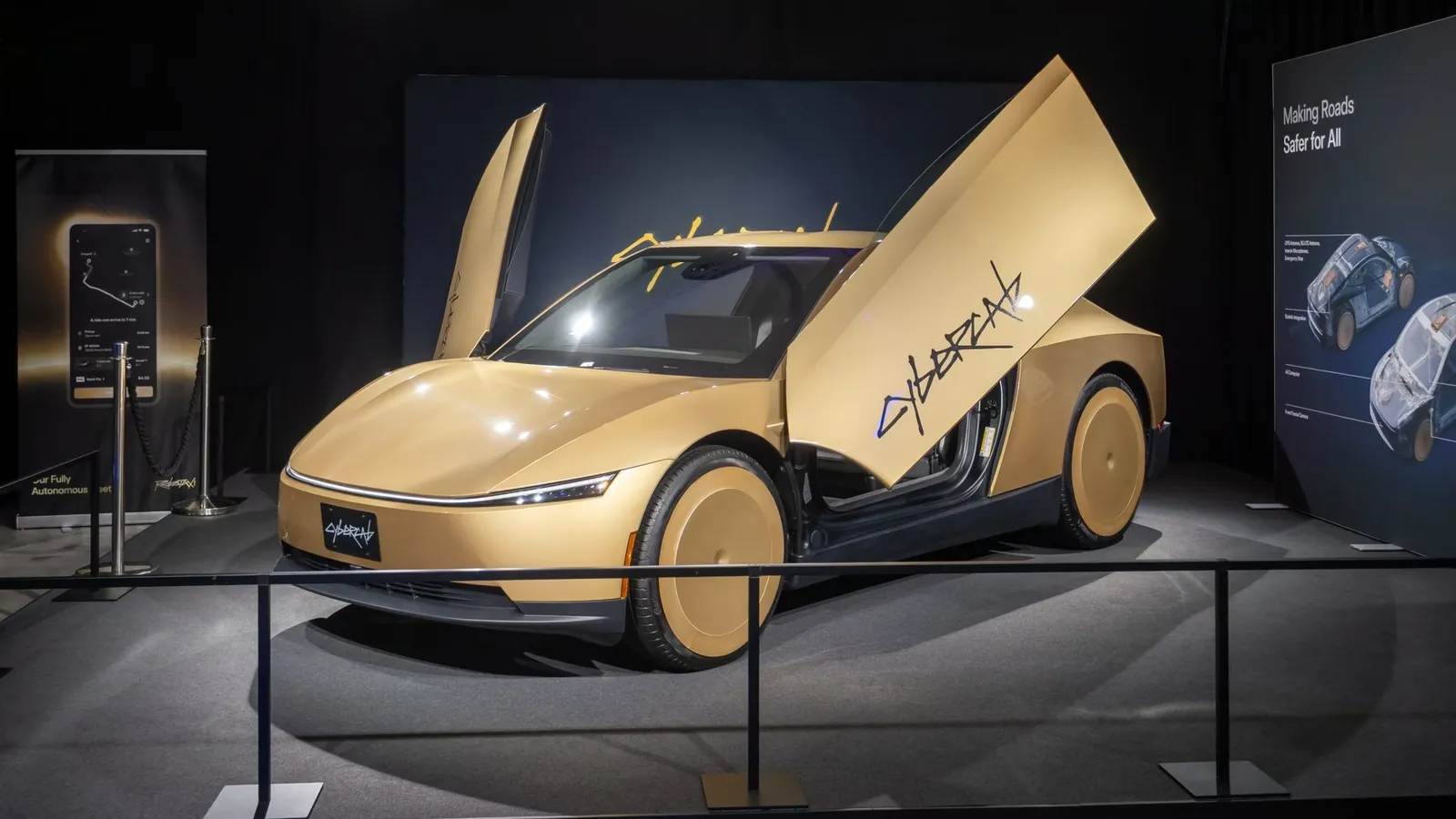
Tesla has begun offering rides in its Cybercab in Dallas, the second city after Austin for the two-seat robotaxi built with no steering wheel and no pedals, while Model Y robotaxis already operate there. The move matters because a vehicle with zero manual controls removes the human fallback entirely, forcing regulators, insurers, and competitors to confront a driverless product rather than a driver-assist feature.
Tesla has started carrying riders in its Cybercab in Dallas, making the Texas city the second market for the two-seat robotaxi that ships with no steering wheel and no pedals. Austin got there first. Dallas was already on Tesla's robotaxi map through its Model Y fleet, which has been running there, so the Cybercab arrives on top of an existing operation rather than as a cold start. The company also says it plans to begin delivering Cybercabs to private buyers in Texas in December.
The detail that matters is not the city. It is the missing hardware. A car with no steering wheel and no pedals cannot be driven by a human under any circumstances, which means Tesla is no longer selling a driver-assistance product that happens to be capable of autonomy. It is operating a machine that only works if the software works. That flips the risk profile: there is no fallback driver, no take-over-now prompt, no human to absorb blame when something goes wrong. For regulators, that is the line separating a supervised experiment from a commercial service, and it is why the Cybercab's rollout map has been so much shorter than the map for Tesla's driver-assist features.
The sequencing tells you the strategy. Austin first, Dallas second, both inside Texas. Tesla is scaling where it has spent years building relationships with state officials and where the regulatory posture toward autonomous vehicles has generally been more permissive than in states like California, where the DMV and the CPUC run separate permitting tracks. For context, most US states require some form of permit, registration, or exemption before a vehicle without manual controls can operate on public roads, and only a handful have moved to allow them outright. Starting in a friendly jurisdiction is the standard playbook: prove the service, collect the safety data, then use that record to argue for expansion elsewhere.
Tesla is running two fleets at once, and that is the underrated part. The Model Y robotaxis in Dallas are built on hardware that already exists at volume. The Cybercab is a purpose-built, low-volume, still-unproven manufacturing program. Running both lets Tesla generate real ride revenue and real-world data on the existing platform while the new one climbs its production curve. If Cybercab output slips, the Model Y fleet keeps the service alive. If Cybercab scales, Tesla gets a vehicle designed from the first bolt to operate without a driver, which is cheaper to build and cheaper to run than a car hauling around redundant human controls.
December is the wildcard. Tesla says it plans to start delivering Cybercabs to private buyers in Texas in December. Selling a vehicle with no steering wheel to an individual is a different problem from operating one inside a company fleet. Insurance underwriting, registration, inspection, and liability rules all assume a human can take control at some point. A privately owned Cybercab breaks those assumptions, and the answers will be written state by state. Watch whether Texas creates a specific framework for owner-operated autonomous vehicles, because that template would be the one other states copy.
Competition is the backdrop. Alphabet's Waymo has been running commercial driverless service in multiple US cities for years, built on cautious, geofenced expansion and heavy safety disclosure. Amazon's Zoox has been developing a purpose-built robotaxi without traditional controls. Tesla's differentiator is vertical integration and manufacturing scale: it builds the car, the chip, the software, and now the ride-hailing network that dispatches them. That is a structural cost advantage if it works, and a single point of failure if it does not.
Three things to watch from here. First, whether Dallas ride volume and safety reporting hold up as the fleet grows beyond a pilot. Second, whether Tesla names a third city outside Texas, which would signal that regulators elsewhere are satisfied enough to say yes. Third, whether the December private deliveries actually land on schedule, because that is the moment the Cybercab stops being a fleet experiment and becomes a consumer product with an owner, a title, and an insurance policy attached to it.
The strategic stakes are simple. Every automaker and mobility operator now has a live benchmark for how fast a no-controls vehicle can travel from unveiling to paying riders. Tesla has moved from Austin to Dallas in a matter of months and put a consumer delivery date on the calendar. Peers still running safety drivers in test vehicles are now measuring themselves against a car with no steering wheel at all. The question for boards is no longer whether driverless is real. It is whether their own roadmap is fast enough to matter.
This story's Key Insights and Take-aways are locked.
Create a free account to unlock Executive Actions for one credit.
Register to UnlockAlways free for Executives Club members. Join the Club
More in Technology

Anthropic mathematician claims Claude helped crack the Riemann hypothesis
If the proof holds, AI has toppled math's most famous open problem; if it does not, it is a case study in announcing breakthroughs before anyone verifies them.

AI's $4 Trillion Wipeout Erases Nasdaq's Gains for the Year
A brutal week took roughly $4 trillion off the AI sector and left the Nasdaq flat for the year, and the damage ran the full length of the supply chain.

Anthropic mathematician says AI proved the Riemann hypothesis. Verification will take time.
A single unverified claim from inside Anthropic now sits against more than 160 years of open mathematics, and the gap between asserting a proof and surviving peer review is the entire story.