
Nothing's AI device debuts December 8, and it looks like two vapes
Nothing's December 8 AI device launch pairs a form factor Engadget describes as two vapes stuck together with a Swedish House Mafia credit, and the AI hardware graveyard is watching.
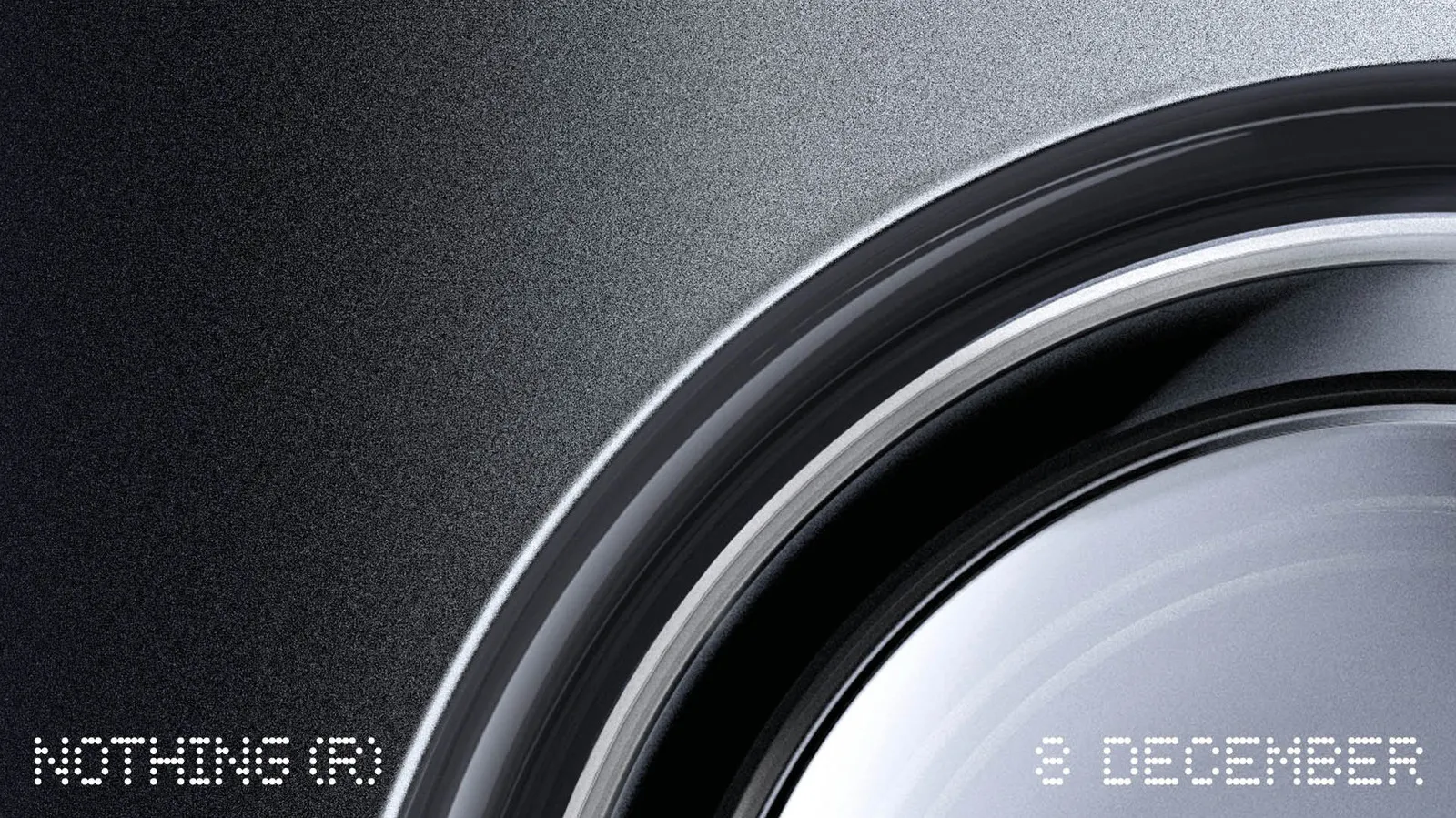
Nothing, the London hardware company founded by Carl Pei, will debut its AI device on December 8, with Engadget describing the design as two vapes stuck together and crediting Swedish House Mafia in its summary. The launch tests whether a design-first challenger brand can succeed in an AI hardware category where Humane and Rabbit have already burned consumer trust.
Nothing has a date, and a form factor that is already doing the marketing for it. The London-based hardware company says its AI device debuts on December 8, and the early look is exactly the kind of thing that travels fast: Engadget describes it as looking like two vapes stuck together. The outlet's own summary credits Swedish House Mafia, a strong hint that the group is tied to the reveal. Thanks, Swedish House Mafia. I guess.
Start with what December 8 actually means. It drops the device into the tail end of the holiday shopping window, late enough to miss Black Friday and early enough to catch last-minute gift budgets and the January review cycle that follows. For Nothing, the timing fits how the company has always launched: build anticipation with a distinctive look, let the internet do the arguing, then ship. Nothing was founded by Carl Pei, who co-founded OnePlus before striking out on his own, and the company has built its identity on design as distribution. Transparent casings. The Glyph LED interface on its phones. The lipstick-shaped case on its Ear (stick) earbuds. A device that reads as two vapes fused together fits that playbook precisely: recognizable in a thumbnail, describable in one sentence, and impossible to confuse with an AirPods case.
The context that matters: AI hardware has a credibility problem, and Nothing is walking straight into it. Humane's AI Pin arrived to brutal reviews and never found a mass audience. Rabbit's R1, a $199 pocket companion, fared little better with critics. Both promised a post-smartphone interface and both hit the same wall: the software was not good enough to justify carrying a second device. Historically, consumer hardware categories do not die from one bad product, but they do get priced for skepticism. That is the environment Nothing is launching into, and it explains why the company is leading with design and a cultural collaborator rather than a spec sheet.
Nothing is also not launching into a vacuum. The AI device race has gotten crowded at the top end. OpenAI has been reported to be working with former Apple design chief Jony Ive on a hardware product. Meta's Ray-Ban smart glasses have quietly become the category's most credible consumer success. Apple keeps folding AI features back into the phone rather than asking people to buy something new. For a challenger brand, that is the real competitive map: not other startups, but the default option, which is the phone already in the reader's pocket.
That is where the Swedish House Mafia credit earns its keep. Consumer hardware launches increasingly borrow the mechanics of a music or fashion drop: a collaborator, a date, a reveal, a limited window. The group's involvement, whatever form it takes, signals that Nothing wants the December 8 moment to be an event rather than a press release. It is a cheap way to buy attention in a category where attention is the scarcest input, and it is consistent with a company that has always treated marketing as part of the product.
Three things to watch when the device lands. First, price and whether it requires a subscription; recurring revenue is how hardware companies survive thin margins, but it is also the fastest way to kill adoption. Second, whether the device stands alone or works best as a companion to Nothing's phones, which determines whether the addressable market is Nothing's existing customer base or everyone. Third, where the AI actually runs. On-device processing is a privacy selling point and a cost problem; cloud processing is cheaper and raises questions about what the device is listening to. The two-vapes form factor suggests something pocketable and possibly two-piece, but the shape alone does not answer any of these.
For operators and boards watching the AI hardware wave, the lesson from the last two years is blunt: the hardware is not the moat. Humane and Rabbit both shipped distinctive objects; neither shipped a reason to keep carrying them. The companies that win this category will be the ones that solve distribution and habit, not the ones with the strangest silhouette. Nothing has an advantage here that is easy to underestimate: an existing hardware supply chain, retail relationships, and a customer base that already bought a Nothing product once.
None of that guarantees December 8 goes well. A device that looks like two vapes stuck together will get the click, and then it will have to survive the reviews, the return rates, and the quiet test that kills most hardware: whether people still have it in their pocket three months later. Nothing has earned the benefit of the doubt on design. The AI part is still unproven, for Nothing and for everyone else. December 8 is when the company finds out which half of that sentence the market believes.
This story's Key Insights and Take-aways are locked.
Create a free account to unlock Executive Actions for one credit.
Register to UnlockAlways free for Executives Club members. Join the Club
More in Technology

Anthropic mathematician claims Claude helped crack the Riemann hypothesis
If the proof holds, AI has toppled math's most famous open problem; if it does not, it is a case study in announcing breakthroughs before anyone verifies them.

AI's $4 Trillion Wipeout Erases Nasdaq's Gains for the Year
A brutal week took roughly $4 trillion off the AI sector and left the Nasdaq flat for the year, and the damage ran the full length of the supply chain.

Anthropic mathematician says AI proved the Riemann hypothesis. Verification will take time.
A single unverified claim from inside Anthropic now sits against more than 160 years of open mathematics, and the gap between asserting a proof and surviving peer review is the entire story.