

Nvidia board refuses Huang comeback as Musk, 177,000 sign petition
Analysts put a 25 to 30 percent value hit on losing Jensen Huang, but
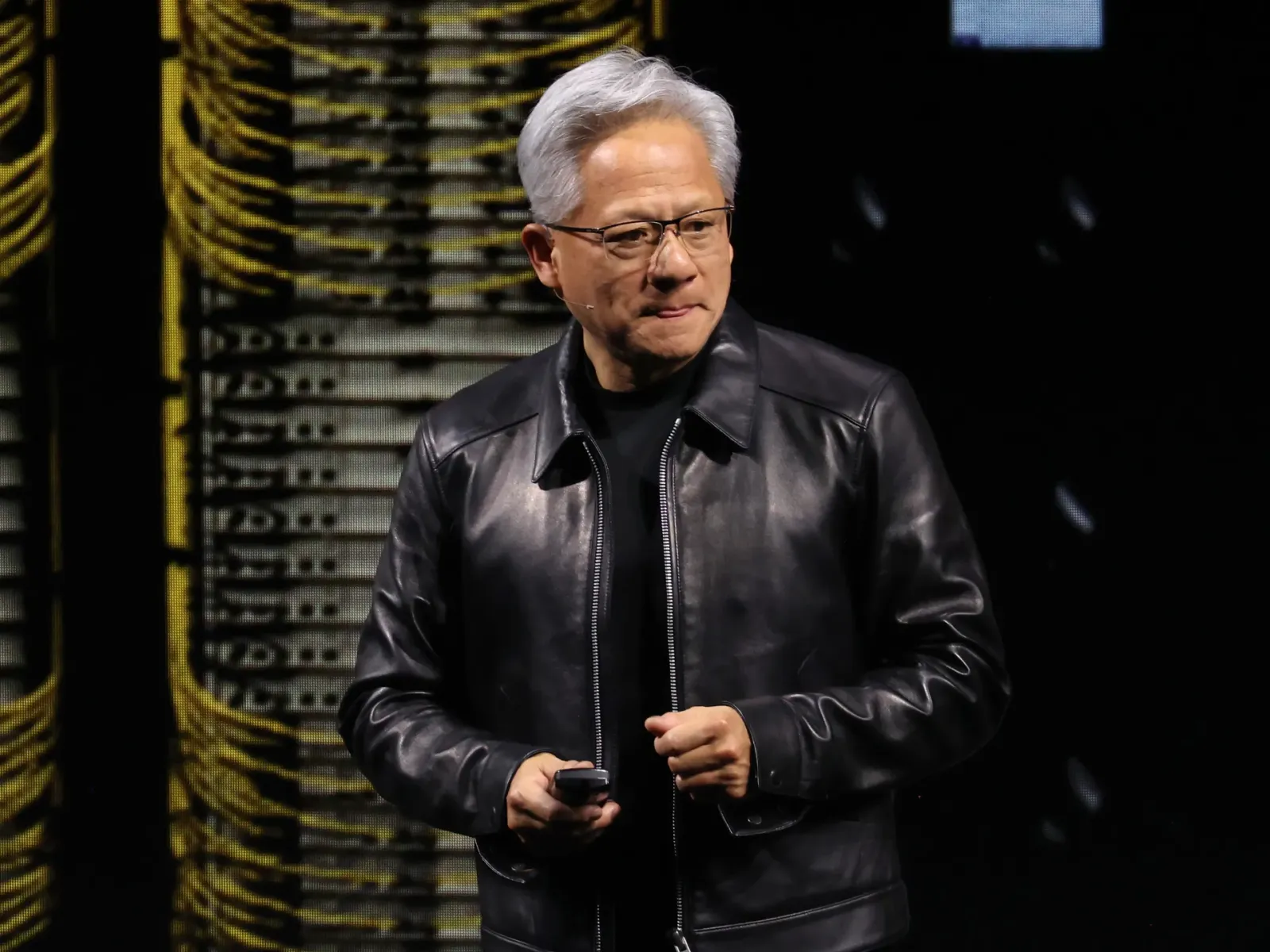
Elon Musk joined 177,000 signatories to a petition demanding Nvidia reinstate cofounder Jensen Huang, who resigned last week, while Analysts estimate Nvidia could lose 25 to 30 percent of its value without Huang, a key-person risk now tangled with White House AI policy and fresh China chip restrictions.
Elon Musk is one of 177,000 signatories to a petition demanding that Nvidia's board reinstate Jensen Huang, the cofounder who resigned last week. The board is not budging. Reuters reported, citing three unnamed people, that Nvidia's directors are not considering bringing Huang back, even as the "Stand With Jensen" campaign collects names from current and former employees, partners, shareholders and supporters.
The number every Nvidia holder is now staring at: analysts estimate the company could lose as much as 25 to 30 percent of its value without Huang. The market has already started pricing something in. Nvidia's stock was trending downward in early trading on Wall Street, with US markets opening down 2.3 percent on the day. Over the last five days the stock has dropped 8.5 percent, and it is down more than 25.7 percent over the last month. Historically, a drawdown of that size at a company of Nvidia's scale ripples through the index funds and portfolios that hold it, which is why this boardroom fight is being watched far beyond Silicon Valley.
The petition's letter is blunt about the sequence its signatories want. "We are current and former NVIDIA employees, partners, shareholders, and supporters. We write with gratitude for Jensen Huang and with a clear demand to the Board: bring Jensen back while an independent investigation establishes the facts, unless and until you can provide compelling evidence that his removal is in NVIDIA's best interests," it reads. The pressure is not only public. The Financial Times reported that Huang is considering a comeback, and that an unnamed group of Silicon Valley insiders has assembled a so-called war room and is lobbying the White House for support, a move that may have been successful.
President Donald Trump gave that effort a nudge on Monday. "A lot of people are asking Jensen, they think Jensen should go back. That certainly isn't a bad idea," he told reporters. The president has his own exposure to the outcome: the Washington Post reported on Monday, citing a review of his financial disclosures, that Trump's reported trades this year suggest he held between $13m and $62m in Nvidia stock as of the end of August.
Huang resigned last week from the company he cofounded, following reports of extramarital affairs, including one with an alleged Chinese spy. That is the factual basis the source gives for the departure, and it is why the petition asks for reinstatement while an independent investigation establishes the facts. For a company whose founder is its public face, the gap between allegation and finding is now a governance question with a market price attached to it.
The board's decision lands in the middle of a policy squeeze. The White House is moving to designate Nvidia, along with more than two dozen other companies, as "national champions" in the artificial intelligence industry, a new initiative intended to help the company secure more business overseas, according to reporting by The Wall Street Journal. At the same time, the Trump administration issued a rule on Monday restricting China's access to chips made by companies including Nvidia, as Trump begins a trip to China where he will meet with President Xi Jinping.
The restrictions target a specific workaround: Chinese companies using data centres in Southeast Asian countries such as Malaysia and Thailand to train their AI models and thereby "circumvent" existing limits. "The rule is designed to ensure that existing restrictions on access to sensitive American technology cannot be circumvented through remote computing arrangements involving data centres in third countries," the Department of Commerce said in a statement. The timing is not accidental. The Commerce Department is scrambling to demonstrate that it is cracking down on Chinese access to sensitive US technology, following reports that the agency under Secretary Howard Lutnick turned a blind eye to the smuggling of advanced Nvidia AI chips into China.
For executives watching, Nvidia is a live case study in key-person risk, the idea that a company's value can be inseparable from one individual. Analysts have put a 25 to 30 percent figure on that dependence, roughly the scale of the stock's one-month decline. Boards typically treat founder departures as succession problems. Here it is simultaneously a succession problem, a political problem and a national-security problem, with the White House, the Commerce Department and a 177,000-name petition all in the room. The lesson for peers is uncomfortable: when a founder is the brand, the balance sheet and a diplomatic asset at once, the cost of a governance decision never stays inside the boardroom.
This story's Key Insights and Take-aways are locked.
Create a free account to unlock Executive Actions for one credit.
Register to UnlockAlways free for Executives Club members. Join the Club
More in Technology

Anthropic mathematician claims Claude helped crack the Riemann hypothesis
If the proof holds, AI has toppled math's most famous open problem; if it does not, it is a case study in announcing breakthroughs before anyone verifies them.

AI's $4 Trillion Wipeout Erases Nasdaq's Gains for the Year
A brutal week took roughly $4 trillion off the AI sector and left the Nasdaq flat for the year, and the damage ran the full length of the supply chain.

Anthropic mathematician says AI proved the Riemann hypothesis. Verification will take time.
A single unverified claim from inside Anthropic now sits against more than 160 years of open mathematics, and the gap between asserting a proof and surviving peer review is the entire story.