
Nvidia Faces SEC Probe Into Accounting as Asia Chip Sales Draw Scrutiny
The New York Times reports federal investigators are examining the chipmaker's books, turning scrutiny on sales practices in Asia that had already raised questions.
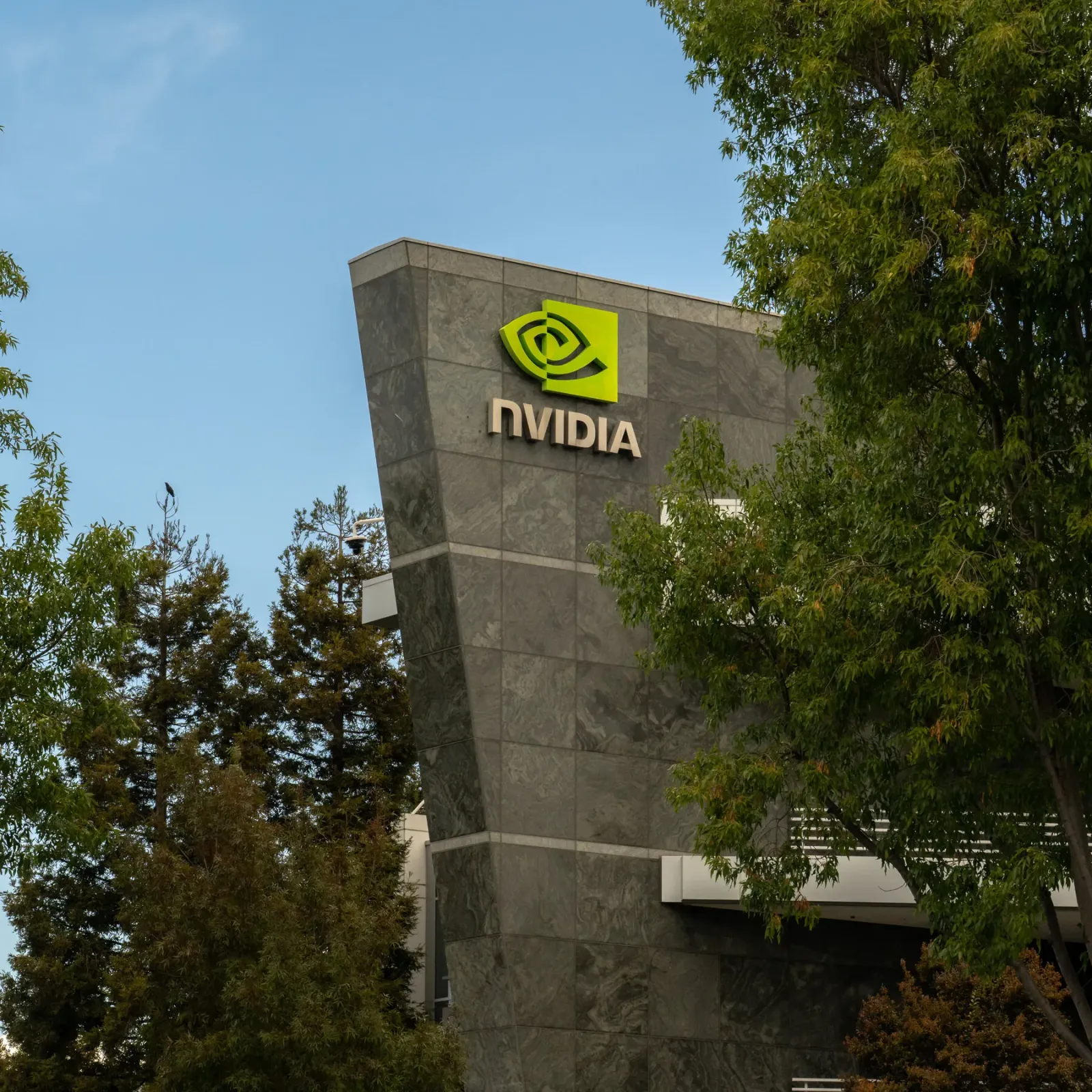
Nvidia is facing a Securities and Exchange Commission probe into its accounting practices, according to a New York Times report, after questions surfaced amid revelations about questionable chip sales in Asia. For executives running companies with complex channel or cross-border revenue structures, the case is a reminder that accounting scrutiny becomes a governance problem long before it becomes a legal one.
Nvidia is facing a Securities and Exchange Commission probe into its accounting practices, according to a New York Times report. The questions did not appear out of thin air. They surfaced amid revelations about questionable chip sales in Asia, which means the scrutiny is not about a rounding error buried in a footnote. It is about how revenue was recognized, where the chips actually went, and whether the numbers told the story investors believed they were buying.
That distinction matters enormously. Product risk, competitive risk, and even geopolitical risk are things investors price every single day. Accounting risk is different. It attacks the one thing a public company cannot replace quickly: the assumption that the reported numbers are real. For a company at the center of the AI trade, where valuation rests on expectations about future demand, a cloud over the books is a cloud over everything else.
Start with what an SEC accounting investigation actually is, because the phrase sounds more dramatic than the process usually turns out to be. The agency's enforcement division typically opens a matter after tips, whistleblower submissions, news reports, or anomalies flagged in filings. Investigators then issue document requests and subpoenas, take testimony, and work alongside the company's outside auditors. Most investigations close without charges. Some end in settlements involving civil penalties and undertakings. A smaller number end in litigation. The worst outcomes, historically, involve restatements, officer-and-director bars, and disclosure that prior financials can no longer be relied upon. None of that has happened here, and a probe is not a finding.
The Asia element is where this gets interesting for anyone who follows hardware. Asia is simultaneously the factory floor and a giant customer base for the chip industry. Taiwan, South Korea, Japan, Singapore, and Malaysia sit at the center of fabrication, packaging, and distribution. China is one of the largest end markets. That combination creates a long list of places where revenue recognition gets complicated: distributors that take title versus those that act as agents, consignment inventory, side agreements, rights of return, and shipments timed to land inside a quarter. Auditors and regulators have historically paid close attention to channel sales in the region for exactly those reasons. Layer on years of US export restrictions on advanced chips, and the question of who bought what, where it shipped, and when it was booked becomes a compliance question as much as an accounting one.
For context, this is not a new theme in tech. The industry has a long history of accounting disputes tied to channel inventory, from the telecom equipment bust two decades ago to more recent cases involving hardware makers and their distributors. The pattern is familiar: demand looks strong, the channel absorbs product, and then the channel stops absorbing. The question regulators ask afterward is whether the company knew, and whether investors were told.
The second-order effects are where boards should focus. An SEC probe triggers a set of obligations that run in parallel with the investigation itself. Companies must assess whether the matter is material and whether disclosure is required. Audit committees typically launch their own independent review, often with outside counsel, which can create tension with management and slow decision-making. Auditors become more conservative, which can affect everything from revenue recognition judgments to the timing of sign-offs. D&O insurers reprice. Customers and suppliers, especially those with their own compliance exposure, start asking questions. And the stock, which trades on narrative as much as on numbers, can move on headlines alone.
There is also a competitive dimension. Nvidia sits at the center of an ecosystem of chip designers, foundries, memory makers, and equipment suppliers, many of which sell through the same Asian distribution networks. If regulators are examining how one company books those sales, peers with similar structures should assume their own practices will get a second look. That is how enforcement waves typically start: not with a sweeping new rule, but with one high-profile matter that resets what everyone considers acceptable.
The strategic takeaway is not that Nvidia did anything wrong. It is that the cost of an accounting question gets paid long before any verdict arrives. Management time gets diverted. Recruiting gets harder. Deals get slower. And the market applies a discount that is hard to quantify and harder to remove. For executives running companies with complex channel structures, the lesson is to get ahead of it: know exactly where your product goes after it leaves the loading dock, document the judgments behind every revenue recognition call, and make sure the audit committee is asking the uncomfortable questions before a reporter or a regulator does it for them.
This story's Key Insights and Take-aways are locked.
Create a free account to unlock Executive Actions for one credit.
Register to UnlockAlways free for Executives Club members. Join the Club
More in Technology

Anthropic mathematician claims Claude helped crack the Riemann hypothesis
If the proof holds, AI has toppled math's most famous open problem; if it does not, it is a case study in announcing breakthroughs before anyone verifies them.

AI's $4 Trillion Wipeout Erases Nasdaq's Gains for the Year
A brutal week took roughly $4 trillion off the AI sector and left the Nasdaq flat for the year, and the damage ran the full length of the supply chain.

Anthropic mathematician says AI proved the Riemann hypothesis. Verification will take time.
A single unverified claim from inside Anthropic now sits against more than 160 years of open mathematics, and the gap between asserting a proof and surviving peer review is the entire story.