
Nvidia's $58.1B stock spree nearly matched its buybacks, and one analyst sees double exposure
Nvidia's $58.1B in equity stakes nearly equals its $61.2B in buybacks, turning the chipmaker into both supplier and financier of the AI boom, and one analyst warns the downside now cuts twice.
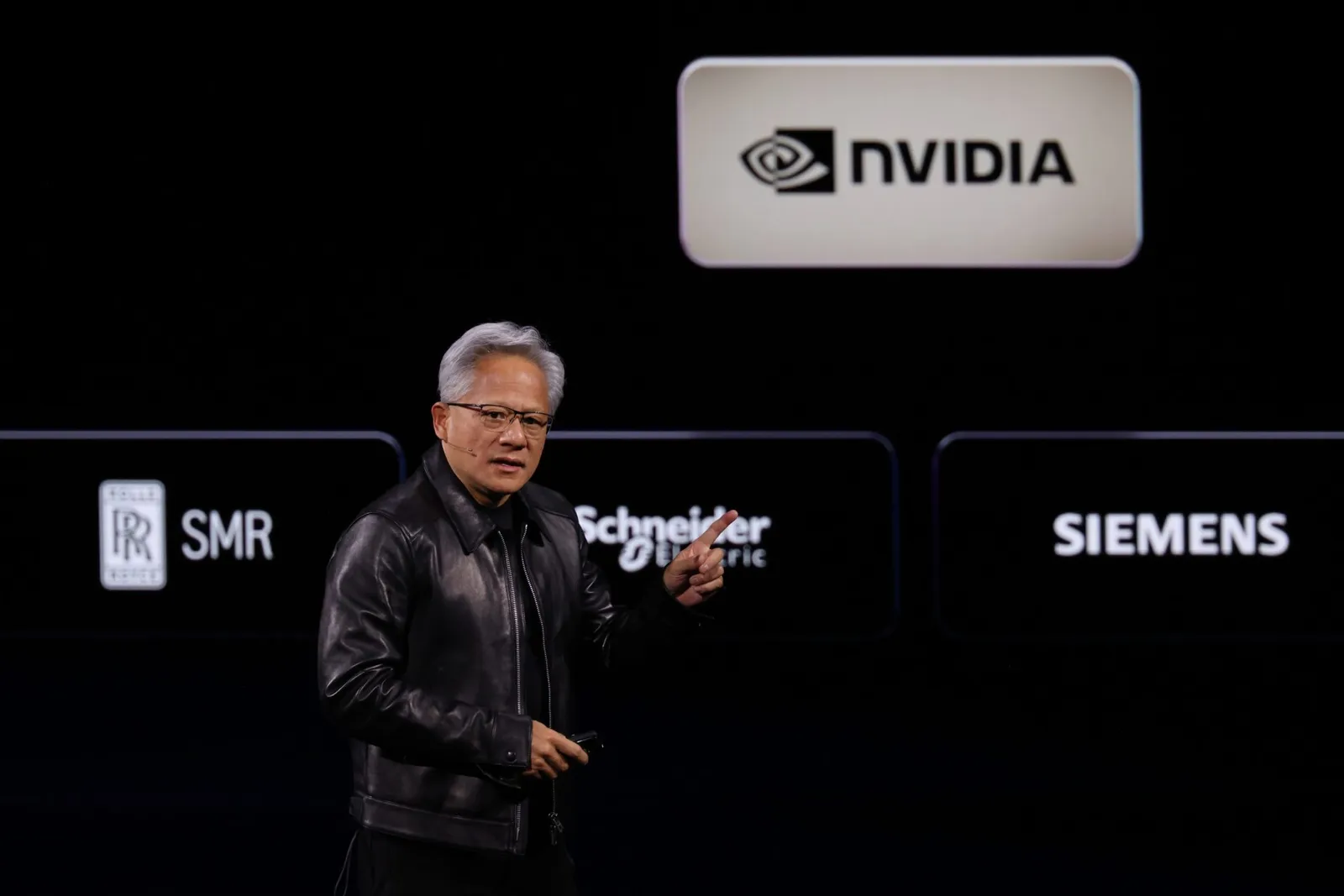
Nvidia spent $58.1 billion buying other companies' stock in the nine months ending Oct. 25, nearly matching the $61.2 billion it spent on buybacks, per its latest quarterly results, with Colette Kress running the call as interim CEO. For boards and CFOs, that near-even split means Nvidia now carries chip-demand risk and equity-valuation risk in the same AI cycle, a double exposure that reshapes how the industry's financing chain should be stress-tested.
Nvidia spent $58.1 billion buying other companies' stock in the nine months ending Oct. 25, nearly 12 times the $4.95 billion it spent in the same stretch a year earlier, according to quarterly results posted late Tuesday. That figure lands almost exactly on top of the $61.2 billion Nvidia spent on its own stock buybacks, up from $36.3 billion a year ago. For a company best known for selling the chips that power the AI boom, the near-even split is the tell: Nvidia is now one of the industry's biggest suppliers and one of its biggest financiers at the same time. James Kisner, managing director of technology at equity research firm Water Tower Research, put the risk bluntly to Fortune: "It's magnified and you feel more pain because you're kind of double exposed here."
The scale only makes sense against the quarter itself. Nvidia reported $115.8 billion in revenue for the three months ending Oct. 25, more than double the $57 billion it posted a year prior and ahead of the $109 billion analysts expected. It was also Nvidia's first earnings report without Jensen Huang as CEO, with Colette Kress running the call as interim chief executive. The equity stakes, per Nvidia's Q3 2026 CFO commentary, are "focused on frontier labs, infrastructure financiers, and other private companies." Nvidia has invested in OpenAI and Anthropic, which means a meaningful share of the capital leaving the chipmaker is landing inside some of the largest buyers of its own hardware.
That is where the circular-financing question gets uncomfortable. If Nvidia's money helps fund the data centers and model training that consume its chips, how much of its own demand is it underwriting? Kisner did not dodge it. "If you were really cynical, you could say, 'Oh, like these guys are just generating their own demand,'" he told Fortune. The returns on those stakes are not yet carrying the story: equity securities generated just $1.8 billion in net gains in Q3, a number that included a $1 billion loss from non-marketable equity securities. The strategic value may be real, but the mark-to-market payoff is thin next to the $58.1 billion deployed.
Kisner is careful to note the incentives cut in Nvidia's favor, at least while the boom runs. "There are all kinds of incentives for them to fuel the fire if they have the cash, so there's a self-serving aspect," he said. "The markets really reward them for pouring all this money." The market has rewarded plenty: Nvidia became the first company to cross the $5 trillion valuation mark last year, though it has since slipped to $3.7 trillion as of Nov. 18, per Yahoo Finance data. Kisner described the strategy as a continuation of Huang's approach of "spreading money around and kind of keeping the ecosystem going," and said he sees Kress carrying it forward with "a little more conservatism" at the margins.
Kress laid out her own hierarchy on the Nov. 17 earnings call. Returning capital to shareholders is a "super top priority," she told analysts, with $227.3 billion still authorized under the buyback program that she said Nvidia intends to use "by the end of fiscal 2028." But a second priority is standing behind suppliers who "are working feverishly to build more" and may need "assistance in terms of capital." "We want to make sure that we're there for them so they can move as quickly as possible," Kress said. "I think that is a very great use of our capital to help support that part of it."
The commitments extend well past suppliers. Kress said Nvidia's future commitments to neoclouds, the smaller firms that buy Nvidia chips and then rent out computing capacity, totaled $32 billion in Q3. Total credit guarantees reached $118 billion, including $105 billion in credit support for the PORTS-Pike data center project in Ohio, which will host Nvidia infrastructure under a 20-year lease with OpenAI. Those guarantees are conditional, and Kress was explicit about it: some only take effect once customers secure financing for their data centers, and may fall away if construction runs into trouble. "If all of that begins and unfortunately they are delayed or they have a challenge in terms of building that, our guarantee doesn't exist anymore," she told analysts. "Our guarantee for most of these are really about when they are ready to go." Nvidia is also open to financing select customers' data centers, though Kress called it "a lot of work to understand if those are the right types of investments," adding that the company will look "very deeply" at the company, its plans, and everything the data center needs.
For CFOs and boards across the AI supply chain, the read is not that Nvidia is doing something reckless. It is that the company has quietly built a second balance sheet made of other companies' equity and other companies' credit, and that structure behaves differently in a downturn than a pure chip business does. Kisner's point is arithmetic: if AI spending slows, Nvidia absorbs lower chip sales and falling valuations on the stakes it holds, at the same time. The $58.1 billion is affordable against Nvidia's free cash flow, as Kisner noted, which is exactly why it is worth watching. The same cash engine that lets Nvidia fund its customers and suppliers also lets it decide, quarter by quarter, how much of the ecosystem it wants to own. Peers weighing similar vendor-financing or strategic-investment programs should note the disclosure burden that comes with it: every guarantee, every neocloud commitment, and every private stake now sits in the same document as the revenue line, and investors will read them together.
This story's Key Insights and Take-aways are locked.
Create a free account to unlock Executive Actions for one credit.
Register to UnlockAlways free for Executives Club members. Join the Club
More in Business

S&P 500 Enters Correction, Down 10% From Its High on AI Worries
The index's slide past the 10 percent line is a symbolic verdict on investor mood, and the AI trade that powered the rally is now the thing testing it.

Dow and S&P 500 enter correction as Nasdaq logs worst week since 2020
All 11 S&P 500 sectors fell more than 1% in the same week for the first time since April 2025, a breadth signal that matters more than any single index level.

Chip stocks lose $2.3 trillion in a week, worst run in 25 years
A $2.3 trillion weekly wipeout in semiconductors is forcing every board with an AI story to ask whether it owns a thesis or just a crowded trade.