

Nvidia's interim CEO dangles December raises as board rules out Jensen Huang's return
Colette Kress and her executive bench told staff the AI roadmap and customer ties survive without Huang, while dangling pay raises and equity to hold technical talent.
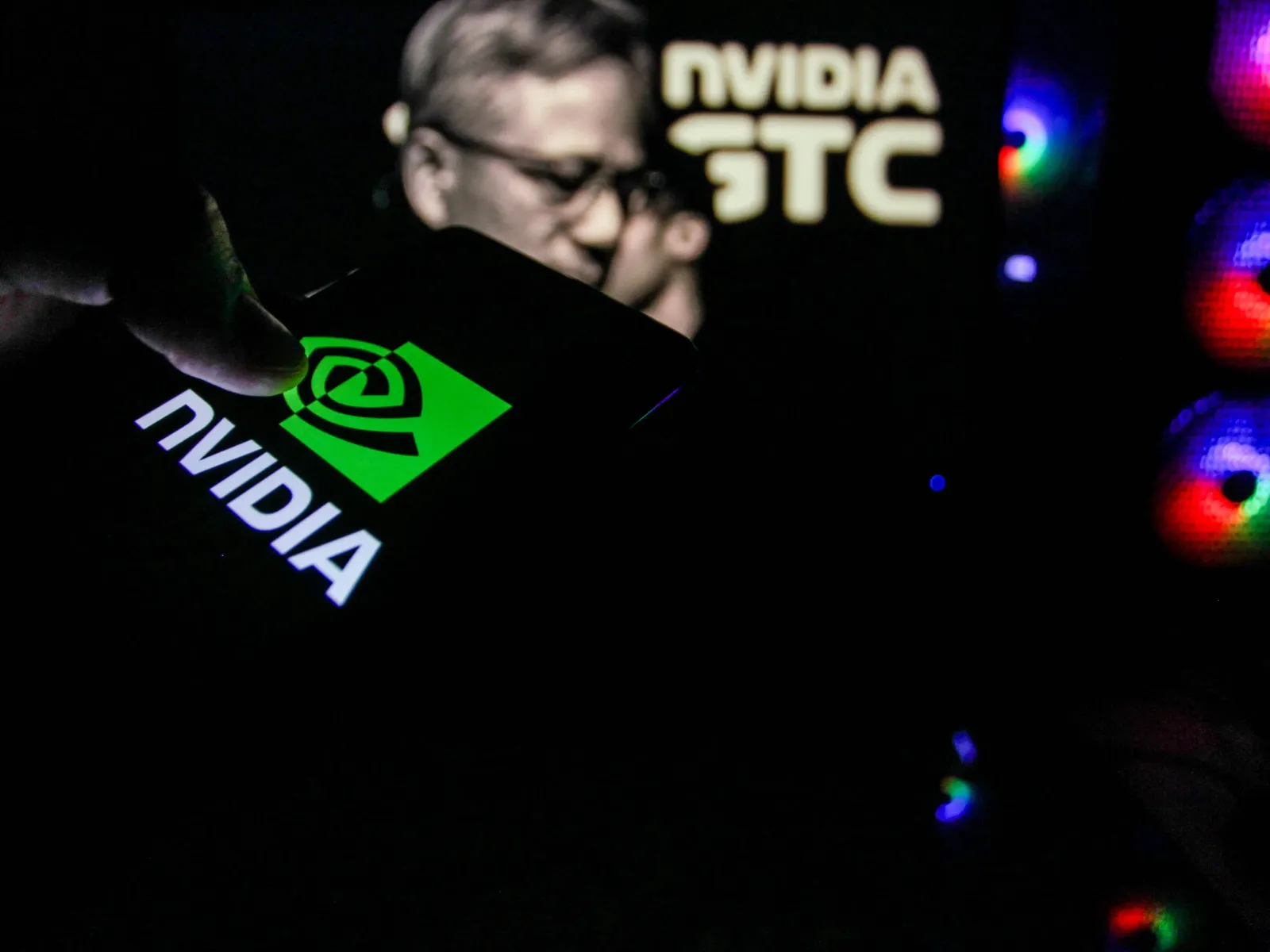
Nvidia interim CEO Colette Kress told employees at the company's first all-hands since Jensen Huang's resignation that pay raises and additional equity grants arrive in December, while the board searches for a permanent CEO and rules out reinstating Huang. For boards and operators, the meeting is a live case study in holding talent, customers, and suppliers together through a leadership shock.
Nvidia's interim CEO Colette Kress used the company's first all-hands meeting since Jensen Huang's resignation to put money on the table: pay raises and additional equity grants are coming in December. The message, delivered Wednesday, was aimed squarely at the technical talent Nvidia cannot afford to lose while it hunts for a permanent chief executive. Kress also reiterated that the board is searching for a new CEO and is not considering reinstating Huang, even as employees have organized internal and external campaigns pushing for his return.
That is a striking thing to say out loud to a workforce that just watched its most recognizable leader walk out the door. The all-hands was a stabilization play, and Nvidia stacked the room accordingly. Kress was joined by GPU engineering SVP Jonah Alben, Chief Commercial Officer Nick Parker, engineering SVP Andrew Bell, software engineering SVP Dwight Diercks, operations EVP Debora Shoquist, and HR chief Kristen Major, according to a recording of the meeting obtained by Business Insider. Parker said customers and partners had flooded the company with support. "They said, 'We support you, anything we can do to help,'" he said. "We love our relationship with Nvidia. We love everything that you've done for us." But he also conceded the obvious: Nvidia has to broaden customer ties beyond Huang, leaning on a "deep, broad, wide executive bench." His framing: "That's how we'll scale that executive touch that has been such a great piece of the magic of how Nvidia delivers value."
The more concrete news came from Bell, who laid out how Nvidia intends to stop being a chip company and become an AI-infrastructure company. The company has already moved from designing chips to building systems and racks. It spent the past year building racks. Next year, it plans to build containerized "pods" capable of delivering eight racks at a time. Eventually, customers will be able to order a full data center. "At some point, people will be able to just order a full data center, and we're going to lead that," Bell said. He argued that Nvidia's hands-on approach, following products through systems, software, operations, and customer deployments, is what separates it from chip suppliers that lose momentum after demand peaks. "I believe we don't fade off because we take it all the way to the end," he said. "And so into the future, we're going to continue that."
Shoquist, the operations chief, made the case that supplier relationships are the moat underneath all of it. Nvidia's suppliers are "very excited about our stardom," she said, but she stressed those ties "are bonded by mutually beneficial situations," including aligned product roadmaps, sufficient manufacturing capacity, and profit for vendors. "Those things don't ever change," she said. "They were consistent when we were small. They're consistent now that we're large." The logic she offered suppliers: "As we are successful, they will be successful regardless of the product, the direction, and the technology transition."
On software, Diercks said Nvidia remains committed to "ultimately acquiring" Hugging Face, the open-model platform, and would keep supporting both open and closed models. He called open models "our next developer platform," pointing to Nvidia's Nemotron models and its physical-AI software, including Groot for robotics, Cosmos for simulation, and Alpamayo for autonomous vehicles. The company would keep "aggressively partnering with and supporting and ultimately acquiring Hugging Face," he said.
Alben offered the most candid moment of the meeting, describing the coordination strain inside a company growing this fast. Teams have to make room for colleagues' ideas even when those ideas compete with their own priorities. "If we're not willing to band together to do those things, it's actually no CEO that can actually fix that problem," he said. He also flagged the "top 5 things" email practice, an internal system meant to surface problems without routing them through layers of management. "The idea is that you don't communicate up to your manager, up to your up, up, up, up, up," Alben said. Instead it enables "breadthwise communication to everybody that cares about something." His blunt addendum: "If your dream is getting crushed, you'll probably express that in the top five things at some point. Statistically, that should get noticed."
Major, the HR chief who said she joined less than two years ago, struck a more emotional note, telling employees the company needed to preserve the culture that made it successful. "We need to continue doing exactly what we do well," she said. "That is taking care of each other, taking care of our partners and our customers." She described Nvidia as "an amazing place" and said her team wanted to "continue to create the conditions for you all to do your life's work." Jeff Fisher, SVP of GeForce, made sure gaming stayed in the frame, noting Nvidia still ships tens of millions of graphics products a year to roughly 250 million gamers, creators, and developers. Parker closed the loop by crediting employees and Huang for the goodwill the company is now leaning on: "That is everything that you've built, that equity that's been built up by you all and the equity that obviously Jensen has been part of building for the whole world. That is what we need to maintain momentum and trust in."
For anyone running a company through a leadership shock, the playbook on display is worth studying. Nvidia is doing three things at once: paying to keep talent, promising customers that relationships outlast any individual, and pushing a roadmap that makes the company harder to replace. The risk is that all three depend on execution during a CEO search with no announced end date. The reward, if Bell is right, is a company that sells the entire factory instead of the parts inside it.
This story's Key Insights and Take-aways are locked.
Create a free account to unlock Executive Actions for one credit.
Register to UnlockAlways free for Executives Club members. Join the Club
More in Technology

Anthropic mathematician claims Claude helped crack the Riemann hypothesis
If the proof holds, AI has toppled math's most famous open problem; if it does not, it is a case study in announcing breakthroughs before anyone verifies them.

AI's $4 Trillion Wipeout Erases Nasdaq's Gains for the Year
A brutal week took roughly $4 trillion off the AI sector and left the Nasdaq flat for the year, and the damage ran the full length of the supply chain.

Anthropic mathematician says AI proved the Riemann hypothesis. Verification will take time.
A single unverified claim from inside Anthropic now sits against more than 160 years of open mathematics, and the gap between asserting a proof and surviving peer review is the entire story.