
Nvidia's interim CEO offers pay raises and one message: 'let's move forward'
Colette Kress steadied staff with raises and a forward-march order at her first all-hands since Jensen Huang's exit - the retention test every board should be running right now.
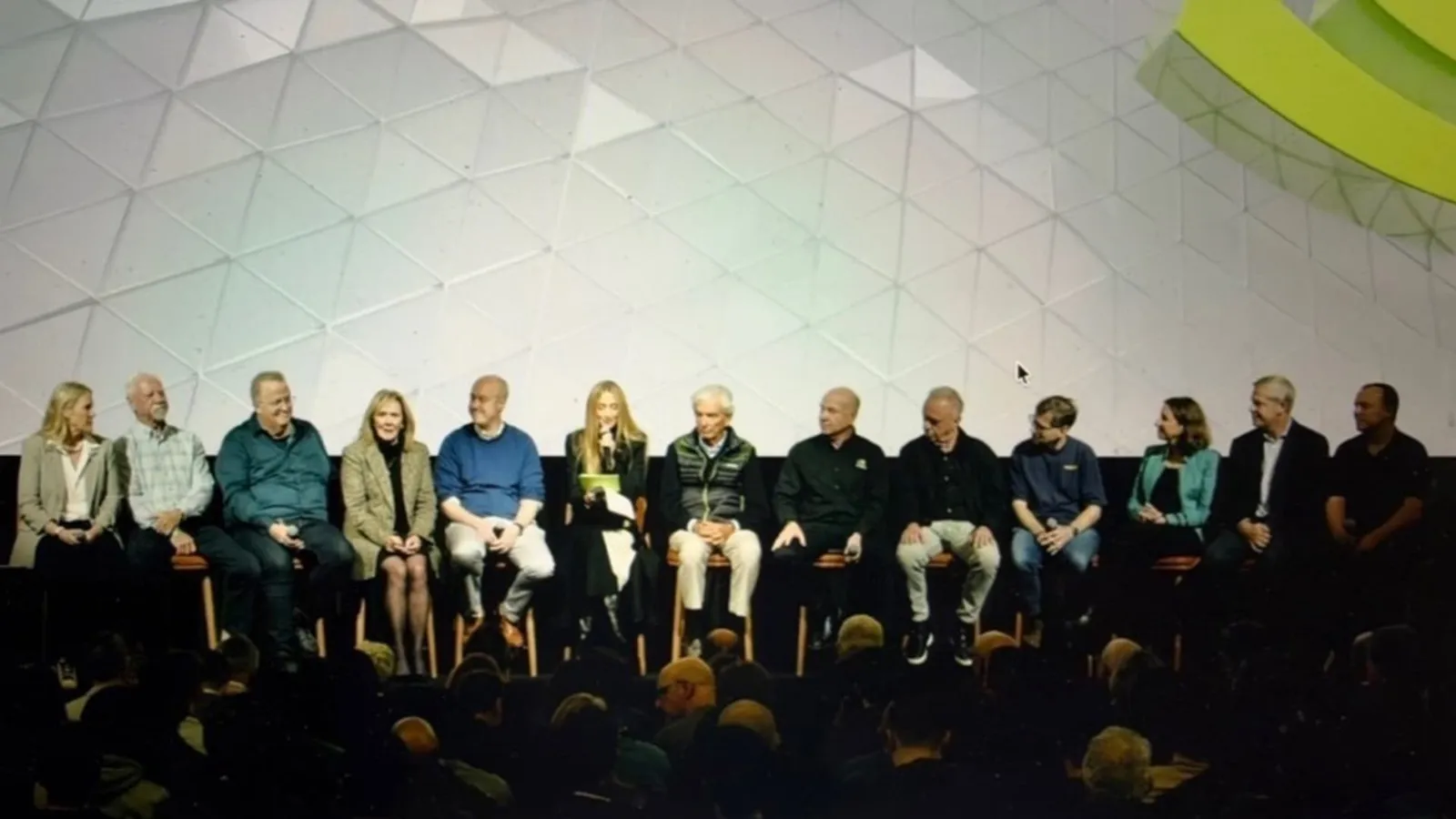
Nvidia interim CEO Colette Kress told employees 'let's move forward' and offered pay raises at her first all-hands meeting since Jensen Huang's exit. The combination is a live case study in how leadership transitions are actually held together: cash and clarity first, org chart later.
Colette Kress, Nvidia's interim chief executive, walked into her first all-hands meeting since Jensen Huang's exit with a directive and a checkbook. The directive, as CNBC reported it: 'let's move forward.' The checkbook: pay raises for staff. The report did not disclose the size of the increases, how many employees are eligible, or the circumstances behind Huang's departure, and there is no public indication yet that Nvidia has filled in those blanks. That silence is precisely why the meeting deserves attention. A raise is the one retention tool that needs no strategy deck and no reorg chart, and deploying it in the very first all-hands of an unplanned transition tells you where management believes the fragility sits: with the people who design and sell the chips, not with the boxes on the org chart.
Read the move as retention math, not generosity. When a chief executive exits without a public explanation, the first instinct inside a company is to update the resume; the first instinct outside it is to call the best engineers and ask how they are feeling. A raise changes that calculation in both directions. Internally, it converts an abstract 'we value you' into a number on a paycheck. Externally, it signals that the board and the interim leadership are willing to spend to keep the bench intact before the next quarter's deliverables are at risk.
What we do not know is the scale, and scale is the whole ballgame. A raise for a slice of the workforce is a morale gesture; a raise across the board is a compensation reset with a permanent cost line attached and a precedent that the next chief executive inherits. With no figure disclosed, the announcement functions first as a signal and only later, if at all, as policy.
For context on why a single all-hands is making headlines: Nvidia is not a company where a leadership change stays a private matter. Historically, it built its franchise on graphics processors, then found those same chips at the center of the artificial intelligence buildout, which turned a hardware vendor into one of the most closely watched companies in global markets. Companies in that position are read by suppliers, cloud customers, contract manufacturers, and investors simultaneously, and each of those audiences interprets an 'interim' title the same way: as an unanswered question. Interim leaders can run operations. What they cannot do is commit a company's next five years, and the counterparties who sign multi-year capacity deals know it.
The harder problem is identity. Some chief executives are so fused with a company's public story that their departure is not a staffing event but a narrative one. Employees who joined to work for that person need a new reason to stay; customers who bought partly on that continuity need reassurance; and investors who anchored a thesis to one leader have to rebuild it. Kress's answer, at least in the first meeting, was to compete on the most tangible ground available: pay, plus a plain instruction to keep moving. Both are unglamorous. Both work, at least for a quarter.
Now watch the sequencing, because ordering is where transitions get won or lost. First, does the interim tag get a timeline? An open-ended interim arrangement drains the senior leaders who are quietly deciding whether to test the market. Second, do the raises become a formal, company-wide compensation review or stay a one-time gesture? The former is a strategy; the latter is a headline. Third, does the company explain Huang's exit? Every week without an answer lets rumors do the narrating, and rumors are expensive.
For every other company watching, the lesson is about preparation. Leadership successions at founder-influenced or long-tenured companies tend to fail on the same two fronts: talent retention and communication cadence. Boards typically rehearse the legal and disclosure choreography and skip the part where the hundred most important employees decide, in the first two weeks, whether to stay. Nvidia's answer, a raise paired with a forward-looking message at meeting one, is a playbook any chief people officer can copy this quarter.
The stakes are not abstract. Semiconductor and AI talent is mobile, well paid, and actively recruited, and the firms that win the next cycle are usually the ones that kept their engineering core intact through the messy middle. Kress has bought time, goodwill, and a bit of quiet with a single announcement. The test is whether Nvidia's leadership uses that time to name a permanent structure, widen the raises into a real compensation strategy, and close the question mark hanging over Huang's exit, or whether the company simply asks everyone to move forward and hopes nobody asks forward to where.
This story's Key Insights and Take-aways are locked.
Create a free account to unlock Executive Actions for one credit.
Register to UnlockAlways free for Executives Club members. Join the Club
More in Technology

Anthropic mathematician claims Claude helped crack the Riemann hypothesis
If the proof holds, AI has toppled math's most famous open problem; if it does not, it is a case study in announcing breakthroughs before anyone verifies them.

AI's $4 Trillion Wipeout Erases Nasdaq's Gains for the Year
A brutal week took roughly $4 trillion off the AI sector and left the Nasdaq flat for the year, and the damage ran the full length of the supply chain.

Anthropic mathematician says AI proved the Riemann hypothesis. Verification will take time.
A single unverified claim from inside Anthropic now sits against more than 160 years of open mathematics, and the gap between asserting a proof and surviving peer review is the entire story.