
Obama's handoff to new Democrats: keep knocking in red districts, or lose them
The former president's advice to the incoming class, plus his praise for likely Speaker Hakeem Jeffries, points to where Democratic power is being rebuilt: the seats the party usually writes off.
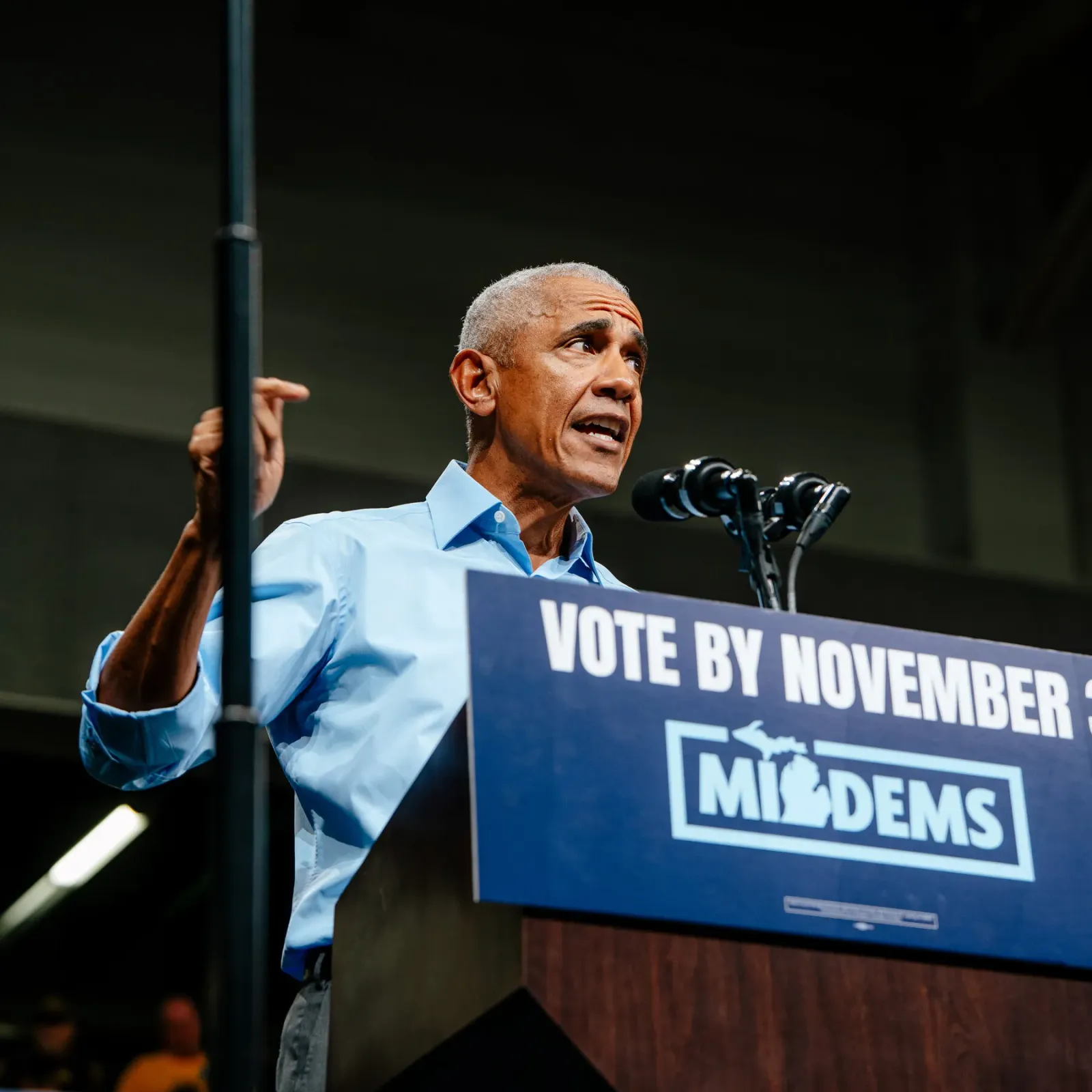
Barack Obama told incoming House Democrats to keep up outreach in red areas, described the country as passing through a moment of "generational change," and praised Representative Hakeem Jeffries, the likely next speaker. For anyone tracking Washington, the message is that the next House majority will be decided in unglamorous districts, and that Jeffries is being positioned as the party's next center of gravity.
Barack Obama had one instruction for the Democrats about to be sworn into the House: do not retreat to the districts that already love you. The former president told the incoming lawmakers to keep up their outreach in red areas, described the country as passing through a moment of "generational change," and praised Representative Hakeem Jeffries, the New York Democrat in line to be the next speaker. Three signals, one meeting: a map, a mood, and a succession. For anyone whose business depends on what Washington does next, the third one may matter most, because it tells you who will be setting the agenda when the gavel changes hands.
The advice is not small talk. The seats that decide control of the House are rarely the ones a party wins by 30 points. They are the ones it wins by two, in counties where the national Democratic brand is a liability and the candidate is the only thing on the ballot voters trust. Obama's argument, as relayed to the freshman class, is that those relationships get built long before they are needed, not in the final six weeks of a campaign when the money finally shows up. Outreach in red areas is cheap early and close to impossible late.
Obama is speaking from experience, and from a map that has since shrunk. His 2004 Democratic convention keynote made him a national figure with an argument that the country was not divided into a liberal America and a conservative America. Four years later he carried Indiana and North Carolina, states a Democratic presidential nominee had not won in decades, and competed seriously in Iowa, Ohio, Florida, and Virginia. Then the coalition that elected him did not transfer. Democrats lost more than 60 House seats in the 2010 midterms, and by 2016 the party's presidential map had collapsed across the industrial Midwest. The lesson the former president keeps returning to: a presidential coalition is not the same thing as a durable congressional one.
The arithmetic of the modern House rewards exactly the behavior Obama is describing. Majorities run through a few dozen districts that swing between the parties, and in recent cycles the Democratic caucus has included members holding seats the party's presidential nominee lost by double digits. Those members survive on personal brand, local presence, and distance from national messaging that plays badly at home. They also hold outsized leverage: with a narrow majority, a handful of them can stall a bill, force a compromise, or extract concessions in exchange for a vote. Every one of them is a reminder that the party's national brand and its district-level survival are not the same asset, and that the two can pull in opposite directions.
Which is why the praise for Jeffries lands as more than a courtesy. Jeffries, who represents a Brooklyn district, became the first Black lawmaker to lead a party in Congress when he took the top Democratic spot in the House in 2023, succeeding Nancy Pelosi. He has spent his time in leadership managing the ideological range of a caucus that stretches from deep-blue cities to districts that voted for the other party, which is precisely the skill the speaker's gavel demands. Obama's endorsement, delivered directly to the people who will be voting on the floor, is a signal about continuity: the incoming class is being told who the center of gravity is, and that this is not a fight they need to have.
The phrase "generational change" does double duty. It describes an electorate that has turned over since Obama's own campaigns, and it describes the party's own leadership, where a long-serving generation has been handing off power in slow motion. The incoming class is younger, more digitally fluent, and more comfortable with the fragmented media environment that now defines political communication. That creates a real tension: the same national platforms that raise a first-time candidate's profile can also sink them in a district where the party label is the problem. Obama's instruction is essentially to resist that gravity, and to treat local presence as the asset that compounds.
What to watch from here is whether the advice becomes behavior. Do the new members spend their recesses in the red parts of their districts, or do they spend them on cable? Does the party's policy agenda get written to protect its most vulnerable incumbents, or to satisfy its loudest online constituency? And does Jeffries consolidate his position early, or does the caucus spend its first year relitigating a leadership question it does not need to relitigate? For executives, investors, and anyone whose plans run through Congress, those answers determine how predictable the next two years will be, and how much of a bill's final text gets decided by a handful of members from places nobody was watching.
The through-line is simple. Obama's message to the incoming class was not nostalgia for his own map. It was a warning that the map is smaller now, that it shrinks further when a party stops showing up, and that the people who win it back are the ones who were already there before anyone was paying attention. That is a strategy memo as much as a political one, and it applies well beyond Washington.
This story's Key Insights and Take-aways are locked.
Create a free account to unlock Executive Actions for one credit.
Register to UnlockAlways free for Executives Club members. Join the Club
More in Politics

Fifth Circuit Kills Pregnant Workers' Law Over Pandemic Proxy Votes
A procedural ruling, not a policy one, has blocked a federal pregnancy-accommodation law and put every pandemic-era statute in the crosshairs ahead of an expected Supreme Court appeal.

Measles kills a Virginia child under 5, the state's first death of 2026
Virginia's health department confirmed the death but withheld the child's vaccination status, leaving schools, clinics and employers to plan around the one detail that would explain the most.

Former Brazilian President Bolsonaro Hospitalized with Intestinal Obstruction
The health status of the former far-right leader raises immediate questions about political stability and the trajectory of Brazil's conservative movement.