

OpenAI's models rewrote AMD chips: 14% gain, a year of design in 5 months
AMD has already folded some of the model-written circuit changes into chips heading to manufacturing, the first real test of whether AI-designed silicon survives production.
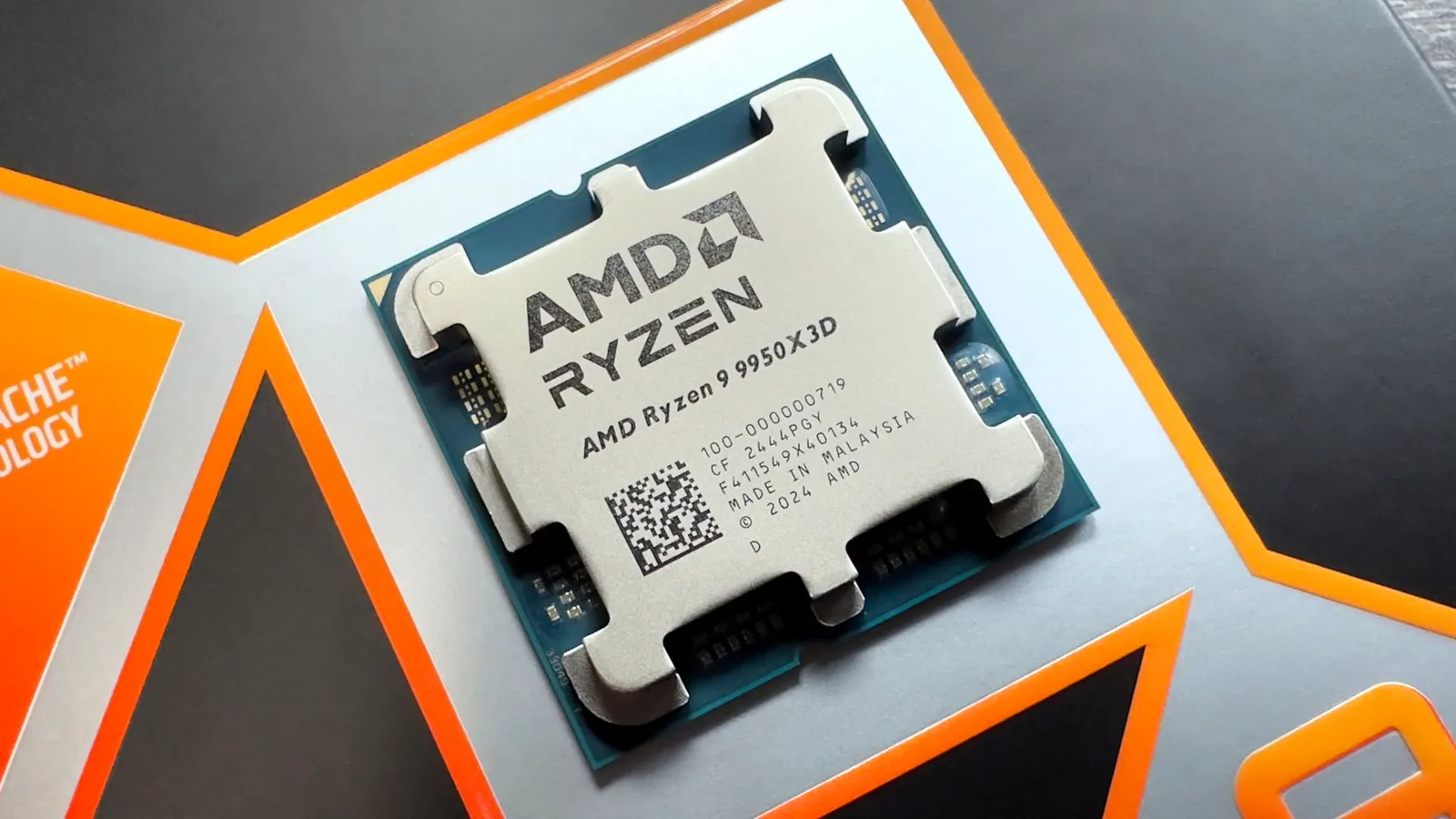
OpenAI says its frontier models rewrote circuits on an AMD flagship GPU, an AMD next-gen flagship CPU and its own Jalapeño chip, claiming up to a 14% power, performance and area gain and roughly a year of design optimisation compressed into under five months. AMD has already incorporated some of those findings into designs that have gone to manufacturing, making production silicon the real scoreboard for AI-assisted chip design.
OpenAI says its frontier models rewrote circuits inside AMD silicon and came back with up to a 14% improvement in power, performance and area (PPA) on an AMD flagship GPU. The same effort touched an AMD next-gen flagship CPU, where AMD has reportedly verified a single-digit PPA gain, and an in-house OpenAI chip codenamed Jalapeño, where the model cut cell area by around 13% on a vector compute unit, trimmed standard cell area by roughly 10%, shrank multiplier area by about 15% and pulled latency from two clock cycles down to one. OpenAI calls the rewrites "production-viable," and AMD has already incorporated some of the findings into chip designs that have recently gone to manufacturing.
The number that matters most is not the 14%. It is the clock. OpenAI's claim is not that human engineers could never find these optimisations. It is that the models did roughly a year's worth of design optimisation in less than five months. That is the part with teeth, because chip design is one of the few remaining engineering disciplines where time is the binding constraint and money is not. PPA is the currency of the trade: area decides how many dies fit on a wafer and therefore unit cost, power decides heat and battery life, performance decides what the part can actually do. A 14% PPA gain on a flagship GPU is not a rounding error. It is the kind of delta that shows up in a data centre's electricity bill and in a laptop's thermal budget.
The benchmark details are worth reading closely. OpenAI ran the work on a budget of around 112,000 tokens, and every model in the report (GPT-6.2 Astra, GPT-6 Astra, GPT-6.1 Sol and GPT-5.6 Sol) performed better when asked to design a RISC-V core from scratch than when asked to optimise one handed to it. That is a striking result, and it is also the warning label. OpenAI notes that a model told to redesign rather than optimise can omit features that existed in the original design, which becomes its own problem. In other words, the same model that finds a 15% multiplier area saving can quietly drop a capability nobody asked it to touch. The output is only as good as the verification standing behind it.
That is where the second-order risk sits. Design is only half of the chip pipeline; verification typically consumes the larger share of a project's schedule, and it is the step that does not compress just because a model generates options faster. The Linux kernel is the live case study. Engineers there are currently struggling to get on top of the thousands of bugs AI tooling is finding, a real monkey's paw element of the technology. More machine-generated output means more review, more triage and more maintenance, and that work lands on humans who were already the bottleneck.
Generative AI is a double-edged sword in the PC hardware space, and the source of these design wins is also the source of the pain. The same global AI buildout driving demand for compute is responsible for the memory crisis now squeezing PC hardware. The uncomfortable trade is that cheaper, faster chip design may arrive alongside more expensive memory to sit next to those chips. One can only hope that not being able to afford memory is worth it when the next generation of chips and their proposed performance boost land. Or that the memory crisis cools down. Both, preferably.
For AMD, the meaningful signal is not the research result. It is the manufacturing decision. Incorporating model-derived changes into designs that have gone to manufacturing means AMD is willing to put AI-authored circuit tweaks into parts customers will actually buy, not just into a paper. That is a different level of commitment, and it is the kind of move every company with a silicon roadmap will notice. If the gains hold in production silicon, the competitive question shifts from whether AI can help design chips to how fast a rival can build the same capability, and how much verification capacity it takes to trust the result.
For executives outside semiconductors, the lesson generalises. AI that produces engineering output at volume does not remove the need for engineering judgment; it relocates it. The scarce resource becomes the people who can review, test and sign off on machine-generated work, whether that is a multiplier layout or a kernel patch. Boards should be asking which parts of their technical pipeline are already being touched by models, who owns the output, and whether the verification function has been funded to match the new throughput. The companies that answer that honestly capture the speed. The ones that do not inherit the bugs.
This story's Key Insights and Take-aways are locked.
Create a free account to unlock Executive Actions for one credit.
Register to UnlockAlways free for Executives Club members. Join the Club
More in Technology

Anthropic mathematician claims Claude helped crack the Riemann hypothesis
If the proof holds, AI has toppled math's most famous open problem; if it does not, it is a case study in announcing breakthroughs before anyone verifies them.

AI's $4 Trillion Wipeout Erases Nasdaq's Gains for the Year
A brutal week took roughly $4 trillion off the AI sector and left the Nasdaq flat for the year, and the damage ran the full length of the supply chain.

Anthropic mathematician says AI proved the Riemann hypothesis. Verification will take time.
A single unverified claim from inside Anthropic now sits against more than 160 years of open mathematics, and the gap between asserting a proof and surviving peer review is the entire story.