
Outlook went down first. Then Microsoft's cloud crisis went global.
A daylong Microsoft outage that started in Outlook and Teams spread to much of its cloud, and the gradual recovery is a live test of how much single-vendor dependence enterprises can stomach.
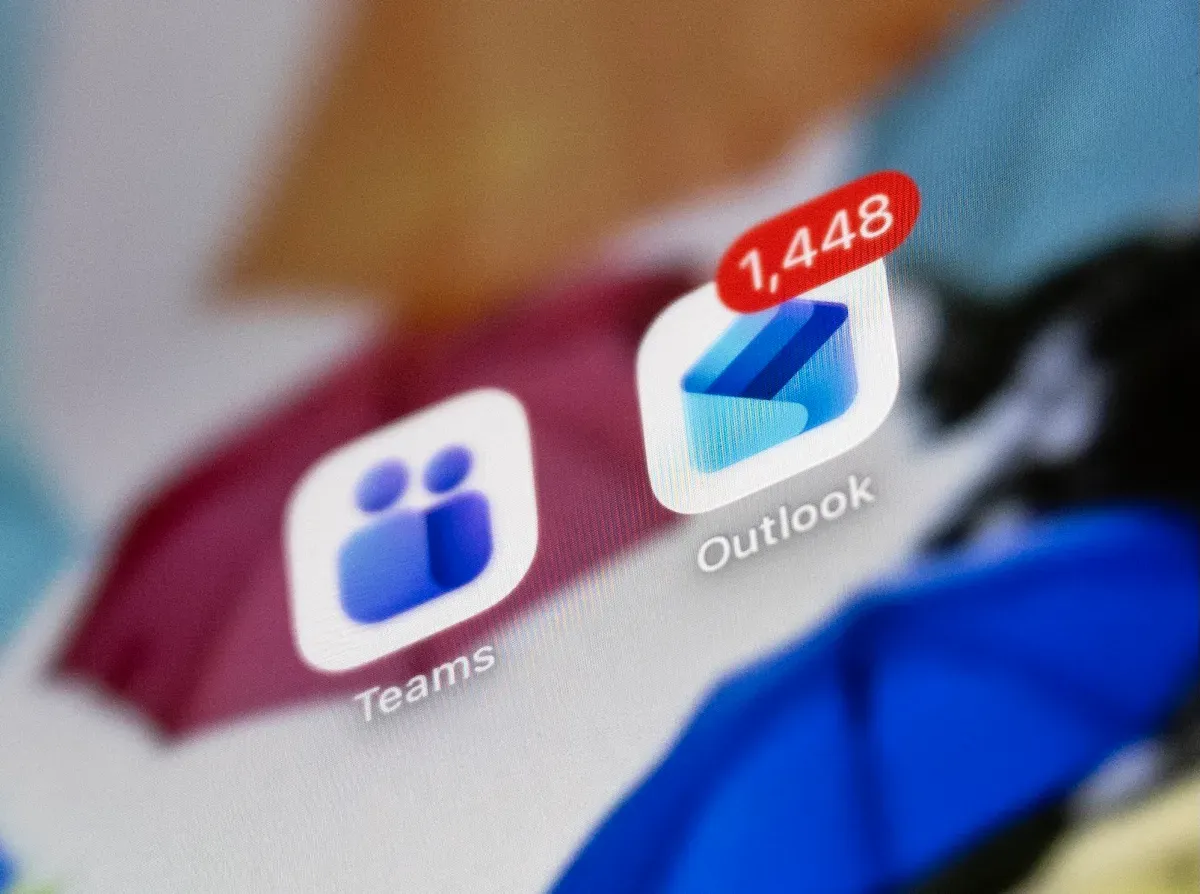
Microsoft's daylong outage began in Outlook and Teams before taking much of the company's cloud services offline, and the company says it is gradually restoring service. For executives, the episode is a direct test of concentration risk: how much of daily operations can sit inside one vendor's stack before a single fault becomes an operational halt.
Microsoft's outage did not stay in Outlook. The daylong disruption began with Outlook and Teams, the two front doors of Microsoft 365, and then spread until much of the company's cloud services were offline, according to TechCrunch. Microsoft says it is gradually restoring service. That sequence is the story. A mail and chat problem is an annoyance; a mail and chat problem that climbs into the wider cloud is a different category of event, the kind that stalls sales calls, payroll runs, support queues and login screens across thousands of organizations at the same time. The company's public account so far is about recovery, not cause.
The reason a small failure becomes a large one is architecture. Cloud providers typically run dozens of products on shared underlying infrastructure, and those products usually lean on the same identity and authentication systems. When something breaks in that shared layer, the symptom shows up everywhere at once: the calendar will not load, the chat will not sync, the file will not open, the admin console will not respond. For customers, the practical effect is that redundancy inside one vendor's stack buys less protection than they assume. For Microsoft, it means a fault that starts in a consumer-facing app can end up being described, accurately, as a cloud crisis.
What the public account does not yet include is a root cause, a customer count, or a firm timeline beyond gradual restoration. That gap matters commercially. Enterprises make procurement and renewal decisions on the assumption that the vendor understands its own blast radius, and the credibility of that assumption rests on how candidly the post-incident explanation is handled. Microsoft has historically published preliminary root-cause analyses after major disruptions; the useful test here is whether this one explains the path from Outlook and Teams into the broader cloud, not just the initial trigger.
Context helps. Microsoft's cloud has been through repeated high-profile disruptions in recent years, and the industry has a recent, vivid benchmark for cascade risk: the July 2024 CrowdStrike update that crashed Windows machines around the world, grounded flights, disrupted hospital systems and forced manual workarounds at banks. The difference is ownership. That event traced to a third-party security update pushed into Microsoft's ecosystem; this one sits inside Microsoft's own stack, which removes the easiest defense a customer has, namely blaming and replacing a supplier one layer down.
The commercial exposure is not mainly the service credits. Enterprise cloud agreements typically promise credits for missed uptime targets, and those credits are usually small relative to what an outage costs a business in lost transactions, idle staff and missed deadlines. The real exposure is habit. Microsoft 365 is the default productivity layer for a large share of the world's big employers, and the switching cost is measured in years of migration, retraining and renegotiation. That is precisely why outages at this scale get board attention: the vendor is too embedded to leave quickly, so the only lever is pressure to harden.
Regulators have been moving in the same direction. Operational resilience rules now ask financial firms and their critical suppliers to map dependencies and prove they can recover, and supervisors have grown louder about concentration risk in a handful of hyperscale providers. Disclosure expectations have tightened too, with boards increasingly expected to have a view on how quickly they would learn about a material technology failure and what they would say publicly. An outage that resolves in a day can still generate weeks of questions in a procurement review or a supervisory conversation.
For peers running platforms of their own, the lesson is less about Microsoft than about the shape of the failure. Incidents rarely announce their full scope at minute one. The teams that handle them well tend to have already answered three questions: which shared dependencies would take multiple products down at once, which customer workflows are genuinely critical versus merely loud, and who is authorized to communicate before the root cause is known. Those answers are cheap to prepare and expensive to improvise.
Microsoft says service is coming back gradually. The harder restoration is reputational: convincing customers that the company can see the whole map of its own stack, and that the next fault in Outlook stays in Outlook. Until that case is made in detail, every enterprise buyer has a fresh reason to ask what happens to their business on the day the cloud does not answer.
This story's Key Insights and Take-aways are locked.
Create a free account to unlock Executive Actions for one credit.
Register to UnlockAlways free for Executives Club members. Join the Club
More in Technology

Anthropic mathematician claims Claude helped crack the Riemann hypothesis
If the proof holds, AI has toppled math's most famous open problem; if it does not, it is a case study in announcing breakthroughs before anyone verifies them.

AI's $4 Trillion Wipeout Erases Nasdaq's Gains for the Year
A brutal week took roughly $4 trillion off the AI sector and left the Nasdaq flat for the year, and the damage ran the full length of the supply chain.

Anthropic mathematician says AI proved the Riemann hypothesis. Verification will take time.
A single unverified claim from inside Anthropic now sits against more than 160 years of open mathematics, and the gap between asserting a proof and surviving peer review is the entire story.