
Overdose deaths are falling fast. The White House credits the wrong president.
A statement celebrates a historic drop in drug deaths and points to Trump-era wins, but the steepest progress came under Biden, and that timeline will decide where the next public-health dollars land.
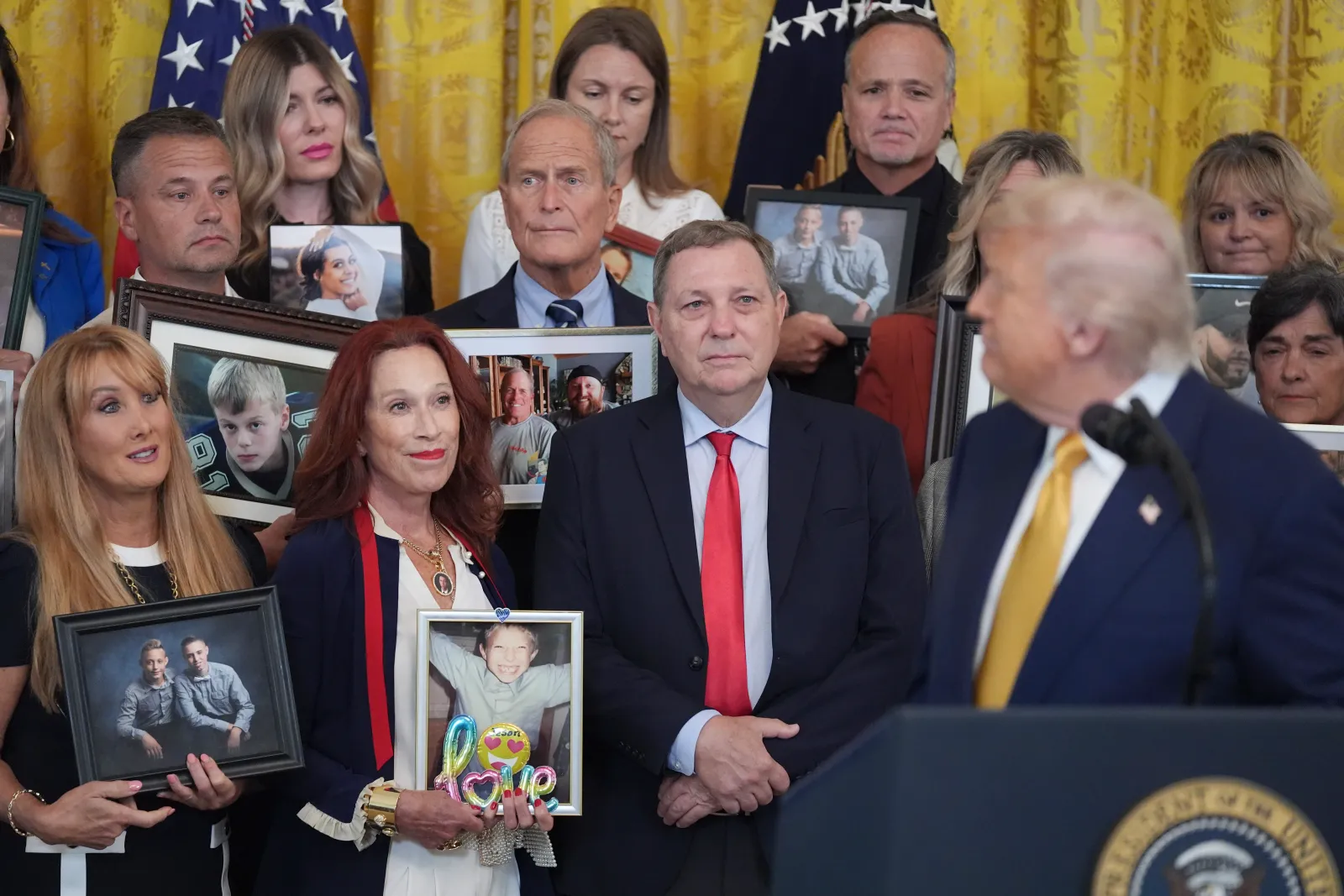
The White House issued a statement celebrating a historic decline in U.S. drug overdose deaths and pointing to successes since President Trump took office, but NPR reports the biggest progress actually happened under the Biden administration. For executives in healthcare, treatment, insurance, and state-funded programs, the attribution fight matters because it shapes which policies get credited, protected, and funded next.
The White House says it deserves credit for a historic drop in American drug overdose deaths. The record splits the difference, and then some. In a statement celebrating the decline, the administration pointed to successes since President Trump took office. The problem, according to NPR's reporting: the biggest progress happened under the Biden administration. That is not a rounding error or a talking point. It is the entire attribution question, and it determines who gets to claim the win when the next set of numbers lands.
Start with what is not in dispute. Overdose deaths are falling, and the drop is large enough that the White House treated it as a victory worth publishing. That alone is news, because the overdose crisis has been one of the few American health trends that reliably went the wrong way for years. The disagreement is about cause and credit, and it is the kind of disagreement that never stays contained to a press release. In Washington, credit is the raw material of budgeting. Whoever owns the narrative of why deaths fell also gets to argue for the policies that supposedly did it, and against the ones that supposedly did not.
For context: the U.S. overdose crisis built over decades, migrating from prescription opioids to heroin to illicitly manufactured fentanyl, with annual death totals climbing in most years. Sustained declines have been rare enough that a genuine one is worth studying closely. That is exactly why the timeline fight is so sharp. Mortality data typically arrives months late and gets revised repeatedly before it settles, which means the curve of a decline can be traced backward and forward depending on who is holding the chart. Policy changes, funding cycles, and supply shifts all move on different clocks, so a death rate that turns in one administration often reflects decisions made in another.
The mechanics of the response make that lag worse. Federal money for treatment, naloxone distribution, and state health departments generally arrives after appropriations fights, then takes additional months to reach clinics, pharmacies, and community groups. A grant signed in one term shows up in the mortality statistics of the next. The same is true in reverse: when funding stalls, the damage is not visible in that year's data. Anyone claiming credit for a falling death rate is claiming credit for a pipeline that was built, funded, and staffed long before they arrived.
There is a commercial dimension too. Addiction treatment is a real industry, with providers, insurers, employers, and investors all pricing expectations off the direction of the curve. A falling death rate is good news for families and complicated news for balance sheets. It can soften demand for crisis-level services while increasing demand for long-term recovery care, and it can cool the political urgency that unlocked emergency dollars in the first place. If the White House narrative hardens, funding may follow the story rather than the evidence, and programs that actually moved the numbers could find themselves arguing for money without the headline that used to come with it.
That is the strategic risk for anyone with exposure to public health funding. Attribution fights are not academic; they are allocation fights wearing a lab coat. When a crisis eases, the political system typically loses interest faster than the underlying problem disappears. Emergency declarations lapse, supplemental funding dries up, and states absorb costs they were never built to carry. A leader who reads a celebratory statement as a signal that the problem is solved is reading it wrong. The correct read is that the problem became affordable to ignore, which is a different and more dangerous thing.
Second-order effects show up quietly. State health departments that staffed up on crisis funding may face flat budgets even as their caseloads shift from overdose reversals to long-term treatment. Employers that invested in addiction benefits may see the issue drop off the executive agenda. Investors in treatment capacity may find that a declining death rate reads as a shrinking market in a slide deck, even when demand for care remains deep. And the political winner of this argument will shape the next round of rules on prescribing, telehealth for controlled substances, and harm reduction funding, all of which are live policy questions rather than settled history.
The honest takeaway is that the decline is real, welcome, and fragile. Death rates in this crisis have reversed before, and the underlying supply of illicit drugs is volatile enough that no single year should be treated as a permanent trend. What readers should take from this episode is a habit rather than a fact: when a government claims credit for a statistical turn, check when the turn actually started. The gap between the press release and the data is usually where the real story lives, and it is almost always wider than anyone standing at a podium wants to admit.
This story's Key Insights and Take-aways are locked.
Create a free account to unlock Executive Actions for one credit.
Register to UnlockAlways free for Executives Club members. Join the Club
More in Politics

Fifth Circuit Kills Pregnant Workers' Law Over Pandemic Proxy Votes
A procedural ruling, not a policy one, has blocked a federal pregnancy-accommodation law and put every pandemic-era statute in the crosshairs ahead of an expected Supreme Court appeal.

Measles kills a Virginia child under 5, the state's first death of 2026
Virginia's health department confirmed the death but withheld the child's vaccination status, leaving schools, clinics and employers to plan around the one detail that would explain the most.

Former Brazilian President Bolsonaro Hospitalized with Intestinal Obstruction
The health status of the former far-right leader raises immediate questions about political stability and the trajectory of Brazil's conservative movement.