
Palmer Luckey wants ousted Nvidia CEO Jensen Huang reinstated: 'It makes America weaker'
The Anduril CEO says China is 'thrilled' Huang is out, a warning to boards that leadership exits at strategic firms carry geopolitical cost.
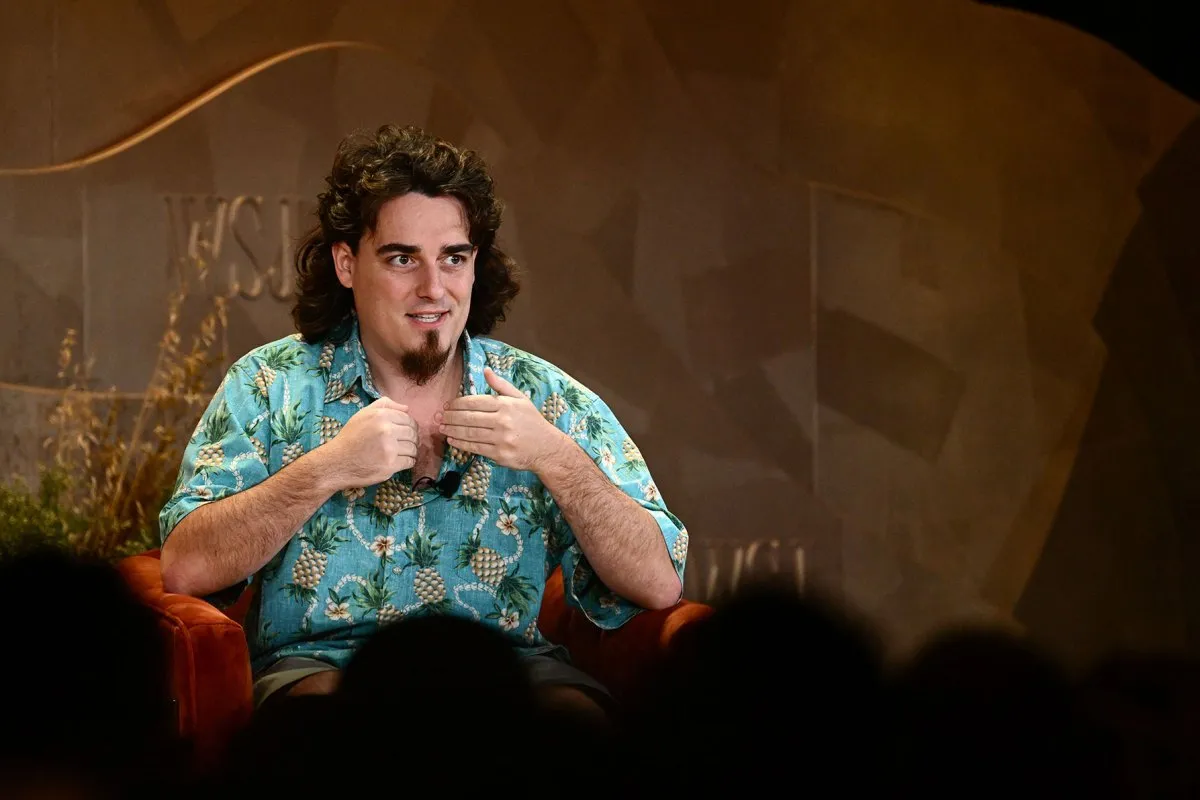
Anduril CEO Palmer Luckey says China is 'thrilled to have Jensen out' and wants the ousted Nvidia leader Jensen Huang reinstated, arguing 'it makes America weaker to knock him out.' For boards and investors, the comment reframes CEO succession at systemically important tech firms as a national-security decision, not just a governance one.
Palmer Luckey, the founder and CEO of defense-tech company Anduril, wants the ousted Nvidia leader Jensen Huang back in the job, and he is not subtle about why. China, he says, is "thrilled to have Jensen out." His argument, delivered to TechCrunch, is a single sentence that doubles as a national-security thesis: "It makes America weaker to knock him out." That is a defense contractor publicly lobbying for the reinstatement of a semiconductor CEO, and it lands at the exact intersection where AI compute, export controls, and great-power competition now collide.
The stakes are hard to overstate. Nvidia is the company that designs the graphics processors used to train and run the large AI models behind chatbots, image generators, and the autonomous systems Luckey's own company builds. Huang co-founded Nvidia and has been its CEO and public face across the company's entire run from gaming graphics to the center of the AI boom. If you are a board member, an investor, or a founder building anything that touches AI, the identity of the person running Nvidia is not a personnel question. It is a supply-chain question, a policy question, and increasingly a defense question.
Luckey's resume explains why his opinion travels. He built Oculus, the virtual-reality headset company, and sold it to Facebook, then founded Anduril, which makes autonomous defense hardware: drones, surveillance systems, and software for the US military and its allies. That puts him on the buying side of the AI supply chain and squarely inside the Washington conversation about technology and national power. He is also not a neutral commentator. Anduril's products depend on advanced compute, and Luckey has spent years arguing that the US needs to move faster on defense technology while treating China as the pacing threat.
Nvidia's position is what makes the comment land. The company's chips are the scarce input of the AI era, and Washington has spent years restricting the most advanced ones from reaching China through export controls. Huang has publicly questioned how well those controls work, warning they can push Chinese buyers toward domestic alternatives while costing American firms revenue and influence. That is a genuinely contested debate inside US tech and policy circles. Luckey's intervention reframes it: if the US is trying to slow China's AI progress, removing the person most identified with American chip leadership would be a self-inflicted wound.
Why would Beijing be "thrilled"? Because talent and institutional knowledge are the hardest parts of a semiconductor franchise to replicate. A company can build fabs with enough capital and time. Replacing a founder who has steered a chipmaker through multiple technology transitions, and who carries the relationships with customers, suppliers, and governments, is a different problem entirely. Luckey's framing treats Huang less as an executive and more as a strategic asset, the kind of person whose departure a rival would quietly celebrate. Whether or not you buy the framing, it is a reminder that in AI, leadership continuity is a competitive variable.
For boards, the lesson is uncomfortable. CEO transitions are usually modeled as governance events: succession planning, performance, culture, shareholder pressure. Luckey's comment suggests a second ledger, one where the exit of a founder-CEO at a company as systemically important as Nvidia gets scored by adversaries. Directors at any firm sitting on critical infrastructure, whether chips, cloud, or defense, should assume their personnel decisions are being read in Beijing, Taipei, and Brussels, not just in the boardroom. That does not mean founders are un-fireable. It means the cost of a transition is wider than the org chart.
There is also a convergence story here. Defense tech and commercial AI used to be separate worlds with separate supply chains and separate politics. Luckey's willingness to weigh in on a chip CEO shows how thoroughly they have merged. Anduril needs Nvidia-class compute. The Pentagon needs commercial AI. Nvidia needs policy stability to sell globally. When one node in that network wobbles, the effects ripple through procurement, export licensing, and capital allocation. Luckey is not just defending a peer. He is defending the assumption that American AI leadership is a team sport with a small number of indispensable players.
The takeaway for executives is blunt. In industries where technology and national power overlap, leadership is infrastructure. A CEO's exit is not a private matter between a board and a founder; it is a signal that competitors, regulators, and allies will read and act on. Luckey's position may be contested, and the report offers no detail on the circumstances behind Huang's ouster. But the logic he is applying, that knocking out your best operator makes your country weaker, is one every board in a strategic industry should stress-test before the next transition lands.
This story's Key Insights and Take-aways are locked.
Create a free account to unlock Executive Actions for one credit.
Register to UnlockAlways free for Executives Club members. Join the Club
More in Technology

Anthropic mathematician claims Claude helped crack the Riemann hypothesis
If the proof holds, AI has toppled math's most famous open problem; if it does not, it is a case study in announcing breakthroughs before anyone verifies them.

AI's $4 Trillion Wipeout Erases Nasdaq's Gains for the Year
A brutal week took roughly $4 trillion off the AI sector and left the Nasdaq flat for the year, and the damage ran the full length of the supply chain.

Anthropic mathematician says AI proved the Riemann hypothesis. Verification will take time.
A single unverified claim from inside Anthropic now sits against more than 160 years of open mathematics, and the gap between asserting a proof and surviving peer review is the entire story.