
Peers tell Burnham: scrap the £100,000 overseas donor cap, cap all donors
David Blunkett's £500,000-a-year universal cap has broad peer support, and Burnham is being pressed to back it when the elections bill reaches the Lords.
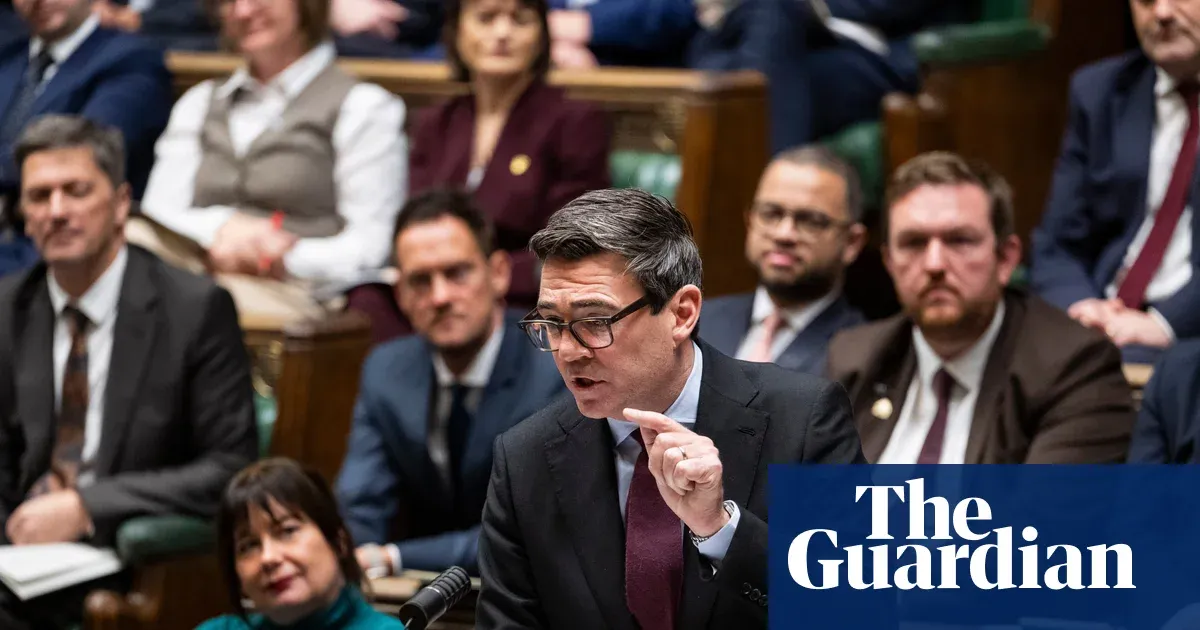
Andy Burnham is facing calls from peers, including Labour former home secretary David Blunkett, to commit to a universal cap on political donations when the elections bill reaches the House of Lords, replacing the 'insanely complex' £100,000 limit proposed for overseas donors. The outcome would reset how every UK party raises money, with it still uncertain whether Reform UK's recent £72m donation haul falls inside the new rules.
Andy Burnham is being told to go further than the government's own plans. Peers, among them the Labour former home secretary David Blunkett, have tabled an amendment calling for a cap on all political donations, not just the £100,000 limit proposed for overseas donors, and they want Burnham to commit to it when the elections bill reaches the House of Lords. Blunkett's proposal sets a £500,000 annual limit per donor, and his plan is believed to have broad support in the upper chamber. That is the fight now: not whether foreign money gets a ceiling, but whether every donor does.
The £100,000 overseas figure is the target of the criticism. Experts quoted in the report call it 'insanely complex', and the objection is easy to grasp. A rule that applies only to donors based outside the country creates a maze of tests, definitions and carve-outs while leaving the far larger domestic flows untouched. A universal cap, by contrast, is one number applied to everyone. The open question is what happens to Reform UK, which recently received £72m worth of donations. It is uncertain whether that money would be affected by the changes under discussion, and that uncertainty is itself the story.
For context, UK political finance has long run on disclosure rather than hard ceilings. Parties are typically required to report donations above a threshold to the Electoral Commission, and the definition of a permissible donor has historically been tied to the UK electoral register or to UK-based companies. That architecture was built to answer 'who gave this?' rather than 'how much is too much?'. Caps on individual giving exist in some democracies and not others, and the design matters enormously. Set the ceiling too low and money tends to migrate into loans, affiliated bodies or campaign vehicles that sit outside the rule. Set it too high and it changes very little.
A universal cap is a much bigger intervention than an overseas one. Overseas donations are a narrow slice of the money that funds UK politics; domestic donors, companies and trade unions are the main arteries. Capping all of them at £500,000 a year per donor would force parties to broaden their fundraising base, and it would bite hardest on whichever party leans most on a small number of very large cheques. That is why the amendment has drawn attention: it converts a technical fix into a structural one. The ask is landing on Burnham, not on a backbench peer.
Reform UK's £72m haul is the number that makes the debate concrete. A £500,000 annual ceiling per donor means a party would need a wide field of major donors to accumulate a sum of that size, so the arithmetic of any cap is inseparable from the question of who is giving. The report is explicit that it is uncertain whether the £72m would be affected, which leaves two very different worlds on the table: one where that money is caught by the new rules, and one where it is not. For anyone tracking party finances, that single unresolved line is worth more than the headline number.
The timing matters because of where the bill sits. The elections bill is in the House of Lords, the stage where amendments are tabled, debated and often traded. Peers cannot usually force a government's hand on their own, but a well-supported cross-party amendment changes the political cost of resistance, and 'believed to have broad support' is the phrase that should make a whip sit up. If the amendment carries, the question moves back to the Commons, where the government decides whether to accept, amend or fight it. Burnham's commitment, or its absence, is one of the inputs into that calculation.
Why should anyone outside Westminster care? Because political finance rules set the price of access and the shape of influence. Companies that donate, executives who sit on donor lists, trade bodies that pool contributions and compliance teams that file the paperwork all operate inside whatever ceiling Parliament settles on. A £500,000 annual per-donor cap would make large single gifts a thing of the past and push organisations toward either smaller, broader giving or none at all. It would also raise the value of the disclosure regime, since a cap is only as good as the reporting that proves it is being respected.
The direction of travel is toward tighter rules, and the argument now is about scope, not principle. The overseas-only £100,000 limit is the government's answer; a universal £500,000 cap is the peers' answer; and the gap between them is where the lobbying will happen. Watch three things: whether Blunkett's amendment holds its support as the bill moves, whether the Reform UK money is caught or spared, and whether Burnham turns a call into a commitment. The first two are process. The third is the one that would change the maths for every party in the country.
This story's Key Insights and Take-aways are locked.
Create a free account to unlock Executive Actions for one credit.
Register to UnlockAlways free for Executives Club members. Join the Club
More in Politics

Fifth Circuit Kills Pregnant Workers' Law Over Pandemic Proxy Votes
A procedural ruling, not a policy one, has blocked a federal pregnancy-accommodation law and put every pandemic-era statute in the crosshairs ahead of an expected Supreme Court appeal.

Measles kills a Virginia child under 5, the state's first death of 2026
Virginia's health department confirmed the death but withheld the child's vaccination status, leaving schools, clinics and employers to plan around the one detail that would explain the most.

Former Brazilian President Bolsonaro Hospitalized with Intestinal Obstruction
The health status of the former far-right leader raises immediate questions about political stability and the trajectory of Brazil's conservative movement.