

Police Departments Are Recruiting With GTA 6, a Game That Loathes Them
Real agencies are borrowing the iconography of a franchise built on contempt for law enforcement to hire officers and lecture the public, and the gap between the two is the story.
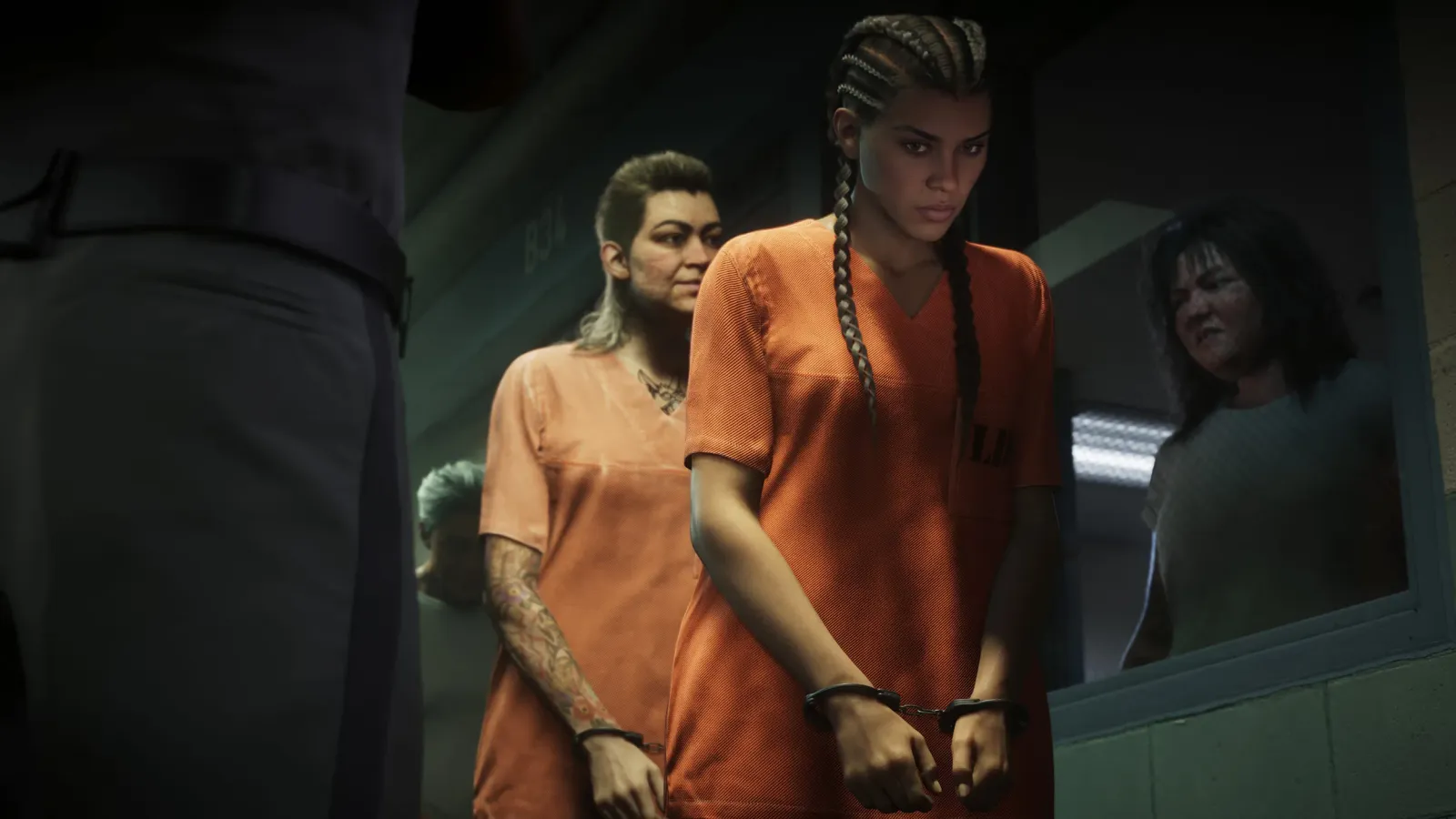
Police departments across the country are using Grand Theft Auto 6, Rockstar Games' blockbuster built on open contempt for law enforcement, to recruit officers and scold the public. For executives watching brand and talent strategy, it is a live case study in what happens when an institution rents a culture it does not control and cannot read.
The memo never made it to the inbox. Police departments are using Grand Theft Auto 6 to recruit new officers and to scold the public, according to WIRED, even though the blockbuster game "makes no secret of its contempt for law enforcement." That is the whole story in two sentences. The most anticipated entertainment product on the planet has spent its entire existence treating law enforcement as the punchline, and real police agencies have decided it is a perfectly good place to hang a recruitment banner. WIRED's verdict on the output is blunt: corny slop. The departments apparently did not get the memo, and the gap between what the game is and what they are using it for is the story.
Start with why anyone would try. Police departments across the United States have spent years talking publicly about staffing shortages and the difficulty of reaching young candidates who do not watch local news, do not read press releases, and do not trust institutional advertising. Grand Theft Auto 6 is, by any measure, the biggest cultural event on the release calendar, and its audience skews directly into the 18-to-34 pool that recruiters say they cannot reach. Borrowing that audience is a rational marketing instinct. The execution is where it falls apart, because the audience in question knows the source material far better than the people borrowing it.
Grand Theft Auto has always been satire aimed upward at institutions: crooked officials, militarized police, a state that behaves worse than the criminals. The franchise's humor depends on the player understanding that the authorities are not the good guys. When an actual department lifts that iconography for a hiring pitch, it does not borrow the cool. It volunteers for the joke. The audience reads the post, recognizes the reference, and files the agency under "does not understand what it just referenced." That is a brutal place for a public institution to land, because the cost is not a fine or a lawsuit. It is credibility with exactly the people it was trying to hire.
For context, the relationship between this franchise and law enforcement has been adversarial for decades. Grand Theft Auto titles have drawn sustained criticism from politicians and police groups who argued the games glamorized crime and violence, and the series has been a recurring target in broader debates over video game content. That history is what makes the current moment a genuine reversal rather than a routine marketing misfire. The institution that once lined up to condemn the game is now using it as a recruiting tool and a public address system. The game did not change. The departments did.
Follow the incentives and the asymmetry gets sharper. Rockstar Games, the studio behind the franchise, gets free earned media every time a police department posts, and it pays nothing for it. The publisher has no control over how its intellectual property is repurposed by government agencies, and no obvious reason to intervene, because the attention flows one way: toward the game. Meanwhile the departments carry all of the reputational risk. That is the classic structure of borrowed-culture marketing. The brand that owns the culture keeps the upside. The institution that rents it keeps the embarrassment.
The second half of the problem is the scolding. Departments are not only recruiting with the game's visual language, they are using it to lecture the public, which is a harder trick to pull off. A public safety message delivered in the costume of a game about stealing cars and outrunning police does not read as authoritative. It reads as a bit. And a bit only works when the audience believes the performer is in on it. WIRED's description of the output as corny slop suggests the audience has already made its call, and the call is not flattering.
For executives outside law enforcement, the lesson generalizes fast. Every marketing and communications team in the country is under pressure to speak in the language of the internet, and the failure mode is always the same: the brand adopts a format without understanding the format's point of view. Meme fluency is not the same thing as cultural literacy. Before a company borrows a piece of culture, someone in the room has to answer one question honestly. Is the audience laughing with us, or at us? If nobody can answer that, the campaign is already a liability.
The stakes for the agencies involved are concrete. Recruiting is a competition for attention against employers with better pay, better hours, and no viral downside. A campaign that becomes the internet's example of how not to do it does not simply fail to fill a class. It hands ammunition to everyone who already doubted the department's judgment, and it does so in public, permanently. The broader lesson for any leader watching from the outside: you cannot borrow relevance from a culture that is built on mocking you. You can only audition for the role of the punchline.
This story's Key Insights and Take-aways are locked.
Create a free account to unlock Executive Actions for one credit.
Register to UnlockAlways free for Executives Club members. Join the Club
More in Technology

Anthropic mathematician claims Claude helped crack the Riemann hypothesis
If the proof holds, AI has toppled math's most famous open problem; if it does not, it is a case study in announcing breakthroughs before anyone verifies them.

AI's $4 Trillion Wipeout Erases Nasdaq's Gains for the Year
A brutal week took roughly $4 trillion off the AI sector and left the Nasdaq flat for the year, and the damage ran the full length of the supply chain.

Anthropic mathematician says AI proved the Riemann hypothesis. Verification will take time.
A single unverified claim from inside Anthropic now sits against more than 160 years of open mathematics, and the gap between asserting a proof and surviving peer review is the entire story.