

Qatar Snaps Up Life Rights to Egyptian Legend Mohamed Mounir for Biopic
Media City Qatar's Film Committee has locked the rights to one of the Arab world's most storied careers, betting a regional studio partner can turn a life into a global franchise.
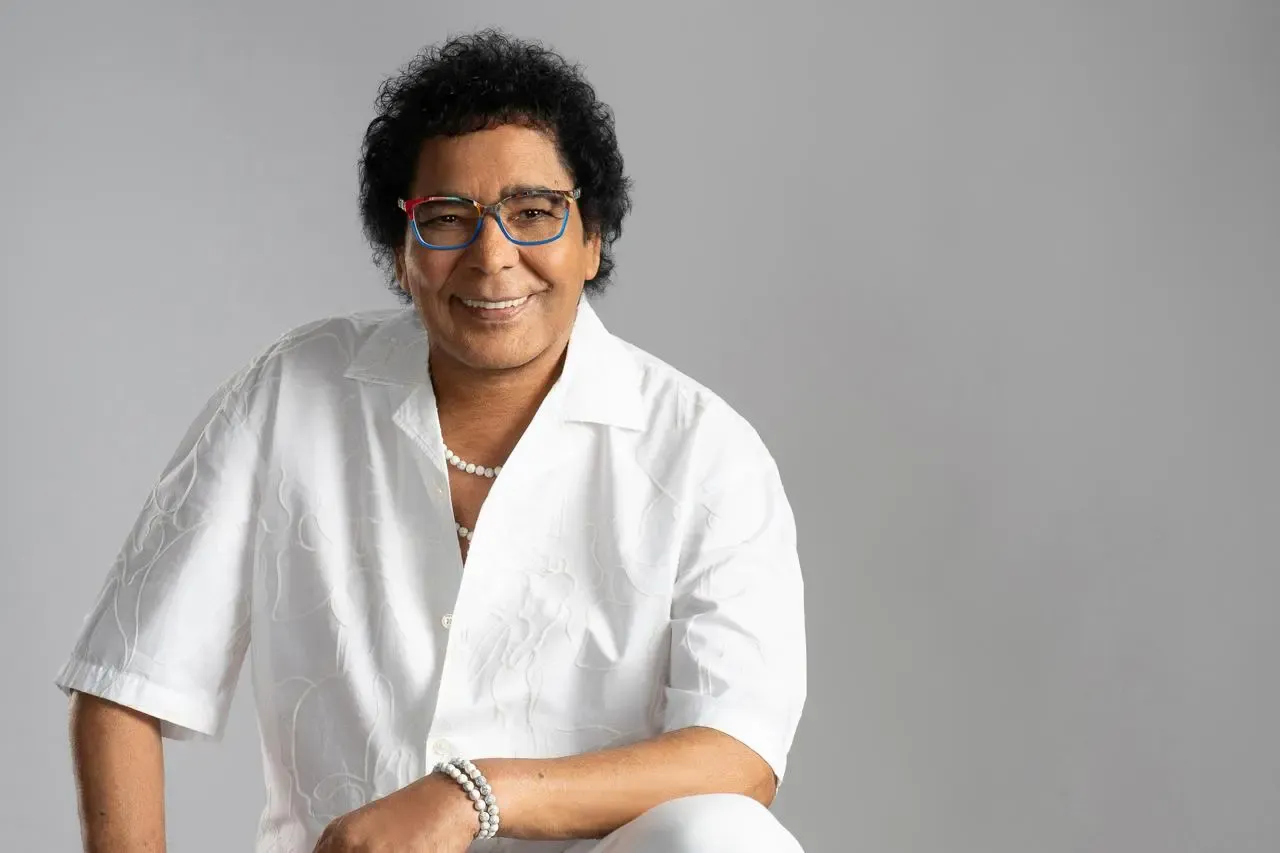
The Film Committee at Media City Qatar has acquired the rights to the life story of legendary Egyptian artist Mohamed Mounir, with a biopic in development and a leading regional studio among the partners. For media and entertainment executives, the deal signals Gulf state capital moving from hosting productions to owning the underlying IP, which resets the price of talent rights across the region.
The Film Committee at Media City Qatar has acquired the rights to Mohamed Mounir's life story, Deadline reported, with a biopic of the legendary Egyptian artist now in development. The project was unveiled at Doha Industry Days, and the Film Committee said partners will include a leading regional studio plus other collaborators it did not name. No director, writer, cast, budget, or release date was disclosed. What is clear is the asset itself: Qatar now controls the on-screen rights to one of the most recognizable careers in Arabic music, and it bought them before anyone else could.
Mounir is not a nostalgia play in the way a Western reader might assume. He is a working cultural institution in the Arab world, a singer whose catalog spans decades and whose audience cuts across generations, classes, and borders. He is widely referred to across the region as "The King," an Aswan-born artist with Nubian roots whose sound pulled African and jazz influences into Egyptian songwriting, and he has appeared on screen as an actor as well. Deadline calls him a "legendary Egyptian artist," and that word is doing real work here. In a region where music is often the fastest route to a shared identity, a Mounir biopic sits closer to a national event than a niche art-house release.
The deal structure is the story. Biopics live or die on life rights, and life rights are messy. They typically require cooperation from the subject, the family, or an estate, plus the music publishing and master recording rights that make a soundtrack possible in the first place. The Film Committee says it has acquired the rights to document Mounir's life story. That is the hard part. Everything downstream, financing, distribution, casting, marketing, is comparatively routine once the underlying rights are locked. Whoever holds the life story holds veto power over everyone who wants to make the film, the series, the documentary, or the album reissue.
Why Qatar? Media City Qatar is a state-backed media hub, and the Film Committee sits inside it as the entity that courts productions and builds a domestic industry around them. Historically, Gulf capital has flowed into entertainment as a soft-power and economic-diversification play, funding festivals, studios, and content pipelines rather than simply buying finished films. Acquiring a life story outright is a step further up the value chain. It means owning the IP, not renting the screen. That distinction matters to any board weighing where content margins actually accrue.
The genre math is friendly. Music biopics have historically outperformed expectations when they land, because they sell two products at once: a cinema ticket and a catalog revival. A hit in the format typically pushes the subject's back catalog back up the charts, which is why estates and labels are often eager partners rather than obstacles. For a regional studio, that dual revenue line, box office plus music, is unusually attractive in a market where theatrical windows remain strong and streaming competition for premium Arabic-language content keeps climbing.
The unknowns matter just as much. Deadline's report names no studio, no director, no writer, no budget, and no timeline. Those gaps are normal at the announcement stage, but they are also exactly where projects like this stall. The risk profile for a life-rights biopic is specific: you need a subject willing to be portrayed, a script that satisfies both the family and the fans, and a distributor who can sell an Arabic-language film beyond the region. Each of those is a separate negotiation, and each can quietly kill the whole thing.
Now the second-order effects. If this works, it becomes a template. Expect other Gulf-backed entities to look at the Arab world's living legends, from Cairo to Beirut to the Maghreb, as acquirable IP rather than as talent to be booked for a night. That reframes the negotiating position of every artist, estate, and manager in the region, and it hands them a new benchmark for what a life story is worth. It also puts Egyptian cinema, historically the Arab world's production engine, in a new kind of competition for its own stories, financed by capital from outside its borders.
The strategic stakes for executives are simple to state and hard to execute. Content is a rights business before it is a production business. Qatar just bought a piece of that leverage in one of the most valuable catalogs in the Middle East, and it did so at the announcement stage, before a script exists and before the price reflects a finished film. The rest of the region's buyers now have a comparable, and a reason to move faster on the names they have been circling. Watch who gets acquired next, and watch whether the unnamed studio partner turns out to be the tell.
This story's Key Insights and Take-aways are locked.
Create a free account to unlock Executive Actions for one credit.
Register to UnlockAlways free for Executives Club members. Join the Club
More in Entertainment

GTA 6 banks $3.8bn in one day, torching every launch record
One game just out-earned every video game launch and every single-day film box office haul in history, and the fallout lands on every media CEO's forecast.

GTA VI Racked Up $3.79 Billion in a Single Day, Topping Every Film Ever
A 13-year wait produced a $3.79 billion day, more than any movie has made in its entire run, and it resets the launch math for every studio, streamer, and brand chasing the same attention.

GTA 6 sells 32.5M pre-sales and $3.79B day one, torches 13-year record
Rockstar's sequel didn't just beat Grand Theft Auto V's 13-year-old benchmark; it reset what a launch can be, with 32.5 million pre-sale copies and $3.79 billion in a single day.