
Quake Champions gets a free 30th-anniversary battle pass and a massive networking overhaul
Lag compensation changes, new gameplay options, and a big cosmetic drop are the real “still alive” proof.
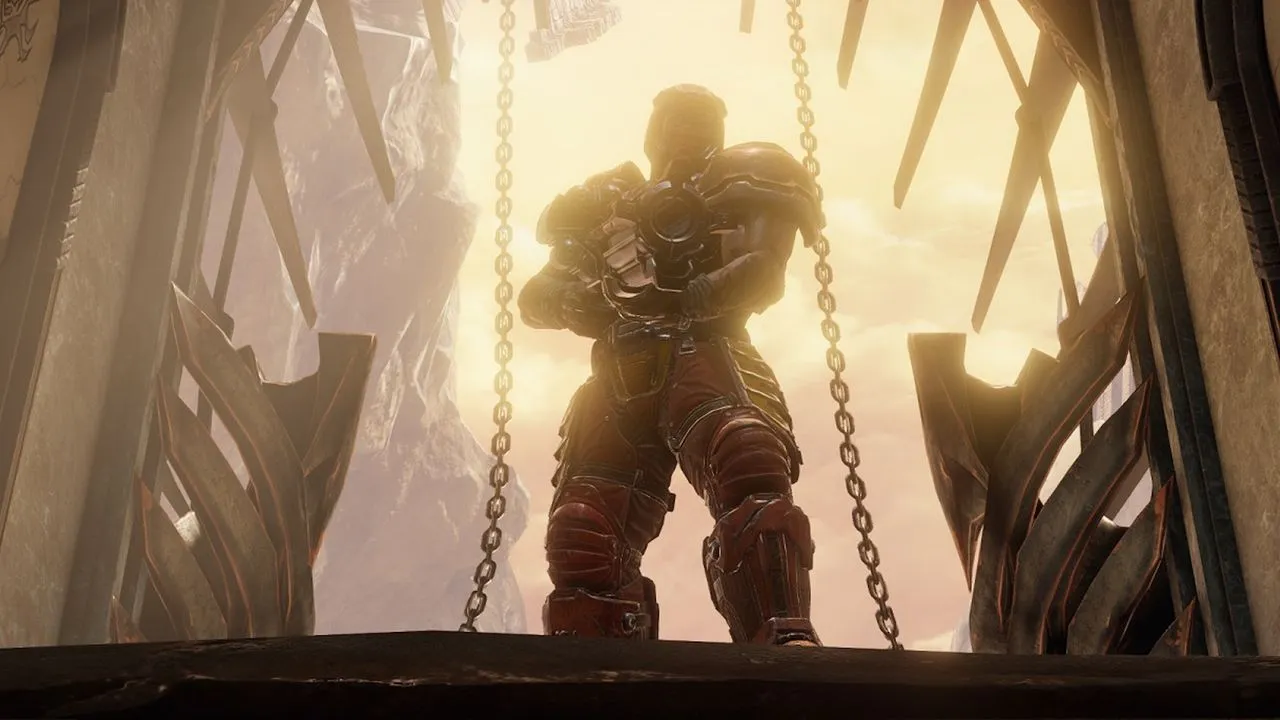
Quake Champions, the free-to-play Quake 3 Arena style game that launched on Steam in 2017, received a huge 30th anniversary update today. For decision-makers, it is a reminder that live-ops momentum can revive even low-concurrency titles when patch quality stays serious.
Quake Champions is still alive, and today id Software proved it with a surprisingly beefy 30th-anniversary update that comes with a free battle pass for everyone. The update is built around Season 30, featuring cosmetic rewards themed to 1996 and QuakeCons that have already happened, plus previously exclusive skins. It also adds new gear: the Disintegrator rocket launcher and Goroth's Earth Magic podium.
If you are wondering whether this is just a skin dump, the patch says otherwise. The “bigger deal” is an overhaul to networking code aimed at reducing packet loss and improving lag compensation and projectile predictions. The update adjusts lag compensation so the amount varies based on your ping, fixes hit validation problems for high-ping players, and removes the 160 ms ping limit that previously required you to connect to games. In plain English: the game is trying harder to make “what you saw” match “what the server decided” so high-latency players get fewer weird outcomes.
This matters for anyone tracking where live games are heading, because Quake Champions is not exactly swimming in a massive audience. The source notes it typically peaks at a few hundred concurrent players on Steam these days. That is the kind of player-count reality that usually puts projects into maintenance mode. Instead, this patch is described as sizable “by any measure,” and it includes a broad sweep of changes beyond networking, from movement and input tweaks to UI and audio fixes.
The update also tackles the gameplay loop itself. A new “Random Champion Select” option adds the ability to play as locked champions when randomly selected, in practice, quick play, and ranked modes. That sounds small, but it changes how matchmaking decisions translate into moment-to-moment play. On top of that, universal weapon shaders have been added, and the patch includes tweaks to characters and maps. Quake 30th anniversary banners are added everywhere. These are the kinds of touches that help players feel continuity and celebration, but they are also useful for onboarding, because a refreshed presentation makes older games easier to re-enter.
Then there is the technical housekeeping, which is where competitive shooters tend to either thrive or quietly rot. The patch notes include fixes like a collision bug that pushed players out of the map, and a bug where you could damage a respawning player by attacking their death location with a gauntlet. Raw Mouse Input gets optimization work, including NVIDIA Reflex fixes and added latency markers. There is also code optimization and cleanup across damage summation markers and special movement input. Even customization issues are targeted, including a fix where a wrong champion medal could be awarded after meeting qualifications and then switching champions.
Audio and visuals get their own attention. Persistent sounds are broken and fixed so they do not remain in the world after they should have ended. Pain sounds are corrected, including missing pain sounds and incorrect playback at exactly 25 or 50 hp, plus restored pain sounds between 75 and 100 hp. Weapon sounds get a specific adjustment too, like reducing the volume of the RUTHLESS water railgun shot. On the feedback layer, the patch adds armor hit beeps (with a new AUDIO option called ARMOR BEEP STYLE including OFF, Q4 and QC options) and armor break FX and sounds (with an AUDIO option called ARMOR BREAK SOUND offering several styles such as POWER DOWN, ENERGY RELEASE, SHIELD PUNCH, and METAL TINK). It also expands hit beep styles with options including Mid-Tone (from Quake 3), High-Tone (from Quake 4), Damage-Based (from Quake Live), and Additive Damage (introduced in QC). If you run competitive titles, you know this is the stuff that changes how “readable” combat feels.
The patch notes also add teamplay and usability features. Teammate death POIs are added so players get markers at a teammate's death location, with the source describing them as a sign of danger. Team commands get utility: Drop Weapon and Drop Power-Up commands are added to team modes, with Drop Weapon dropping the weapon with the current ammo count if you own below the weapon’s starting ammo amount. Six Say Commands are added (Yes, No, Hi, Bye, Thanks, Sorry), and issuing them prints a chat message and generates a local in-world VO message everyone can hear. There are also toggles aimed at player comfort and preference: Show Vanity Customizations (enabled by default) can remove in-game vanity armor shaders, items, vanity weapons, and weapon shaders during gameplay while keeping them visible in match lobby and pre and post match podium scenes. Weapon Zoom can keep your weapon zoomed in until you untoggle.
Zoom out from the patch notes for a second, because there is a business subtext here. The update arrives with a free battle pass and a long list of fixes, in a title that the source frames as low-concurrency relative to its heyday. That combination is not accidental. When a developer chooses to invest in core network behavior, latency markers, hit validation, and projectile prediction, it signals a commitment to competitive integrity, not just aesthetics. And when players notice, it does not stay private. The source says players on Reddit reacted positively, including a comment from redditor Fob0bqAd34 praising whoever convinced the developer team to keep updating the game, and mentioning earlier battle pass content featuring old weapon skins.
Strategically, the lesson for executives is straightforward: “dead” is often a marketing label, not a technical reality. Quake Champions may not have mainstream momentum, but it is getting the kinds of changes that reduce friction for real players, especially in online fairness. For boards, operators, and investors, that is a signal worth logging. If you have live products under your watch, this is what sustained retention work looks like: tackle networking truth first, then layer on feedback, teamplay readability, and meaningful cosmetic celebration. That is how you keep a community from fully drifting away, even years after launch.
This story's Key Insights and Take-aways are locked.
Create a free account to unlock Executive Actions for one credit.
Register to UnlockAlways free for Executives Club members. Join the Club
More in Technology

OpenAI says 10,000 agents cracked a 90-year math problem in 88 hours
The company's claim is audacious, but one mathematician is pushing back. Here's what it means for AI-driven discovery.

Meta still serves child sexual abuse ads on Instagram in India - BBC report
A new report following the BBC Eye investigation says the ads are still there - what it signals for every platform with a self-serve ad engine.

White House yanks 'Build the Wall' game after Tetris Company copyright warning
The administration's arcade game vanished in hours - and the takedown playbook every brand can learn from.