

Robert Pattinson Is James Bond, Capping the 2026 He Owned
The 40-year-old Briton, already the face of a relationship satire, a Nolan epic and an Oppenheim project this year, takes the most coveted role in British cinema.
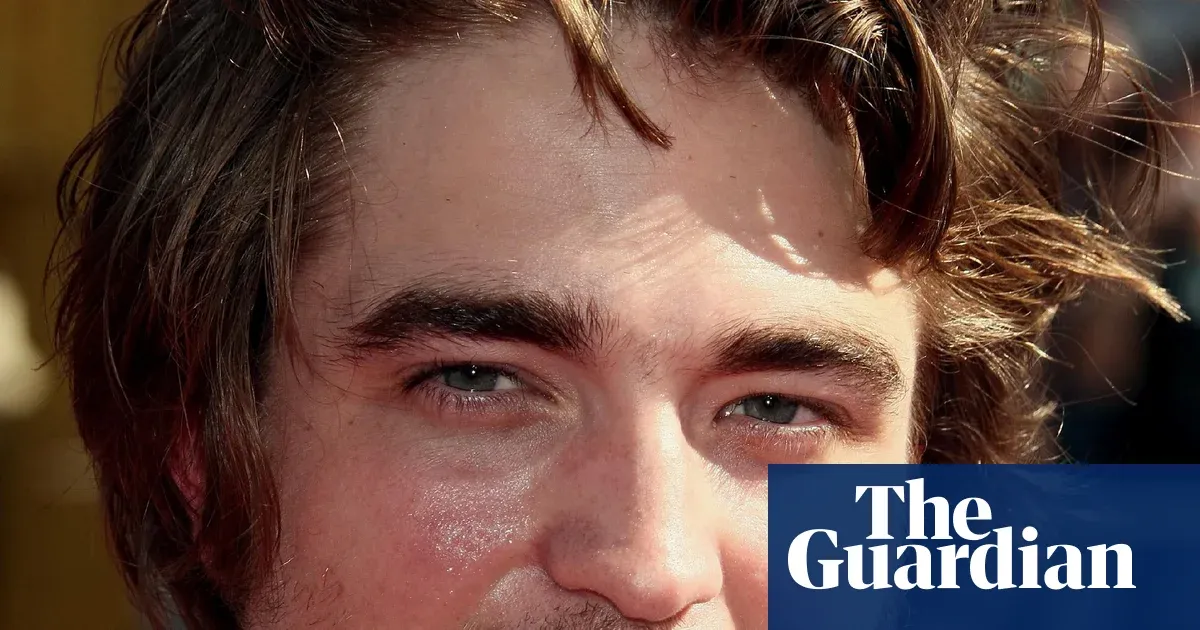
Robert Pattinson, the 40-year-old British actor, has been announced as the next James Bond, capping a 2026 in which he fronted Kristoffer Borgli's The Drama, Christopher Nolan's The Odyssey and Lance Oppenheim's Primetime. For studio and franchise leaders, the pick shows how the next era of 007 will be positioned: a younger lead with franchise pedigree and arthouse range.
Robert Pattinson is James Bond. The 40-year-old British actor has landed the most coveted role in British cinema, and the timing is the story: the announcement lands at the end of a 2026 in which he has been, in the Guardian's framing, the face of everything. Harry Potter gave him his start, Twilight made him a global star, and now 007 makes him the steward of a six-decade-old British institution. Coverage of the news has attached a phrase that sums up the stakes: the honour of a lifetime.
Start with the year that earned him the nod. In 2026 alone, Pattinson has been the face of three films with three very different directors: Kristoffer Borgli's relationship satire The Drama, Christopher Nolan's The Odyssey, and Lance Oppenheim's Primetime. A relationship satire, a studio epic and an Oppenheim project is not a slate you assemble by accident. It is a slate that says this actor will go anywhere, with anyone, and audiences will follow. Casting directors notice that. So do the executives who sign the cheques on franchise films.
The arc is what makes the casting click. Pattinson arrived as a young actor in the Harry Potter films, then became a phenomenon in Twilight, a franchise that made him one of the most recognisable faces on the planet before he turned 25. The conventional move from there is to ride it: sequels, action vehicles, a payday, repeat. He went the other way instead, and the result is a body of work that reads less like a career plan than a series of deliberate swerves. By the time Bond came calling, he had already proved two things: that he could carry a global franchise, and that he had no interest in only carrying franchises. That combination is rare, and it is precisely what a property with a 60-year history and a restless audience needs.
Bond is not a job. It is a decade. Historically, the actor who takes 007 signs on for multiple films, becomes the global face of a brand that spans cinema, streaming, merchandising and tourism, and spends the next ten years answering the same question in every interview. That is why the role is described as the most coveted in British cinema: the upside is not a single fee, it is a career-defining platform. It is also why the decision is never purely creative. A Bond casting is a strategic bet by the studio on a person who will represent the franchise in every market on earth.
For context on how that decision gets made: the Bond films were historically shepherded by Eon Productions and the Broccoli family, the custodians of the franchise since its earliest days. In 2025, Amazon MGM Studios took creative control of the property, a shift widely reported at the time, and it matters here. New stewardship usually means a new appetite: for a younger lead, for a different kind of movie, for a casting choice that signals a reset without torching the inheritance. Pattinson, at 40, sits exactly on that line. He is old enough to be credible as a veteran and young enough to be the face of the next decade of films.
The signal for the wider talent market is blunt. Casting at this level does not simply fill a role; it reprices the person who fills it, and by extension it reprices the profile of actor that agencies, managers and producers have been betting on. Historically, when a franchise of this scale picks a lead with an arthouse past and a blockbuster present, the industry reads it as a template. The formula on display here is a franchise past, a director-driven present, and a willingness to sign long.
The interesting tension is what Bond does to the eclectic slate. A multi-film commitment is exactly the thing that can fence an actor in, and Pattinson's recent run has been built on range: a relationship satire, a Nolan epic and an Oppenheim project, all inside a single year. The question the industry will be watching is whether 007 becomes a platform he can leap off between films, or a gravity well that pulls everything else toward it. Both outcomes have precedent in franchise history, and both change what a leading actor can credibly say yes to.
Step back and the strategic stakes are clear. For studios, Bond is proof that the most valuable asset in entertainment is still a face an audience will follow into almost anything. For talent, it is proof that the surest route to the biggest role is a portfolio, not a lane. And for the people who run franchises, the Pattinson pick is a reminder that the casting decision is the strategy. Get it right and you buy a decade of goodwill and a global marketing engine that costs nothing extra. Get it wrong and you spend a decade explaining it. The name is Pattinson. Robert Pattinson.
This story's Key Insights and Take-aways are locked.
Create a free account to unlock Executive Actions for one credit.
Register to UnlockAlways free for Executives Club members. Join the Club
More in Entertainment

GTA 6 banks $3.8bn in one day, torching every launch record
One game just out-earned every video game launch and every single-day film box office haul in history, and the fallout lands on every media CEO's forecast.

GTA VI Racked Up $3.79 Billion in a Single Day, Topping Every Film Ever
A 13-year wait produced a $3.79 billion day, more than any movie has made in its entire run, and it resets the launch math for every studio, streamer, and brand chasing the same attention.

GTA 6 sells 32.5M pre-sales and $3.79B day one, torches 13-year record
Rockstar's sequel didn't just beat Grand Theft Auto V's 13-year-old benchmark; it reset what a launch can be, with 32.5 million pre-sale copies and $3.79 billion in a single day.