
Robert Pattinson Is the New 007. Bond Fans Are Already Pushing Back.
The backlash follows the exact script that greeted Daniel Craig in 2005 and Pattinson's own Batman casting, and the box office record says the noise lands years before the verdict does.
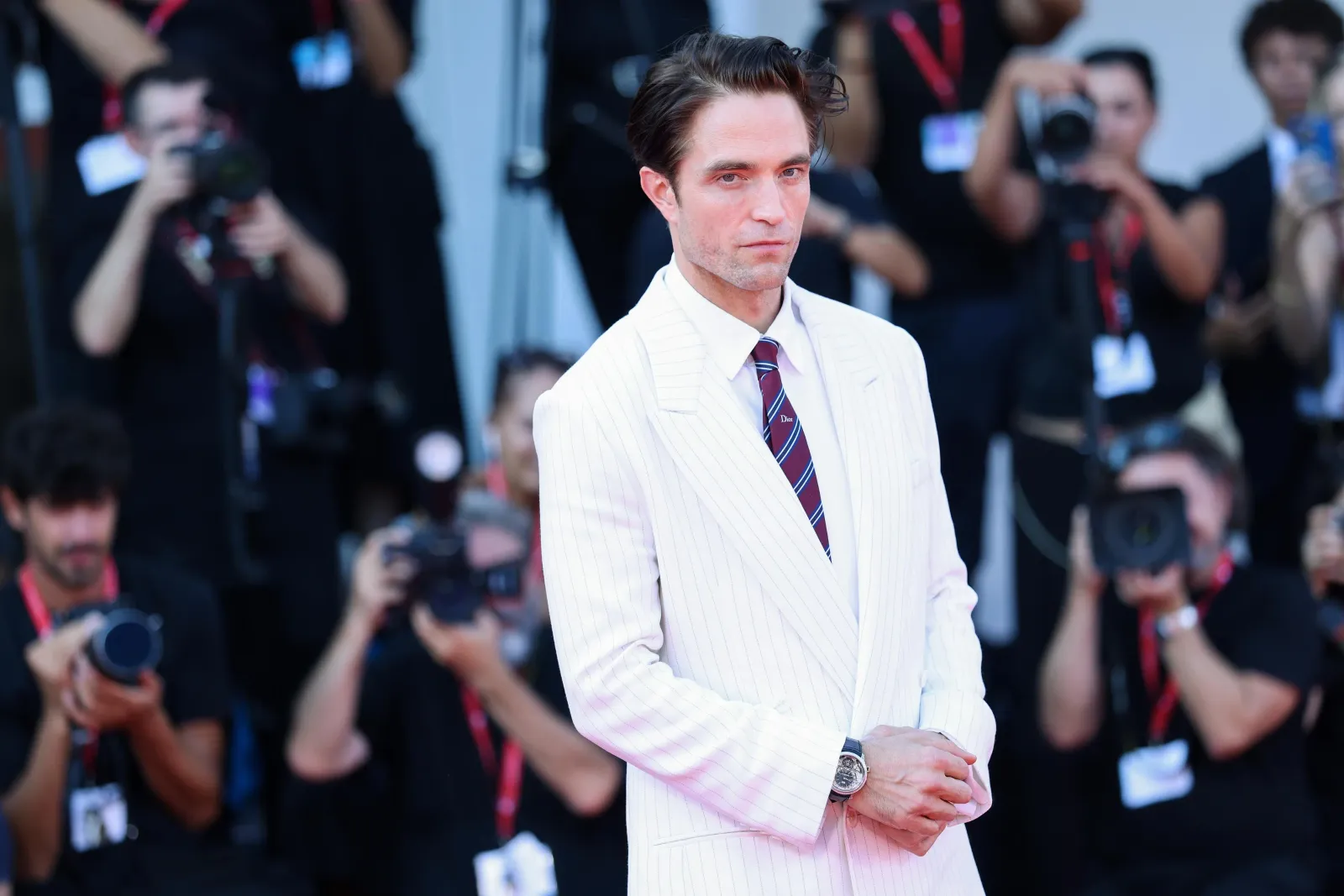
Robert Pattinson has been cast as the new James Bond, and a portion of the 007 fanbase has pushed back, echoing the reaction to previous Bond casting announcements and to his own 2019 Batman casting. For executives, the episode is a case study in how announcement-day outrage functions as an attention asset rather than a market verdict.
Robert Pattinson is the new James Bond, and a slice of the 007 faithful is already unhappy about it. Forbes reports that the casting has drawn fan backlash, and that the reaction tracks closely with the reception given to previous Bond casting announcements. If the pattern feels familiar, it should: Pattinson has been through this exact cycle before, when he was cast as Batman.
The shape of the objection is predictable. Bond is one of the few characters where the audience believes it holds a veto, because the role has been recast on roughly a generational clock for six decades. Each new actor gets measured against a mental image assembled from the last one, and the gap between that image and the studio's choice is where backlash lives. Historically, fans have objected to nearly every incoming Bond at the moment of announcement, and those objections have almost never predicted the outcome. The frustration is rarely about an actor's talent. It is about the collision between a fan's fixed picture and a decision to change it.
History is blunt about how this usually ends. When Daniel Craig was named Bond in 2005, the complaints were that he was blond, not tall enough, and not suave enough. Fans built websites devoted to stopping him. He then delivered a run that reset the franchise commercially and critically, and by the time he exited, much of the same internet that mocked his casting treated his departure as the end of an era. The backlash was loud, early, and wrong.
Pattinson's own file makes the same argument. When he was cast as Bruce Wayne in 2019, the objection was physical: too slim, too pale, too associated with Twilight. The Batman arrived in 2022 and grossed roughly $770 million worldwide, and the conversation flipped from "wrong choice" to "when is the sequel." The pattern is consistent enough to be a rule: casting backlash is a pre-release phenomenon. It peaks before anyone has seen a frame of the film.
That timing is the whole story, because it tells you what the backlash actually is. It is not a verdict. It is an attention event. Bond is a multi-billion-dollar piece of intellectual property, and a lead-actor announcement is one of the few marketing beats that generates global coverage without a trailer, a poster, or a paid media budget. For context, the franchise's creative direction has shifted in recent years as Amazon MGM Studios took control of the property, which makes a lead-actor decision a signal about the tone of the whole enterprise, not just a hiring call. Every angry post is a distribution channel.
The trap for executives is mistaking the loudest voices for the market. Fandom is a small, highly engaged, highly online slice of the audience, and it is structurally overrepresented in early reaction because it cares first and posts fastest. The mass audience, the one that decides whether a production at this scale clears its cost of capital, shows up months later and mostly does not read casting threads. Confusing the two is how studios end up making defensive choices that satisfy the comment section and bore everyone else.
There is a real risk here, and it is not the backlash itself. It is the second-order effect: a franchise that starts managing for its loudest 1% drifts toward safe, backward-looking product. Studios are not buying a face when they cast Bond; they are buying a decade of sequels, merchandising, and licensing, which is why the call gets made on range and longevity rather than on a fan poll. Bond has survived six lead actors and countless tonal resets precisely because it kept recasting against expectations. The bet on Pattinson is a bet on range, and the only honest test of that bet is the finished film, not the timeline.
For anyone making a high-profile, identity-defining hire, the lesson generalizes well beyond Hollywood. Announcement-day backlash is a lagging indicator of nothing except how much people care about the thing you are changing. The metrics that matter arrive later: retention, revenue, repeat purchase, and whether the skeptics show up anyway. Watch whether the noise converts into ticket sales or evaporates the moment the first trailer lands. History, and Pattinson's own Batman file, says it evaporates.
This story's Key Insights and Take-aways are locked.
Create a free account to unlock Executive Actions for one credit.
Register to UnlockAlways free for Executives Club members. Join the Club
More in Business

S&P 500 Enters Correction, Down 10% From Its High on AI Worries
The index's slide past the 10 percent line is a symbolic verdict on investor mood, and the AI trade that powered the rally is now the thing testing it.

Dow and S&P 500 enter correction as Nasdaq logs worst week since 2020
All 11 S&P 500 sectors fell more than 1% in the same week for the first time since April 2025, a breadth signal that matters more than any single index level.

Chip stocks lose $2.3 trillion in a week, worst run in 25 years
A $2.3 trillion weekly wipeout in semiconductors is forcing every board with an AI story to ask whether it owns a thesis or just a crowded trade.