

Rockstar ends 13-year wait: GTA 6 sales top $2.3bn as downloads spike
Rockstar's 13-year wait is over, and the download surge behind an estimated $2.3bn in sales is now the real test of the digital pipes carrying the biggest entertainment launch ever.
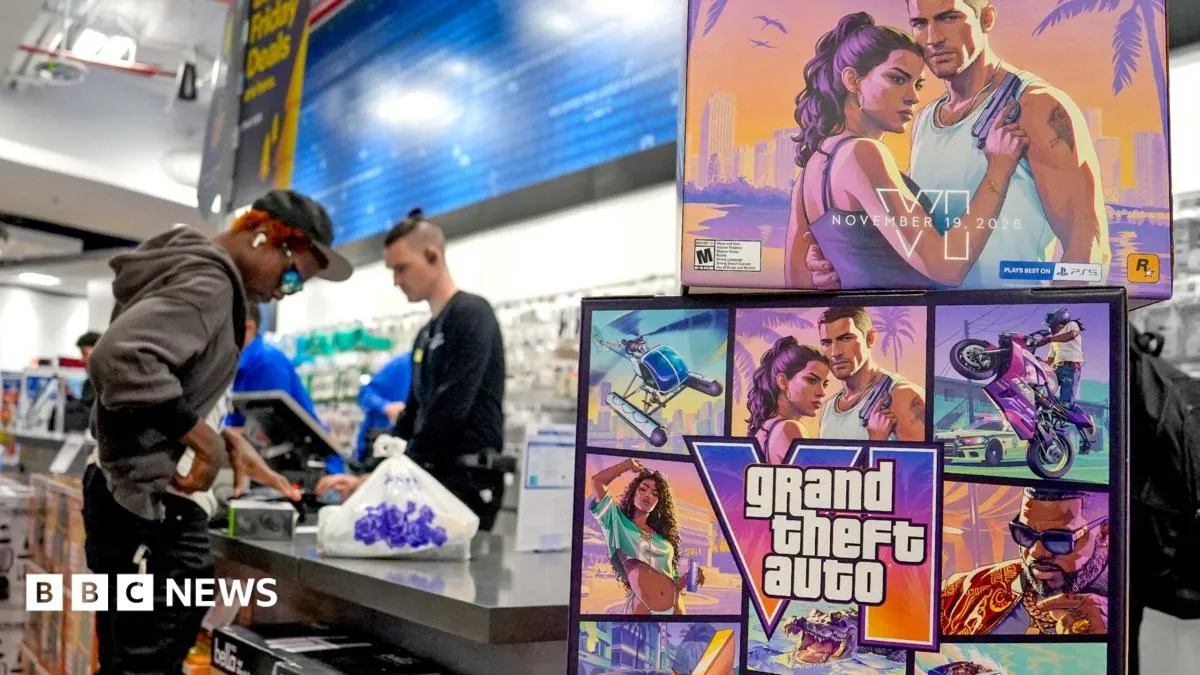
Rockstar Games has ended a 13-year wait with GTA 6, an estimated $2.3bn seller that has driven a spike in download demand and is expected to be the biggest entertainment launch ever. For decision-makers, the launch is a live case study in concentration risk, digital infrastructure at peak load, and how a single release window can carry a publisher's entire year.
Rockstar Games has ended a 13-year wait, and the early scoreboard is already extraordinary. Estimated sales for GTA 6 have topped $2.3bn, and download demand has spiked so sharply that the surge itself has become part of the story. The launch is expected to be the biggest entertainment launch ever, a phrase that usually gets thrown around loosely and here does not. For a company that has spent more than a decade between releases, the first days of availability are the moment when all of that accumulated anticipation converts into cash, server load and cultural oxygen.
The download spike is the detail operators should study hardest. A 13-year gap does not simply build hype; it builds a queue. Players who have been waiting since the previous entry arrived 13 years ago tend to arrive in the same compressed window, hitting the same digital storefronts, the same payment systems and the same content delivery networks at once. That makes launch day a stress test of infrastructure rather than a test of desire. When demand is this concentrated, the bottleneck is rarely whether people want the product. It is whether the pipes can carry it, and whether the checkout completes before the customer's patience does.
Put the $2.3bn in context. The biggest Hollywood opening weekends are typically measured in the hundreds of millions of dollars, and they are spread across thousands of cinemas and dozens of markets. A single game can post a comparable or larger figure through a handful of digital storefronts, with no manufacturing, no shipping and no shelf space to negotiate. That is why the games business has become one of the highest-margin hit businesses in entertainment: the marginal cost of the millionth download is close to zero, and the price is set long before the customer reaches checkout. The download spike is not a side effect of the launch. It is the launch.
The 13-year gap is the other half of the story, and it cuts both ways. Rockstar is part of Take-Two Interactive, and the arithmetic of a decade-long development cycle is unforgiving: costs accrue every single year while revenue arrives in one compressed window. That structure rewards patience when a franchise retains its cultural gravity and punishes it brutally when tastes move. Rockstar has now answered the question that hung over the whole project, which is whether a 13-year wait would read as anticipation or as irrelevance. The estimated $2.3bn suggests anticipation won, and won decisively.
The second-order effects are where this gets interesting for people who do not work in games. A launch of this scale does not just sell copies; it consumes attention. Rival publishers historically steer clear of a release this large, because a title that absorbs the conversation for weeks can flatten the opening window of anything launched beside it. Hardware makers typically see a system-selling title lift console demand, which pulls forward spending across accessories, subscriptions and online services. Advertisers follow the eyeballs. And streaming and social platforms get a free content engine, since a game this size generates clips, streams and commentary whether or not anyone paid for placement.
There is also a consumer-protection dimension that tends to surface only when a launch of this scale stumbles. Age ratings, refund policies, in-game spending disclosures and the quality of service at peak load are all areas where regulators and consumer groups historically take interest once millions of people have paid upfront for something they cannot return. A smooth launch keeps that pressure quiet. A rough one invites scrutiny that outlasts the headlines. For a publisher, the reputational cost of a broken first weekend is not measured in refunds. It is measured in the next launch, years from now, when customers decide whether to buy on day one or wait.
The strategic lesson for peers in media, tech and consumer businesses is about concentration. Rockstar has bet a decade of resources on a single title landing in a single window, and the estimated $2.3bn suggests the bet is paying. But the same structure that produces enormous margins also produces enormous fragility: one delayed release, one broken launch, one shift in taste, and the calendar moves against you. The companies watching this closest should be asking a blunt question. If your biggest revenue event of the decade arrived in a single window, would your infrastructure, your pricing and your customer service be ready for it? Rockstar just showed everyone what the answer looks like at scale.
This story's Key Insights and Take-aways are locked.
Create a free account to unlock Executive Actions for one credit.
Register to UnlockAlways free for Executives Club members. Join the Club
More in Business

S&P 500 Enters Correction, Down 10% From Its High on AI Worries
The index's slide past the 10 percent line is a symbolic verdict on investor mood, and the AI trade that powered the rally is now the thing testing it.

Dow and S&P 500 enter correction as Nasdaq logs worst week since 2020
All 11 S&P 500 sectors fell more than 1% in the same week for the first time since April 2025, a breadth signal that matters more than any single index level.

Chip stocks lose $2.3 trillion in a week, worst run in 25 years
A $2.3 trillion weekly wipeout in semiconductors is forcing every board with an AI story to ask whether it owns a thesis or just a crowded trade.