
Rockstar rules out 60 fps for GTA 6 on current-gen consoles, patches included
The industry's biggest release just told a generation of console owners their hardware will not be enough, and no future patch will change it.
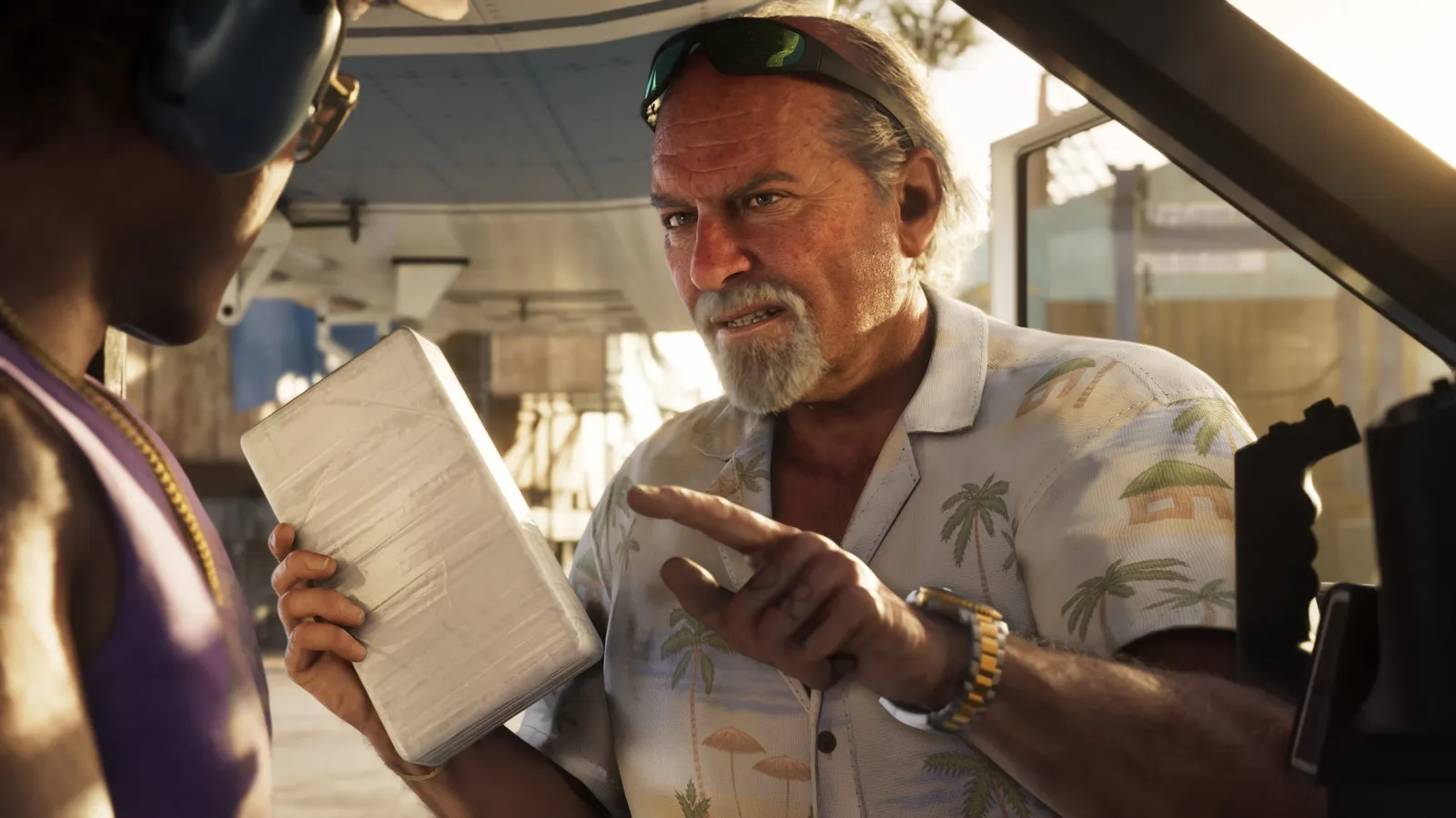
Rockstar has settled the frame rate question for Grand Theft Auto 6, confirming that current-generation consoles will not get a 60 fps mode, even in future patches. For decision-makers, it is a case study in spending brand leverage to refuse a feature the market has come to expect, and in what that refusal costs and buys.
Rockstar has answered the question GTA 6 players have been asking since the game was announced: there is no 60 fps mode coming to current-generation consoles, and there will not be one later. As Engadget put it, you can forget about a 60 fps mode on current-gen hardware, even in future patches. That is not a launch-window limitation or a day-one compromise waiting on a fix. It is a settled position, and it lands on one of the most anticipated releases in the industry, which is exactly why it matters beyond one game.
The stakes are simple. Over the past console generation, 60 fps stopped being a premium feature and became a default expectation. Most big-budget releases now ship with a choice: a performance mode that prioritizes frame rate and a quality mode that prioritizes resolution and visual detail. Players learned the vocabulary, then learned to wait, because a patch often arrived to improve things after launch. Rockstar has just told that audience the waiting is pointless. For a publisher with less leverage, that would be a commercial risk. Rockstar is not a publisher with less leverage.
To understand why this is a decision rather than an oversight, it helps to know what frame rate actually costs. Rendering a game is a budget of milliseconds per frame, and every system in the game draws from it: physics, traffic, crowds, weather, AI, lighting, audio. A 60 fps target means the whole simulation has to complete twice as often as a 30 fps target, and the binding constraint is usually the processor, not the graphics chip. Turning down resolution or shadows, the usual levers in a performance mode, does not buy back processor time. That is why performance modes are typically designed in from the start rather than bolted on later, and why a patch that adds one is rare and expensive rather than routine.
That engineering reality explains the commercial logic. Rockstar is one of the few studios whose audience arrives regardless of the spec sheet. Its players are not choosing between this game and a competitor on frame rate; they are choosing when to buy, not whether. Where a competitive shooter lives and dies on responsiveness, a sprawling open-world title is typically sold on scale, detail, and the promise of a world that feels alive. Rockstar appears to have made the bet that its players will trade smoothness for whatever the extra processing power buys elsewhere. Whether that bet is right will be settled by the only metric that counts, and it will be settled publicly.
The phrase "current-gen" is doing quiet work in that answer, and it is where the strategic read gets interesting. By ruling out a 60 fps mode on today's consoles specifically, Rockstar leaves the door open on hardware that does not exist yet or has not been positioned as the target. Historically, Rockstar's biggest releases have reached PC after their console debuts, and a PC version is where frame rate stops being a platform decision and becomes a settings menu. A future console generation, or a mid-cycle hardware refresh, is the natural home for the 60 fps conversation next. In other words, the answer is not "never." It is "not on the box you already own."
For platform holders, that is a double-edged message. Sony and Microsoft have spent this generation selling hardware on performance, and a flagship title that declines to use the headroom is an awkward data point for that pitch. It also hands them a future marketing hook: the same game, running better, on whatever comes next. For rival studios, the precedent cuts both ways too. Rockstar can absorb a frame rate backlash because its brand is bigger than any single spec. Most studios cannot, and the ones that try to follow this playbook without that leverage will find out quickly that players vote with their wallets.
The practical takeaway for anyone building or funding in this space is that technical decisions are positioning decisions. Rockstar has effectively declared that its product's value is not measured in frames per second, and it has done so early enough that no one can accuse it of a bait and switch. That is a cleaner position than promising a mode and quietly abandoning it. The cost is a segment of vocal players who will not be persuaded. The benefit is a development team that does not have to split its engineering effort across two performance targets for a console generation that is already well underway. For executives watching, the lesson is not about video games. It is about knowing which promises you can afford to break, and which ones you should never make in the first place.
This story's Key Insights and Take-aways are locked.
Create a free account to unlock Executive Actions for one credit.
Register to UnlockAlways free for Executives Club members. Join the Club
More in Technology

Anthropic mathematician claims Claude helped crack the Riemann hypothesis
If the proof holds, AI has toppled math's most famous open problem; if it does not, it is a case study in announcing breakthroughs before anyone verifies them.

AI's $4 Trillion Wipeout Erases Nasdaq's Gains for the Year
A brutal week took roughly $4 trillion off the AI sector and left the Nasdaq flat for the year, and the damage ran the full length of the supply chain.

Anthropic mathematician says AI proved the Riemann hypothesis. Verification will take time.
A single unverified claim from inside Anthropic now sits against more than 160 years of open mathematics, and the gap between asserting a proof and surviving peer review is the entire story.