
Saudi's $900B PIF caps foreign bets at 20% as missiles hit Riyadh
The fund that backed Uber and EA's $55 billion buyout is pulling back, and no equally large pool of capital is waiting to replace it.
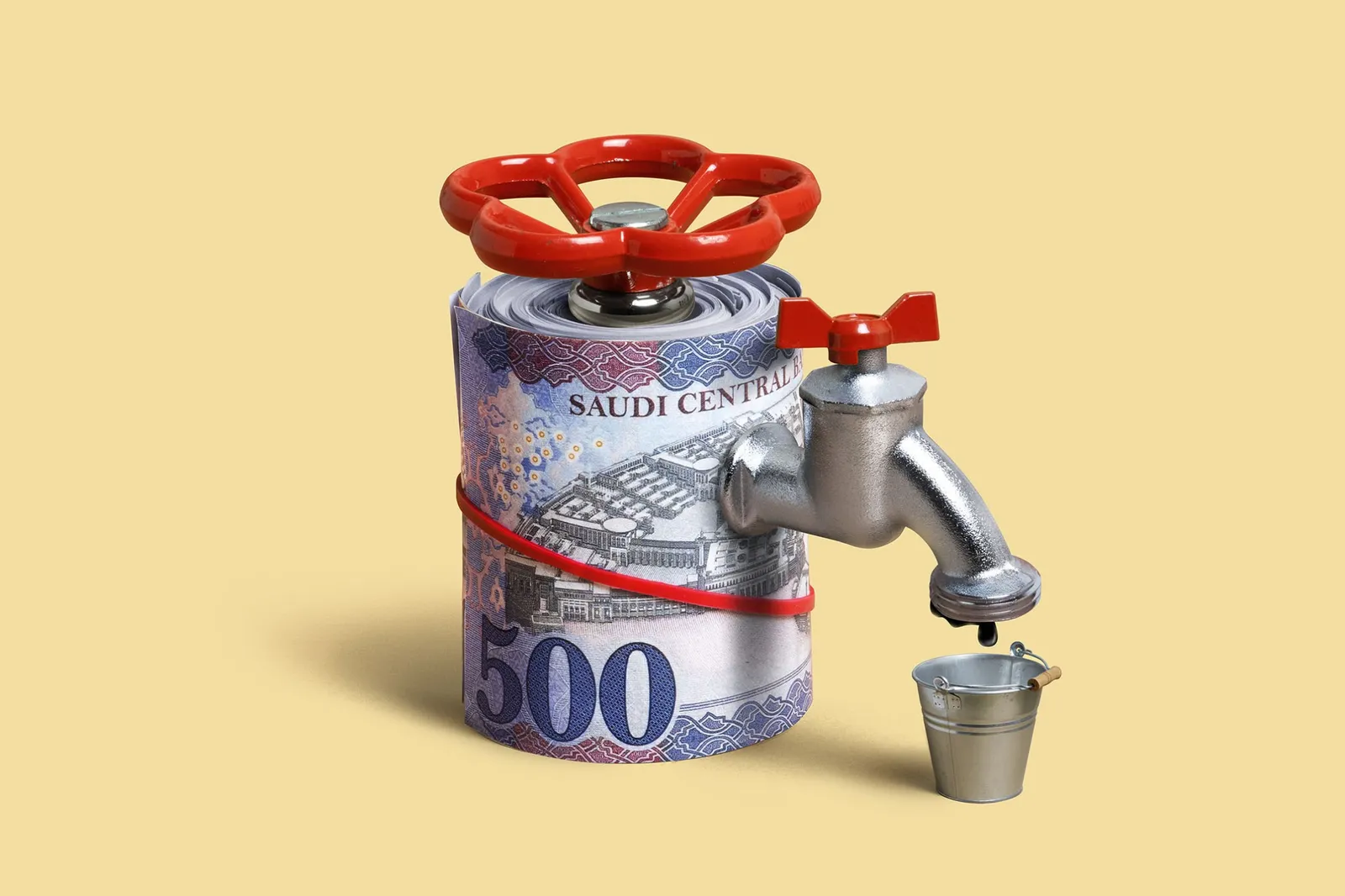
Saudi Crown Prince Mohammed bin Salman's Public Investment Fund is capping foreign investments at 20% of its portfolio, down from 30% in 2020, after Houthi missile strikes hit Riyadh's airport and Aramco's headquarters. For executives and boards that have leaned on Gulf sovereign money, the retreat removes the easiest source of mega-checks just as the UAE fund faces the same wartime strain.
Saudi Arabia's Public Investment Fund is capping foreign investments at 20% of its portfolio, down from 30% in 2020, a quiet retreat from the bottomless-cash era that made Riyadh the most courted checkbook on earth. The trigger was not a spreadsheet. In October, Houthi rebels in Yemen fired a ballistic missile into Riyadh's international airport, a core Vision 2030 project, killing 12 people outright. A second missile hit the airport the next day, forcing a shutdown and stranding thousands. Days later, a missile struck Saudi Aramco's headquarters, forcing the world's biggest oil company to evacuate its sprawling campus.
For a decade, that checkbook looked inexhaustible. The PIF, chaired by Crown Prince Mohammed bin Salman, has grown its assets 600% since 2015 to more than $900 billion, fueled by oil revenue and aimed squarely at Vision 2030, MBS's signature strategy to end the kingdom's dependence on crude. The fund splurged on soccer, tech giants, California EV maker Lucid, London's Heathrow Airport, and mega-sized tourism sites, arenas, and entertainment complexes at home. No investment seemed too big; mammoth spending was the point. Companies came to treat Riyadh as an easy ATM, says Helima Croft, RBC Capital Markets' global head of commodity strategy. That assumption is now the story.
The war's damage arrived fast. After the U.S. and Israel dropped bombs on Iran last February, Iran shut the Strait of Hormuz to critical oil shipments, forcing Saudi Arabia to cut millions of barrels in daily exports or pipe them overland to its Red Sea port. Glittering Vision 2030 events built to attract global talent were shelved. The PIF dropped its $5 billion LIV Golf investment in May, ditching efforts to acquire the PGA and sign top players. It rescheduled an international tennis tournament, postponed a film festival in Jeddah, and canceled the city's Formula 1 race. Foreign direct investment into Saudi Arabia plunged 18% in the second quarter. The country predicts its economy will shrink 3.6% this year, its steepest drop since the pandemic, with a $51 billion budget shortfall. "A lot of investment will sit on the sidelines and wait for some more signs of stability," says Monica Malik, chief economist at Abu Dhabi Commercial Bank.
Then came October. After the airport strikes, the PIF canceled the country's flagship business conference, the Future Investment Initiative, or FII, once known as Davos in the Desert, after it emerged that few Wall Street hedge funders or corporate executives dared risk the trip. Aramco's Riyadh office was hit on Nov. 8. Reeling, the PIF scrapped five of the multibillion-dollar stadiums it had promised for the 2034 World Cup. Even if peace returns, Croft says, "they are going to be very focused on their own citizens, their own infrastructure needs."
The belt-tightening was not immediate or total, which is exactly why it fooled people. The PIF kept spending in the U.S., plowing $10 billion into the Paramount-Warner Bros. merger in April, snapping up $26.3 million worth of SpaceX shares in June, and completing its $55 billion takeover of Electronic Arts, the Silicon Valley gaming giant, in August. It also withdrew a planned $200 million partnership with New York City's Metropolitan Opera. For companies hunting capital, the read was that the Saudi bonanza would continue regardless. The 20% foreign-investment cap says otherwise, and it lands hardest on the U.S., the biggest recipient of Saudi money.
The paradox is oil. Crude still generates 60% of Saudi fiscal revenue, and billions of those dollars have been transferred to the PIF to pay for Vision 2030. "Oil is the enabler of everything," Croft says. War cuts both ways: the sharp rise in oil prices pushed Aramco's third-quarter profits up 9%, even as missiles forced the company to evacuate its headquarters. Higher prices cannot fix a country whose flagship projects are being canceled for lack of safe ground.
Vision 2030 was never only about money. When MBS unveiled it in 2015, 71% of Saudis were younger than 35, and millions more jobs were needed, including for women, who were finally allowed to drive. Entire new sectors, tourism, entertainment, sports, were meant to stop fun-starved Saudis from spending an estimated $1 billion a year abroad on movies and restaurants. The change was startling: a 35-year cinema ban ended, AMC multiplexes cropped up, live concerts drew thousands. Munira Aldayood, Riyadh's director of conferences and exhibitions, returned home after 23 years in the U.S. "As a female, Saudi Arabia is now the best place to live," she said. "It's heaven."
None of that changes the political reality: Saudi Arabia remains an autocracy that jails mild critics and executes nonviolent offenders, and MBS's grip is firm regardless of what happens to his economic plan. The exposure sits with everyone who built a strategy around Gulf money. The Council on Foreign Relations warned in May that "there is no obvious, equally large capital source waiting in the wings." The UAE's sovereign wealth fund, the obvious alternative, is also feeling the war's strain. For U.S. executives and boards, the lesson is blunt: a funding source that looked permanent just repriced itself, and the replacement is not coming.
This story's Key Insights and Take-aways are locked.
Create a free account to unlock Executive Actions for one credit.
Register to UnlockAlways free for Executives Club members. Join the Club
More in Business

S&P 500 Enters Correction, Down 10% From Its High on AI Worries
The index's slide past the 10 percent line is a symbolic verdict on investor mood, and the AI trade that powered the rally is now the thing testing it.

Dow and S&P 500 enter correction as Nasdaq logs worst week since 2020
All 11 S&P 500 sectors fell more than 1% in the same week for the first time since April 2025, a breadth signal that matters more than any single index level.

Chip stocks lose $2.3 trillion in a week, worst run in 25 years
A $2.3 trillion weekly wipeout in semiconductors is forcing every board with an AI story to ask whether it owns a thesis or just a crowded trade.