
Save the Children: almost 1 in 4 children live in conflict zones
A new Save the Children report says abductions, sexual violence and blocked aid all worsened in a single year, and the fallout reaches supply chains, sanctions compliance and every board with exposure to fragile markets.
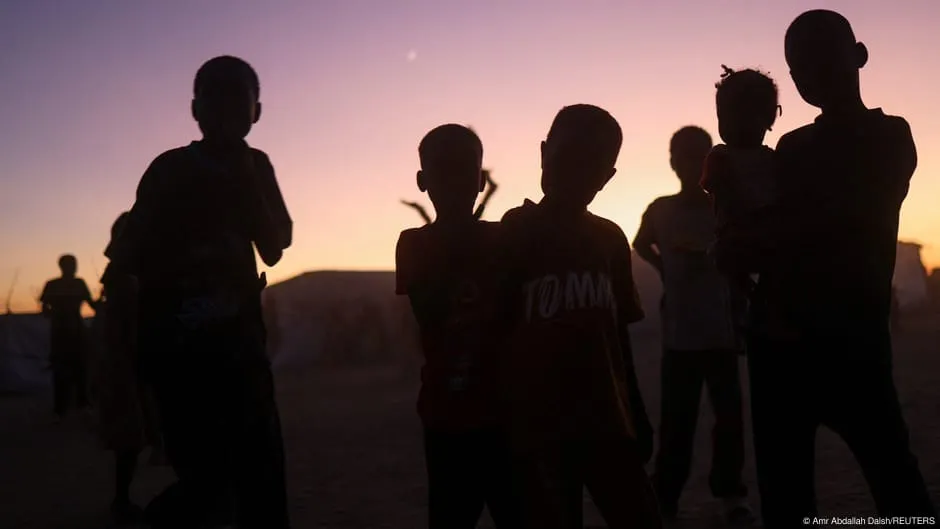
Save the Children's new report finds that almost one in four children live in conflict zones, with denial of humanitarian access, abductions and sexual violence all rising dramatically over the past year. For executives, the finding is a governance signal: conflict-affected markets are getting harder to operate in, insure and audit, and the burden of proof on supply chain diligence keeps shifting toward boards.
Almost one in four children alive today live in a conflict zone. That is the headline finding of a new report from Save the Children, and it comes with a companion figure that is harder to sit with: violations against children, specifically denial of humanitarian access, abductions and sexual violence, have increased dramatically over the past year. Read those three categories again. They are not incidental to war. They are the harms that accelerate when the systems built to protect children stop working, and the report says all three got worse inside a single year.
Start with the one that sounds the most bureaucratic and is actually the most consequential. Denial of humanitarian access means aid convoys, medical teams and food shipments are blocked from reaching the people who need them. Unlike a bombing, it is not a byproduct of fighting. It is a decision, made by someone with the power to say no, and it is the mechanism that turns a crisis into a catastrophe. Abductions and sexual violence sit alongside it in the report as violations that rose sharply, and both share a feature that makes them hard to count: they are chronically underreported, which means the true figures are typically worse than the documented ones.
For context on how these numbers get built, humanitarian agencies do not measure this in a vacuum. Violations against children in armed conflict have been tracked for years through formal monitoring and reporting arrangements that identify, verify and publicly name parties to conflict. That architecture matters because it converts individual horrors into a ledger that governments, courts and companies can be held against. When a report says almost a quarter of the world's children live in conflict zones, it is describing exposure, not destiny. Most of those children are not harmed. But the share who are grows when access closes and impunity holds.
Here is where this stops being a story about somewhere else. Conflict-affected regions are, historically, also where the world gets a meaningful share of its minerals, energy and agricultural commodities. Companies that source from, operate in or finance activity in those geographies carry exposure that does not show up on a standard risk register. A blocked aid corridor is a signal about governance and control of territory. Abductions signal that armed groups can move freely. Both are leading indicators that a market is getting harder to operate in, insure, staff and audit.
The regulatory backdrop has shifted underneath all of this. Over the past decade, lawmakers in Europe and elsewhere have advanced mandatory human rights and environmental due diligence rules, while conflict minerals requirements and sanctions regimes already ask companies to know who is in their supply chain and where the money flows. The direction of travel is consistent: the burden of proof has moved from regulators to boards. A report like this one becomes the kind of document that plaintiffs, journalists and investors cite when they ask a company what it knew and when.
For the aid sector itself, the constraint has changed shape. Funding is always tight, but money is not the binding problem when access is denied. You can raise the full appeal and still deliver nothing if convoys cannot cross a checkpoint. That flips the operating model: negotiation, local partnerships and staff safety become the core capability, and national staff, who are often the ones physically at risk, carry the heaviest load. Agencies that treat access as a logistics problem rather than a political one tend to learn that lesson the hard way.
The second-order effects are where executives should focus. Insurance for staff and assets in fragile markets gets repriced when abductions rise. Data collection degrades, so impact reporting and compliance filings rest on thinner evidence. Reputational risk compounds quietly, because the gap between a company's stated values and its on-the-ground footprint is exactly what a hostile headline exploits. None of this requires a company to be doing anything wrong. It only requires the company to be nearby.
What to watch next is straightforward. This report is a snapshot of a trend line, and the trend line is the story: three categories of violations, all moving in the wrong direction in one year. For boards with exposure to conflict-affected markets, the useful question is not whether the number is exactly one in four. It is whether the next report will show the same direction, and whether their own diligence would hold up if someone asked.
This story's Key Insights and Take-aways are locked.
Create a free account to unlock Executive Actions for one credit.
Register to UnlockAlways free for Executives Club members. Join the Club
More in Politics

Fifth Circuit Kills Pregnant Workers' Law Over Pandemic Proxy Votes
A procedural ruling, not a policy one, has blocked a federal pregnancy-accommodation law and put every pandemic-era statute in the crosshairs ahead of an expected Supreme Court appeal.

Measles kills a Virginia child under 5, the state's first death of 2026
Virginia's health department confirmed the death but withheld the child's vaccination status, leaving schools, clinics and employers to plan around the one detail that would explain the most.

Former Brazilian President Bolsonaro Hospitalized with Intestinal Obstruction
The health status of the former far-right leader raises immediate questions about political stability and the trajectory of Brazil's conservative movement.