
Scale AI's Outlier Offers Doctors $180 an Hour, Then Cuts the Pay
Platforms are recruiting physicians, lawyers, and Ph.D.s at premium rates, then applying the pay cuts and sudden ghosting that global data workers already know.
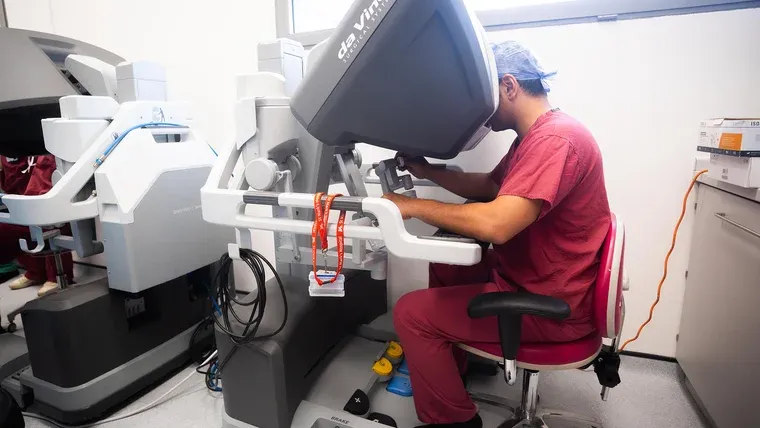
Outlier, the recruiting platform run by Scale AI, advertises offers of up to $180 an hour for U.S. physicians, part of a wave of platforms courting doctors, lawyers, and Ph.D.s for AI training work. Rest of World reports that the same pay cuts and sudden ghosting long documented among global data workers are now hitting these credentialed contributors, putting vendor labor practices squarely on the risk register for any company buying expert-labeled data.
The gig economy has arrived for cardiologists. Outlier, the recruiting platform run by Scale AI, advertises offers of up to $180 an hour for physicians in the United States, and it is not the only marketplace courting credentialed experts. Doctors, lawyers, and Ph.D.s are being recruited with headline rates that would make a junior consultant look cheap. That is the pitch. Rest of World reports what follows: the same tactics that have plagued global data workers for years, pay cuts and sudden ghosting, are now landing in the inboxes of people with medical degrees and law licenses.
The pattern, not the promise, is the story. According to Rest of World, platform companies lure specialists in with top rates, then cut pay and disappear mid-project, leaving workers with unpaid hours and little recourse. For the global data workforce that has spent more than a decade labeling images and annotating text, none of this is new. What is new is the audience. When the person on the other end of the contract holds a professional license, a malpractice carrier, and a public profile, the same labor playbook stops being invisible.
Follow the demand and the pricing makes sense. Modern AI systems are trained and evaluated on data that increasingly requires domain expertise: medical reasoning, legal analysis, graduate-level science. Historically, the annotation layer sat near the bottom of the wage ladder, distributed across low-cost markets where workers competed on volume. As labs push models into higher-stakes territory, they need people who can read a chart or parse a contract, and they are willing to pay for that. The $180-an-hour advertisement is what that willingness looks like at the recruiting stage.
The mechanics of the squeeze are familiar to anyone who has worked a platform job. Assignments typically arrive as discrete tasks or short projects rather than employment, which means no benefits, no notice, and no guaranteed hours. Rates are quoted as ceilings, so the top number is what draws the applicant, not necessarily what the work pays out over time. When a project changes scope, the rate can reset. When it ends, the account can go quiet, a practice workers describe as ghosting. None of this requires a bad actor. It requires only a contract that gives the platform every lever.
There is a deeper irony for the professionals being recruited. The tasks they complete are training data, the raw material that teaches models to perform slices of the work they were trained to do. They are paid once, by the task. They do not hold equity in the model, royalties on the data, or credit for the contribution. For a lawyer drafting model answers on contract interpretation, or a physician working through diagnostic scenarios, part of the value being built is their professional judgment, packaged and resold.
That should worry the buyers too. Labs and enterprises that depend on expert-labeled data inherit the labor practices of their suppliers. If contributors are churned by rate cuts and abrupt disappearances, quality and consistency degrade exactly where the stakes are highest. Regulators have spent years fighting over whether gig platforms misclassify workers as contractors, and professional bodies have their own interest in how licensed expertise is bought, embedded, and resold.
The strategic question for executives is blunt. Any AI roadmap that leans on expert human data has a labor model underneath it, and that model is now visible to the very people supplying it. Doctors, lawyers, and Ph.D.s have louder voices, better lawyers, and more credibility than the offshore workforce that absorbed the last version of this playbook. The companies that treat them as disposable contributors will not just face bad press. They will face a supply problem, in a market where expert judgment is the scarce input.
For everyone else, the lesson from Rest of World is a warning about a familiar trade. Premium rates are a recruiting tool. Retention, transparency, and fair terms are a business decision. The gig economy just got a credentialed workforce, and that workforce is about to find out which one it was offered.
This story's Key Insights and Take-aways are locked.
Create a free account to unlock Executive Actions for one credit.
Register to UnlockAlways free for Executives Club members. Join the Club
More in Technology

Anthropic mathematician claims Claude helped crack the Riemann hypothesis
If the proof holds, AI has toppled math's most famous open problem; if it does not, it is a case study in announcing breakthroughs before anyone verifies them.

AI's $4 Trillion Wipeout Erases Nasdaq's Gains for the Year
A brutal week took roughly $4 trillion off the AI sector and left the Nasdaq flat for the year, and the damage ran the full length of the supply chain.

Anthropic mathematician says AI proved the Riemann hypothesis. Verification will take time.
A single unverified claim from inside Anthropic now sits against more than 160 years of open mathematics, and the gap between asserting a proof and surviving peer review is the entire story.