

Senate Outlaws Bets on Death and War in First-Ever Hit to Kalshi, Polymarket
The DEATH BETS Act just cleared the Senate by voice vote, putting every CFTC-regulated exchange on notice that its most controversial contracts may soon be contraband.
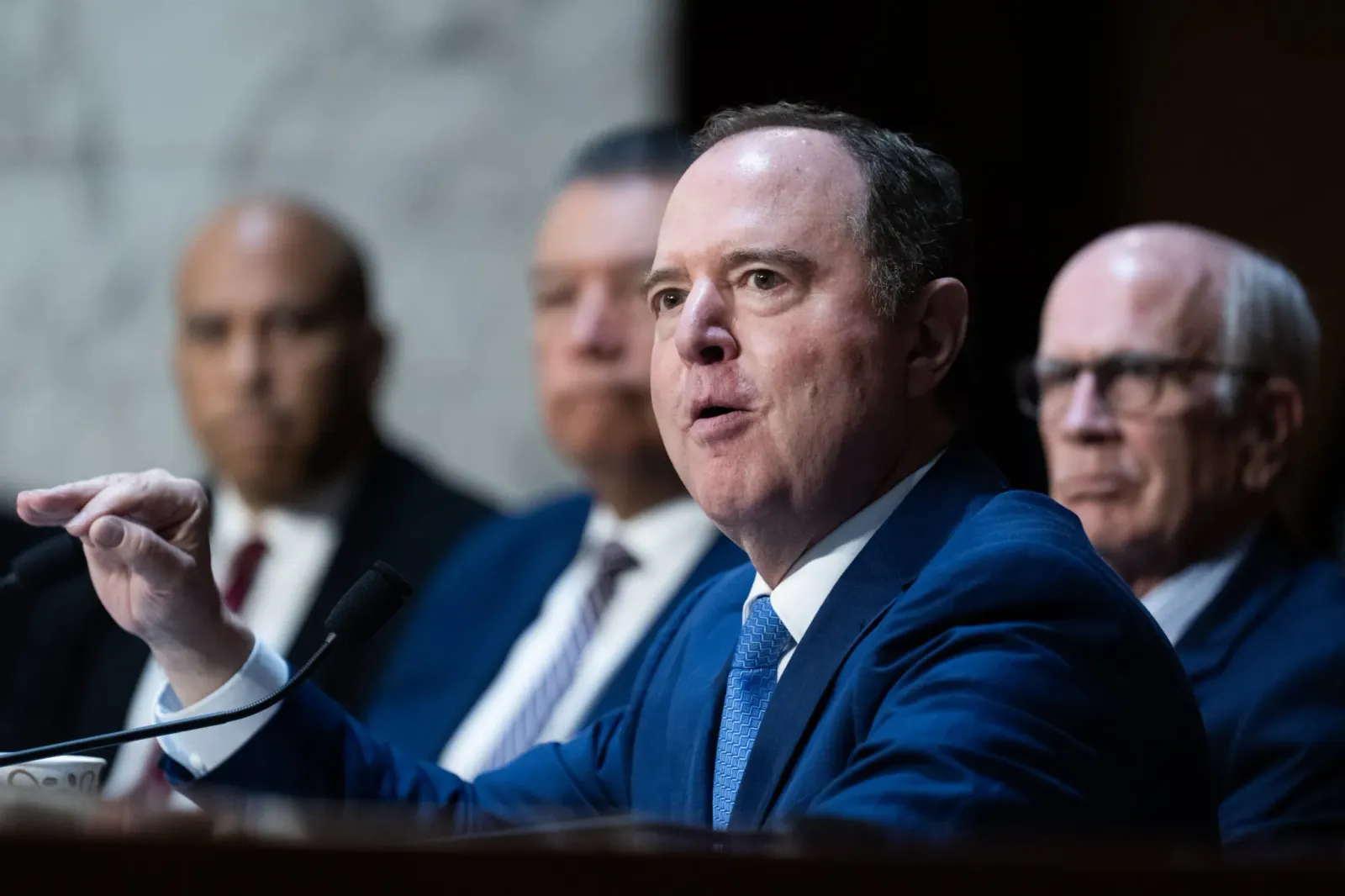
The Senate passed the DEATH BETS Act, introduced by Sens. Adam Schiff (D-Calif.) and John Curtis (R-Utah), barring CFTC-regulated platforms including Kalshi and Polymarket from offering contracts tied to war, assassination, terrorism or an individual's death. It is the first prediction market legislation to clear either chamber, and it lands as Democrats, newly in control of Congress, open a second front against sports and casino-style contracts.
The Senate passed the DEATH BETS Act on Thursday evening by a voice vote, making it the first piece of legislation aimed at the prediction market industry to clear either chamber of Congress. Introduced by Sen. Adam Schiff (D-Calif.) and Sen. John Curtis (R-Utah), the bill bars exchanges and clearinghouses overseen by the Commodity Futures Trading Commission from offering or processing contracts tied to terrorism, assassination, an individual's death, war or U.S. military operations. It also sweeps in contracts whose outcomes are reasonably expected to depend mainly on someone's death, even when the contract language never mentions death at all. The bill must still pass the House before it reaches the president's desk.
Schiff did not soften the pitch on the Senate floor. "They are offered with no regard for national security and in far too many cases, even basic morality," he said. "These markets are operating in a wild West, desperately in need of regulation and guardrails." That is the argument the industry has been fending off for two years, and it just found its first binding answer in Congress. Voice votes typically signal broad support rather than a narrow party-line split, which matters here: this was not a squeaker, and the crypto-era playbook of running out the clock on Washington looks weaker than it did last week.
The path to this vote runs through the product itself. As Kalshi and Polymarket grew in prominence over the past two years, they listed contracts on seemingly anything, drawing scrutiny over wagers tied to war, violence or human suffering. They also raised insider trading concerns, because users can trade without publicly revealing their identities, which makes it harder for outsiders to spot conflicts of interest. Two cases did the most political damage. One involved a Polymarket trader who made more than $400,000 betting on Nicolas Maduro's removal from power before U.S. forces captured the Venezuelan leader in January. The other was a Kalshi market on whether Iranian Supreme Leader Ali Khamenei would leave office, which sparked a dispute after his killing when Kalshi declined to pay traders who had bet he would leave office, citing a rule that excluded death as a qualifying outcome.
Schiff brought receipts to the floor. He pointed to a Polymarket bet on whether NASA's Artemis II mission would explode, raising concerns about wagers on astronauts' lives, and to a bet on whether Russian forces would capture the Ukrainian city of Myrnohrad. The companies have pushed back before. "We don't list markets directly tied to death," Kalshi CEO Tarek Mansour wrote on X in February. Speaking at a conference in March, Polymarket CEO Shayne Coplan called conflict-related markets a "complicated question" while defending their value as a source of useful information. Neither company immediately responded to Fortune's request for comment.
The political weather turned fast. The bill's passage comes amid growing scrutiny of prediction markets, particularly after Democrats won control of both chambers of Congress in this month's midterm elections. Sen. Elizabeth Warren (D-Mass.) pointed Wednesday to Kalshi's decision to pause trading on contracts tied to President Donald Trump's public remarks, which have drawn insider trading concerns. "The CFTC needs to do more to stop insiders from cashing in," she wrote on X. Rep. Ro Khanna (D-Calif.) aimed at younger users, calling Wednesday for an investigation and a ban on sports prediction markets. He criticized Kalshi for allowing 18-year-olds to bet on sports and said users under 21 had wagered $3.9 billion on the platform. "They call it a 'prediction market,'" he wrote. "It's gambling."
This is not a one-party squeeze. Beyond cosponsoring the bill that passed Thursday, Curtis joined Warren last month in questioning Kalshi and Polymarket about potentially improper election-related trading, and the Utah Republican has backed separate legislation to ban sports and casino-style prediction contracts, citing concerns about young users' exposure to gambling. Sen. Ted Cruz (R-Texas) has announced plans to introduce legislation barring prediction market platforms from offering sports contracts without state or tribal approval, according to Bloomberg Law. Some operators are already positioned for it: Novig avoids these contracts altogether, limiting its offerings to sports markets and restricting trading to users 21 and older.
For anyone running a platform, the sequencing is the story. Death and war contracts are the morality fight, and they are close to settled. Sports is the revenue fight, and it is just starting, with state and tribal approval now on the table as a gatekeeping mechanism and under-21 wagering volume sitting squarely in the crosshairs. Anonymity is the sleeper issue: identity verification is a compliance cost regulators can impose without ever touching which contracts get listed. The Khamenei episode is the cautionary tale for product teams, because a rulebook clause that excludes death from qualifying outcomes is now the difference between a settled market and a public fight over whether the platform pays. Operators who treat their listing criteria as marketing copy rather than legal documents should expect to be cross-examined on them, in the House and in the press. The bill still needs the House, and the president's signature after that, but the direction of travel is no longer ambiguous.
This story's Key Insights and Take-aways are locked.
Create a free account to unlock Executive Actions for one credit.
Register to UnlockAlways free for Executives Club members. Join the Club
More in Politics

Fifth Circuit Kills Pregnant Workers' Law Over Pandemic Proxy Votes
A procedural ruling, not a policy one, has blocked a federal pregnancy-accommodation law and put every pandemic-era statute in the crosshairs ahead of an expected Supreme Court appeal.

Measles kills a Virginia child under 5, the state's first death of 2026
Virginia's health department confirmed the death but withheld the child's vaccination status, leaving schools, clinics and employers to plan around the one detail that would explain the most.

Former Brazilian President Bolsonaro Hospitalized with Intestinal Obstruction
The health status of the former far-right leader raises immediate questions about political stability and the trajectory of Brazil's conservative movement.