
Senate Republicans Block Iran War Powers Resolution, Trump Keeps Free Rein
The vote leaves Congress sidelined on Iran policy and reinforces the president's unilateral war-making authority.
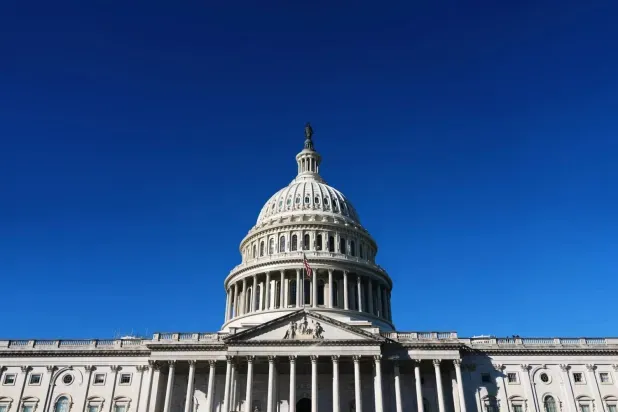
Senate Republicans blocked a resolution aimed at curbing President Trump's war powers regarding Iran. The move leaves Congress without a formal check on military action against Iran and sets a precedent for future executive branch conflicts.
Senate Republicans blocked a resolution to curb President Trump's war powers over Iran, Asharq Al-Awsat reports. The resolution, which aimed to require congressional approval for military action against Iran, did not advance. The result: Trump retains broad authority to order strikes or other operations without a new vote from Congress. For a president who has repeatedly tested the limits of executive power, this is a green light. The vote is a win for the White House and a loss for lawmakers who wanted to reassert Congress's constitutional role in matters of war.
The resolution was a direct challenge to the administration's Iran policy. It would have invoked the War Powers Resolution of 1973, the law passed over President Nixon's veto that requires the president to notify Congress within 48 hours of introducing armed forces into hostilities and to withdraw them after 60 days without congressional authorization. Such resolutions are a rare tool for Congress to assert its war powers. They are typically introduced by members of the opposition party, but they can also come from within the president's own party when lawmakers fear an unchecked march to war. This time, Republicans held the line.
With a Senate majority, Republicans had the votes to block the measure. The vote likely fell along party lines, with Republicans supporting the president and Democrats seeking to limit his authority. That dynamic is familiar: when the same party controls the White House and the Senate, war powers resolutions almost always fail. The last time Congress successfully passed a war powers resolution was in 1973, and even then, it was over a veto. Since then, presidents of both parties have largely ignored the law, and Congress has rarely enforced it. The pattern is clear: congressional war powers have been eroding for decades.
The stakes for Iran policy are significant. By blocking the resolution, Republicans have effectively told the administration that it can continue its pressure campaign without legislative interference. That campaign has included sanctions and military posturing. The resolution's failure means that any future military action against Iran would not require a new authorization. It also sends a signal to Tehran that the U.S. Congress is unlikely to restrain the president. For regional allies and adversaries, that is a key data point.
The broader implications for checks and balances are hard to overstate. This is the latest chapter in a long-running debate over war powers. Congress has not declared war since World War II. The War Powers Act was meant to reclaim that authority, but it has been largely ineffective. Presidents from both parties have argued that the act is unconstitutional, and Congress has been reluctant to force a confrontation. The result is a system where the president can order military action with minimal oversight. That is not a partisan observation; it is a structural reality. For executives in defense, energy, and global trade, this means geopolitical risk is now more concentrated in the White House.
For businesses and markets, the outcome removes a potential check on U.S. military action. Uncertainty around Iran already affects oil prices, defense stocks, and global supply chains. The removal of a congressional brake could increase the risk of miscalculation. Executives should monitor geopolitical risk more closely, especially in energy and defense sectors. But the immediate market reaction may be muted, because the resolution's failure was widely expected. The real story is the precedent: Congress has once again ceded authority to the executive. That has long-term implications for how the U.S. engages with the world.
What happens next? Similar resolutions may be introduced again, but the outcome is likely to be the same as long as one party controls the Senate and the president is from that party. For lawmakers who want to reassert their role, the path forward is unclear. For the president, the path is wide open. And for the rest of us, the lesson is simple: when it comes to war and peace, the balance of power is not decided by the Constitution alone. It is decided by votes like this one. Asharq Al-Awsat's report underscores that the Senate's Republican majority has once again chosen to protect the president's prerogatives over Congress's.
This story's Key Insights and Take-aways are locked.
Create a free account to unlock Executive Actions for one credit.
Register to UnlockAlways free for Executives Club members. Join the Club
More in Politics

Fifth Circuit Kills Pregnant Workers' Law Over Pandemic Proxy Votes
A procedural ruling, not a policy one, has blocked a federal pregnancy-accommodation law and put every pandemic-era statute in the crosshairs ahead of an expected Supreme Court appeal.

Measles kills a Virginia child under 5, the state's first death of 2026
Virginia's health department confirmed the death but withheld the child's vaccination status, leaving schools, clinics and employers to plan around the one detail that would explain the most.

Former Brazilian President Bolsonaro Hospitalized with Intestinal Obstruction
The health status of the former far-right leader raises immediate questions about political stability and the trajectory of Brazil's conservative movement.