
Signal blocks screenshots by default to starve AI agents, fix called incomplete
The encrypted messenger's new default shuts screen-reading AI agents out of your chats, but the coverage calls the fix incomplete and wants a simple developer opt-out.
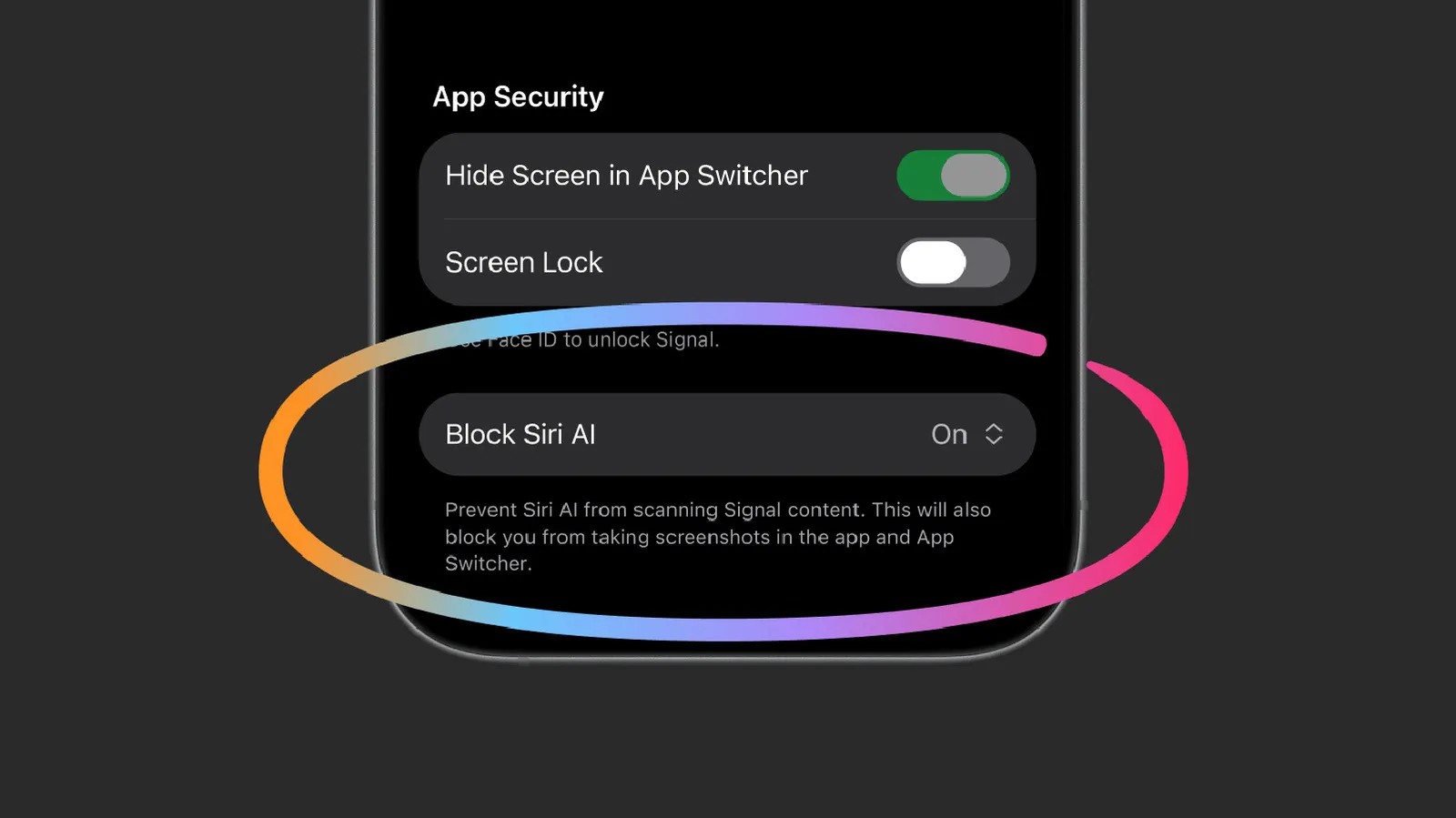
Signal, the nonprofit encrypted messaging app, now blocks screenshots by default in a bid to stymie AI agents that read screens, a fix the coverage describes as incomplete and pairs with a call for a simple way for developers to opt out of AI snooping. For decision-makers, it is an early template for how sensitive apps will draw the line between user content and automated readers.
Signal now blocks screenshots by default. The nonprofit encrypted messaging app flipped the switch so its chats cannot be captured by the screen-reading tools that AI agents increasingly depend on, a direct shot at the software category eating its way across the modern desktop. The catch, as the coverage frames it: the fix is described as incomplete, and it arrives alongside a call for a simple way for developers to opt out of AI snooping. In other words, Signal has closed one door and is asking the rest of the industry to help build the wall.
Screenshot blocking is not a new trick. Mobile operating systems have long given app developers a system-level switch that tells the OS to refuse screen captures: on Android it is a window flag, on iOS a capture-detection API. Signal has historically used that switch for its most sensitive surfaces, the view-once photos and disappearing messages where the entire point is that the content does not linger. What changed is the default. Instead of protecting a narrow slice of the app, Signal is now applying the protection broadly, which means the ordinary chat screen, the one most users stare at all day, is no longer a free-for-all for anything that can read pixels.
The timing is not subtle. The past two years have produced a wave of AI agents that operate computers the way a person does: they look at the screen, find the text, click the button, copy the result. For most apps that is a feature. For an encrypted messenger whose entire pitch is that nobody but you and your recipient can read your messages, it is a structural leak. End-to-end encryption protects data in transit and at rest, but it has never protected data on display. Once a message is rendered on a screen, anything with screen access can read it. Signal's new default attacks that gap at the source.
That is also why the fix is being called incomplete. Screenshot blocking is a client-side control, and client-side controls are speed bumps, not walls. A second phone pointed at the screen defeats it. A rooted or jailbroken device defeats it. Screen recording, accessibility services, and any tool with elevated permissions can defeat it. The ask attached to the coverage is telling: rather than pretend the block is airtight, it calls for a simple, standard way for developers to opt out of AI snooping, a machine-readable signal that says this content is off-limits to automated readers. Think of it as a robots.txt for the screen, a norm agents are expected to honor even though nothing physically stops them from ignoring it.
For executives, the interesting part is not the toggle. It is the precedent. Every company now sits on a pile of data that AI vendors would very much like to read, and the legal and ethical ground under that reading is still being poured. European regulators have spent years building out data protection rules that treat automated processing as a distinct activity with distinct obligations, while the United States remains a patchwork of state laws and sector guidance. The practical question for most boards is simpler than the legal one: if an agent can see it, is it in scope for training, for logging, for resale? Signal's answer, for its own app, is now no by default.
Signal's position is unusual and worth noting. It is a nonprofit, funded by donations, with no advertising business and no data monetization to protect. That gives it the freedom to make an AI-hostile decision that a publicly traded messaging company would have to weigh against its own agent roadmap and its enterprise sales pipeline. When a company with nothing to sell you moves a privacy default, it is a useful signal about where the technical floor is heading, and a useful benchmark against which everyone else's excuses get measured.
The second-order effects are where this gets interesting. If screenshot blocking becomes standard across sensitive apps, AI agents lose a chunk of the visual web, and agent vendors will respond by pushing for deeper operating system access, richer accessibility APIs, or explicit user consent flows. That fight will play out in app store policy and OS design reviews, not in courtrooms. It also creates a fresh compliance question for enterprises: if your internal tools are being read by agents, do you have a record of it, and can you turn it off on demand?
For now, the takeaway is narrow and concrete. Signal has made screenshot blocking the default, described the fix as incomplete, and asked for a simple developer opt-out from AI snooping. The rest of the industry now has a template to copy, a standard to argue about, and a deadline it did not set.
This story's Key Insights and Take-aways are locked.
Create a free account to unlock Executive Actions for one credit.
Register to UnlockAlways free for Executives Club members. Join the Club
More in Technology

Anthropic mathematician claims Claude helped crack the Riemann hypothesis
If the proof holds, AI has toppled math's most famous open problem; if it does not, it is a case study in announcing breakthroughs before anyone verifies them.

AI's $4 Trillion Wipeout Erases Nasdaq's Gains for the Year
A brutal week took roughly $4 trillion off the AI sector and left the Nasdaq flat for the year, and the damage ran the full length of the supply chain.

Anthropic mathematician says AI proved the Riemann hypothesis. Verification will take time.
A single unverified claim from inside Anthropic now sits against more than 160 years of open mathematics, and the gap between asserting a proof and surviving peer review is the entire story.