
Simone Fattal Carved Four Massacre Sites Into Lava Rock. Dublin Hung It.
At IMMA in Dublin, a mostly Palestinian show turns basalt, bulldozed airports and a Mahmoud Darwish poem into a live test of how public institutions carry political memory.
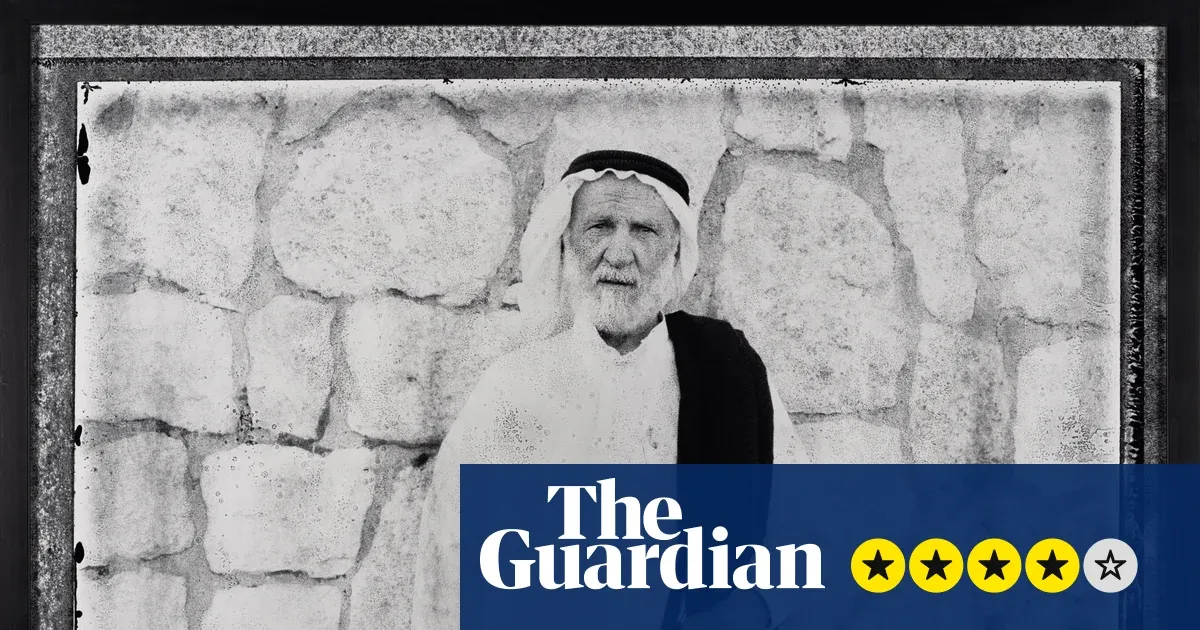
Artist Simone Fattal's 2006 basalt slabs naming massacre sites from Deir Yassin to Sabra open a new exhibition at IMMA in Dublin, a show that takes its title from a line in Mahmoud Darwish's poem Praise for the High Shadow and gathers mostly Palestinian artists from across the Levant. For museum directors, funders and collectors, it is a case study in programming politically charged work in a public institution, where artistic validation, sponsor risk and reputational exposure all arrive on the same opening night.
In 2006, the artist Simone Fattal painted names on to basalt slabs: Deir Yassin; Jenin; Qana; Sabra. The Guardian describes them as places "indelibly associated with massacres in the Levant since 1948." Running through the names, in the same Arabic script, is a single line of poetry by Etel Adnan: "In our lands of drought the rain forever is made of bullets." That work now opens a show at IMMA, the Irish Museum of Modern Art in Dublin, and it sets the temperature for everything after it: anger that runs hot and cold at once, history recorded on a material that is itself a document of violence.
The material is the argument. Basalt is lava that burst from the earth and then settled into stone, so every slab is already a record of transformation before a single letter is added. The show takes its title from a line in Mahmoud Darwish's poem Praise for the High Shadow. That poem was inspired by the last of Fattal's named sites, Sabra, the massacre perpetrated by a Lebanese Christian phalangist militia during Beirut's occupation by Israeli forces in 1982. Darwish wrote it in exile in Beirut, using the sea as a symbol of Palestinian displacement and memory, connecting people dispersed around the eastern Mediterranean both to each other and to their homeland. Read the show's framing and you see the thesis: these are not isolated griefs, they are a network.
Fattal is not alone on the walls. The exhibition ranges from those painted basalt slabs to photocollages of bulldozed airports, and it gathers artists from across the Levant, mostly Palestinian. The register is deliberately not uniform. The work is described as angry, melancholy and defiant, and that mix is the point: this is not a single-voice protest but a chorus with one shared subject and a wide range of tones, from grief to flat refusal.
The bigger curatorial claim is about texture, not only trauma. The show weaves a traumatic national history into the cosmopolitan culture of the Levant and into the interlinked world its audiences actually live in. That framing pushes back on the assumption that politically urgent art from the region is provincial or stuck in the past. Displacement, exile and memory are presented as modern, urban, networked experiences, which is precisely how a large share of the global creative class lives now.
For the institutions that mount shows like this, the operating question never changes: how much political heat can a publicly funded museum absorb before the cost changes shape? For context, museums that program politically charged work typically manage several audiences at once, including artists and their estates, private patrons and sponsors, government funders, local visitors and the international press. Any one of those groups can convert an exhibition into a reputational event. That is why decisions of this kind are usually made with legal review, board awareness and a communications plan already in place, no matter how quiet the wall text looks.
There is also a market dimension institutions rarely say out loud. A museum show is a validation event. When a museum gives an artist a major gallery, it typically sharpens collector attention, gallery representation and secondary-market interest. Artists from the Levant have long been collected regionally and across diaspora communities while receiving thinner institutional recognition in Europe and North America. A Dublin museum hanging this work occupies that gap between cultural demand and institutional supply, and it does so with a show whose currency is memory rather than novelty.
The audience is wider than the art world. Exhibitions built on exile and displacement tend to pull in diaspora visitors, students and people who come for the politics and stay for the craft, and they generate the kind of coverage that raises an institution's international profile. That is the trade. A show like this can bring new visitors and new funders through the door, and it can also bring angry letters, political questions and sponsor discomfort. Both outcomes are part of the calculation before opening night.
The strategic point for anyone running a museum, a foundation or a collection is that memory is now a programming category with real operational consequences. The artists here are not asking to be handled carefully. They are asking to be shown. The institutions that work out how to do that without sanding the edges off the work, or pretending the politics away, are building credibility that a sanitised season cannot manufacture. Dublin now has that show on its walls, and the rest of the sector will be watching what happens next.
This story's Key Insights and Take-aways are locked.
Create a free account to unlock Executive Actions for one credit.
Register to UnlockAlways free for Executives Club members. Join the Club
More in Politics

Fifth Circuit Kills Pregnant Workers' Law Over Pandemic Proxy Votes
A procedural ruling, not a policy one, has blocked a federal pregnancy-accommodation law and put every pandemic-era statute in the crosshairs ahead of an expected Supreme Court appeal.

Measles kills a Virginia child under 5, the state's first death of 2026
Virginia's health department confirmed the death but withheld the child's vaccination status, leaving schools, clinics and employers to plan around the one detail that would explain the most.

Former Brazilian President Bolsonaro Hospitalized with Intestinal Obstruction
The health status of the former far-right leader raises immediate questions about political stability and the trajectory of Brazil's conservative movement.