
Slotkin to Texas prosecutor: your threat is 'publicity,' not an inquiry
Rep. Elissa Slotkin accuses U.S. attorney Aaron Reitz of chasing political ambition after he publicly threatened to investigate her and four other lawmakers.
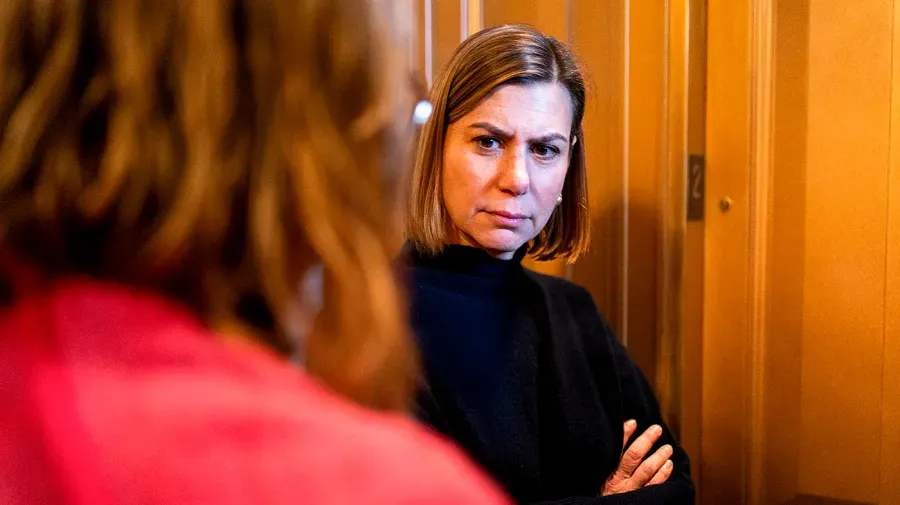
Rep. Elissa Slotkin (D-Mich.) publicly accused Aaron Reitz, a Texas-based U.S. attorney, of pursuing 'publicity and your political ambitions' after he sent letters threatening to investigate her and four other lawmakers and posted his letter to X. The exchange tests whether a federal prosecutor can use public threats as leverage, a precedent that raises enforcement and reputational risk for any company operating in a regulated district.
Rep. Elissa Slotkin (D-Mich.) did not wait for a subpoena to punch back. On Wednesday, she responded to Aaron Reitz, the Texas-based U.S. attorney who last week sent her a letter threatening an investigation, with a statement that framed his correspondence as 'more about publicity and your political ambitions than any sort of legitimate inquiry.' That single line is the whole story compressed: a sitting member of Congress is accusing a federal prosecutor of using the machinery of the Justice Department as a personal marketing channel.
The mechanics matter as much as the accusation. Reitz did not keep the letter quiet. He posted it to X, converting what would normally be a private prosecutorial communication into a public event. And Slotkin was not the only recipient. According to the source account, the letters went to her and four other lawmakers. That detail is what separates a grudge from a strategy. One letter to one member of Congress is a feud. Five letters, published, is a template.
For context on why this lands so hard: the country runs on 93 U.S. attorneys, each a presidential appointee typically confirmed by the Senate and serving at the president's pleasure, operating under the Attorney General. Their formal job is to prosecute federal crimes in their districts. Their informal job has historically come with an unwritten rule, which is to avoid announcing investigations of political figures from a personal social media account. Justice Department practice has long leaned toward silence until charges are filed, on the theory that a public probe can wreck a reputation even if it never produces an indictment. Reitz's decision to publish the letter breaks with that norm, and the break is the actual news.
Slotkin is not a random target. She represents a Michigan district, carries a national security background, and has built a profile that extends well past her state. In modern politics, being named as an investigative target is not purely a liability. It is also a signal, a fundraising hook, and a reason for bookers to call. That asymmetry is why these fights escalate so reliably: the prosecutor gets attention, the lawmaker gets attention, and the underlying legal question can sit unresolved for months while both sides collect the upside.
The source account does not name the other four lawmakers, and that omission is worth flagging on its own. Without names, it is impossible to tell whether the group shares a committee, a state, a vote, or nothing at all. If the letters are tied to a specific official act, the legal theory is one thing. If they are tied to public statements, the theory is considerably more contested, because speech by members of Congress sits close to the protections of the Speech or Debate Clause, the constitutional provision that shields legislators from being questioned for legislative acts. The breadth of the recipient list is the tell for which theory is in play.
For executives and boards, the practical question is not who wins the cable segment. It is what a prosecutor willing to publish his own letters means for anyone operating in a regulated industry inside his district. Companies plan around predictable enforcement. When the announcement becomes the enforcement, compliance teams have to price in reputational risk that no disclosure regime captures. That is a real cost, and it lands on shareholders rather than on the officials trading quotes.
Three things to watch from here. First, whether Main Justice in Washington endorses Reitz's approach or quietly distances itself; U.S. attorneys are supervised, and silence from above is a signal in itself. Second, whether the letters convert into subpoenas, grand jury activity, or nothing at all. Third, whether other U.S. attorneys copy the playbook. A tactic that generates headlines and costs nothing is a tactic that spreads.
The strategic takeaway for anyone in a leadership seat: political risk and legal risk are converging into a single category, and the loudest signal is often not the strongest case. Slotkin's response is a bet that voters and donors read the letter the way she does, as ambition dressed up as inquiry. Reitz's letter is a bet that the threat alone shifts behavior. Both bets get settled in public, and neither requires an indictment to change how people act. That is the part worth watching, and it is already underway.
This story's Key Insights and Take-aways are locked.
Create a free account to unlock Executive Actions for one credit.
Register to UnlockAlways free for Executives Club members. Join the Club
More in Politics

Fifth Circuit Kills Pregnant Workers' Law Over Pandemic Proxy Votes
A procedural ruling, not a policy one, has blocked a federal pregnancy-accommodation law and put every pandemic-era statute in the crosshairs ahead of an expected Supreme Court appeal.

Measles kills a Virginia child under 5, the state's first death of 2026
Virginia's health department confirmed the death but withheld the child's vaccination status, leaving schools, clinics and employers to plan around the one detail that would explain the most.

Former Brazilian President Bolsonaro Hospitalized with Intestinal Obstruction
The health status of the former far-right leader raises immediate questions about political stability and the trajectory of Brazil's conservative movement.